Welcome to a site where we sometimes provide food for thought, and often provide information about the Western Canada Professional Hockey Scouts Foundation.
OKOTOKS, AB (April 1, 2026) — Four men who combined to spend more than 100 years working for NHL teams will share in the Ace Award when the non-profit Professional Hockey Scouts Foundation holds its annual Wall of Honour induction dinner in Okotoks on Aug. 28.
Lorne Davis, Del Wilson, Ted Hampson and Marshall Johnston will be honoured on an evening when 21 other scouts will be inducted into the Wall of Honour. Davis, Wilson, Hampson and Johnston were among the original inductees in 2024.
The Ace Award is presented in honour of the late Garnet (Ace) Bailey, a longtime NHL scout. He was the Los Angeles Kings’ director of pro scouting and was en route to their training camp when the plane he was on was hijacked and deliberately flown into the South Tower of New York City’s World Trade Centre on Sept. 11, 2001. The Ace Award is presented annually to an individual or individuals who are seen to have made outstanding contributions and efforts to the NHL scouting profession.
This year’s recipients are recognized by those in the scouting fraternity for their dedication to the profession and their willingness to help those who were working to follow in their footsteps.
“Congratulations to Lorne, Del, Ted and Marshall, all of whom deserve to be honoured with the Ace Award,” said Erin Ginnell, the Foundation’s president. “All four gentlemen are pillars in the scouting community, not only for their successes but by also being the great people that they have been over the many years of scouting.”
Archie Henderson, a now-retired scout and a member of the Wall of Honour, chaired the selection committee.
“I went back and looked at the history of these guys; I would encourage hockey fans to do the same and look at what these guys did, not just in their scouting careers, but as players and executives,” Henderson said. “The number of championships they won . . . the number of teams they impacted is amazing.
“The one word I would use to describe the four of them is ‘passion’ . . . they had to have passion for hockey and the game of life to do what they did. They were iconic, not just in scouting but in all different facets and levels of North American and international hockey.”
Davis, who died in 2007 at the age of 77, was an NHL scout for more than 40 years — 29 of those with the Edmonton Oilers and 10 with the St. Louis Blues. He also worked with the New York Rangers and the WHA’s Houston Aeros. During his time with the Oilers, he helped the organization win five Stanley Cup titles. He also won a Stanley Cup as a player with the 1952-53 Montreal Canadiens. He has been a member of the Regina Sports Hall of Fame since 2003.
Wilson, who died in 2015 at the age of 88, was a scout with the Montreal Canadiens for 47 years, during which time they won 18 Stanley Cup titles. He also was an owner and general manager of the Regina Pats, and a founder of what now is the Western Hockey League. The Del Wilson Memorial Trophy is awarded annually to the WHL’s top goaltender. He is a member of the Regina and Saskatchewan sports halls of fame, and the Saskatchewan Hockey Hall of Fame.
Hampson didn’t go scouting until ending his playing career at the age of 44. He started his scouting career with NHL Central Scouting, before moving on to the St. Louis Blues (21 years), Colorado Avalanche (2) and Vancouver Canucks (10). He was 85 when he retired in 2022. He is a member of the Manitoba Hockey Hall of Fame.
Johnston, 84, moved from the New Jersey Devils’ coaching staff to become director of player personnel in 1983, a role he filled through nine seasons. He then spent nine seasons with the Ottawa Senators as director of player personnel and then general manager. He followed that with three seasons with the Chicago Blackhawks and 11 as director of pro scouting for the Carolina Hurricanes, winning the Stanley Cup with them in 2006. He has been inducted into the International Ice Hockey Federation Hall of Fame — he was a regular on Canada’s national team in the mid-1960s — and the Prince Albert Sports Hall of Fame.
In 2025, the Ace Award was presented to two veteran scouts — Mike Penny and the late Barry Fraser. The initial recipients, in 2024, were former team executive and long-time play-by-play man Dennis Beyak and Gregg Drinnan, a sports journalist for more than 40 years.
You are able to follow the PHSF and its happenings at its website — hockeyscoutsfoundation.com.
OKOTOKS, AB (March 10, 2026) — The Western Canada Professional Hockey Scouts Foundation has undergone a name change.
With an eye to the future and as it moves to expand its footprint, the non-profit organization’s board of directors has changed its name to Professional Hockey Scouts Foundation (PHSF).
“Our foundation has grown and evolved since its inception so that expansion to other areas in North America and possibly Europe was inevitable,” said PHSF president Erin Ginnell. “Transforming to the Professional Hockey Scouts Foundation will allow us to continue to honour and help scouts with a global reach and also continue to give back to the game by reaching a wider range of people and organizations in need.”
The PHSF is in only its third year of existence, having introduced itself to the world with its inaugural dinner on July 30, 2024, in Okotoks. That dinner provided the Foundation with the seed money to have its Wall of Honour video display installed in the Viking Rentals Centre, the home of the BCHL’s Okotoks Oilers.
The Foundation inducted 44 past and present-day scouts into the Wall of Honour in 2024 and added 30 more at its second annual banquet in 2025. The third annual banquet, in Okotoks on Aug. 28, will include the induction of 21 honourees.
As well, the PHSF is to play host to its second annual Celebrating Indigenous Hockey Legends banquet on Sept. 29, one day before Truth and Reconciliation Day, this time in Kelowna.
“Transitioning from a Western Canada focus to a broader global identity has always been central to our vision,” said PHSF vice-president Ross Mahoney. “From the beginning, our goal has been to build an organization with international reach and impact.
“With our Foundation officially established as the Professional Hockey Scouts Foundation, we are proud to be expanding our efforts beyond Western Canada. We are actively supporting initiatives in Eastern Canada and laying the groundwork for continued growth into the United States.”
The name change reflects the Foundation’s desire to grow into a national and, eventually, an international entity.
There already is a move afoot aimed at establishing a PHSF chapter in Eastern Canada. An organizing committee is in the works, while discussions are ongoing involving the location of a Wall of Honour.
While revealing its name change, the PHSF also announced it has been designated a registered charitable organization by the Canada Revenue Agency. The Foundation, which had been operating under Alberta’s Societies Act, had applied to the CRA early in 2025.
“Obtaining our charity status with the CRA took considerable time and effort, but it will be well worth the wait and expense,” said Garth Malarchuk, the PHSF’s chairman of the board. “It significantly enhances our fundraising capabilities and provides our foundation with greater opportunities to deliver meaningful financial assistance to individuals, communities, and charitable organizations in support of sports initiatives, as well as medical and educational needs.”
The PHSF’s website remains at the same address — hockeyscoutsfoundation.com — and there always is more organizational information available there.
The Kidney Walk is back and, yes, Dorothy Drinnan is back, too.
The 2026 Kamloops Kidney Walk is scheduled for June 7 in McDonald Park.
Dorothy, who underwent a kidney transplant in 2013, is taking part, meaning that she is fund-raising, for a 13th straight year. (Hey, she is doing just fine, too; thanks for asking.)
She goes into the 2026 Walk having raised $42,015.30 over the first 12 years.
A co-founder of the Kamloops Kidney Support Group — we gather for breakfast on the fourth Saturday of every month — Dorothy’s participation in fund-raising for the Kidney Walk is her way of saying “Thank You” to her donor, all those folks who were involved in her transplant, and those who continue to provide care through the renal clinic at Royal Inland Hospital in Kamloops.
A huge thank you, too, to Dean (Scooter) Vrooman and the Western Canada Professional Hockey Scouts Foundation for getting Dorothy’s 2026 campaign started with a donation of $500. The non-profit Foundation honoured Scooter, the retired long-time radio voice of the WHL’s Portland Winterhawks, with the Bob Ridley Golden Microphone Honourarium in 2025. The award includes $500 that the honouree is to give to a charity or individual of his choosing.
Scooter chose to donate it to the Kidney Foundation of Canada/BC and Yukon branch, via Dorothy’s Kidney Walk Page.
If you are interested in joining Scooter on Dorothy’s team, you may do so right here.
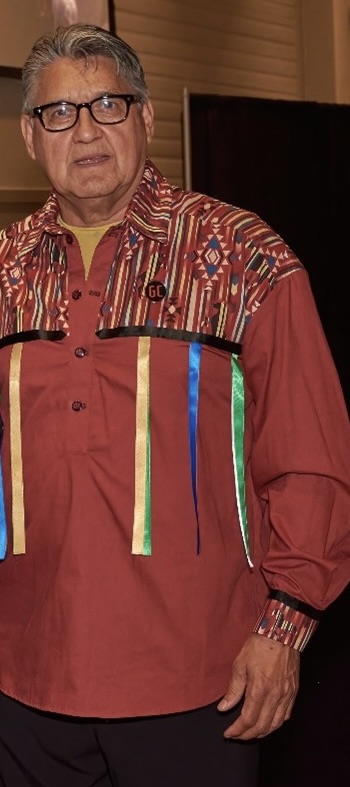
OKOTOKS, Alta. (Feb. 4, 2026) — Ron Delorme, a former NHL player who has spent 40 years scouting with the NHL’s Vancouver Canucks, is the 2026 recipient of the Two Glens’ Honourarium from the non-profit Western Canada Professional Hockey Scouts Foundation.
Ron Delorme, at the Foundation’s 2014 Wall of Honour induction dinner.
The Foundation made the announcement today.
Delorme, 70, will be honoured at the Foundation’s third annual Wall of Honour induction dinner in Okotoks on Aug. 28.
The Two Glens’ Honourarium was created by the Foundation in memory of Glen Cochrane and Glen Dirk, two beloved members of the scouting community who lost battles with cancer early in 2024. It is presented annually to an individual or individuals who are dedicated to the profession and show humanitarian values and goodwill in their day-to-day lives.
The honourarium carries with it a financial benefit with the honouree able to present it to a charitable organization or an individual who requires assistance with medical and/or mental health challenges.
“Ron was a mentor to a lot of us . . . we all looked up to him,” said Scott Bradley, who chaired the selection committee. Bradley, who is in the Wall of Honour, is in his 33rd season with the Boston Bruins, now as senior advisor to the general manager. “I’m just so happy that Ron is going to get this award. I really can’t say enough about him.”
“Ron is the perfect candidate for the Two Glens’ award,” added Erin Ginnell, the Foundation’s president. “With 40 years of scouting behind him, he has helped so many fellow scouts and has been a mentor to a lot of us over the years. So many miles and so many laughs . . . he’s one of kind.”
After a knee injury ended Delorme’s nine-season professional playing career, he joined the Canucks’ scouting staff in 1986. In 2000, he was promoted to chief amateur scout, a position he filled for 22 seasons before stepping back to amateur scout. Add it all up and he now is in his 40th season as a Canucks’ scout.
A native of North Battleford, Sask., Delorme, who is Cree, grew up in Cochin, Sask. He has long been heavily involved in working with Indigenous youths both on and off the fields of play.
He is a member of both the Saskatchewan Hockey Hall of Fame and the B.C. Hockey Hall of Fame.
The Two Glens’ Honorarium was first presented in 2025 when veteran scouts Dean Malkoc and Jesse Wallin were honoured.
OKOTOKS, Alta. (Jan. 27, 2026) — Les Lazaruk, the longtime play-by-play voice of the WHL’s Saskatoon Blades, will receive the Bob Ridley Golden Microphone Honourarium at the 2026 Wall of Honour induction banquet, the Western Canada Professional Hockey Scouts Foundation announced today.
This award, presented annually by the non-profit foundation, recognizes a member of the print or broadcasting profession for their dedicated years of service at the major junior level. It carries with it an honourarium to be donated to an individual or charity of their choosing.
Bob Ridley (right) congratulates Les Lazaruk on having been awarded the Golden Microphone Honourarium on Jan. 27 in Medicine Hat during a visit by the Saskatoon Blades. (Photo by Blair Reid)
“I am shocked . . . thrilled . . . and honoured,” Lazaruk said when informed that he was to receive the Golden Microphone. “Are you sure you couldn’t find someone more deserving?”
No, Les, we couldn’t.
The award is named in honour of Ridley, who called more than 4,000 Medicine Hat Tigers games and also drove the team bus a lot of the time before retiring in August 2022.
“I couldn’t be more thrilled in Les being selected,” said Ridley, who is a member of the selection committee. “Les and I worked side-by-side in broadcast booths for many years and he has always been an outstanding talent and a credit to his occupation and community. I am just so happy to see Les receive this honourarium.”
Lazaruk has been the radio voice of Blades’ games since the start of the 1994-95 season. Now in his 32nd season, he has called more than 2,300 regular-season and playoff games.
“I have known Les for a long time,” said Gregg Drinnan, the Foundation’s editor and historian. “He personifies exactly the terms of this honour. If you are at all familiar with his work in covering and calling games involving the Blades, you know that no one is more dedicated to or more passionate about major junior hockey.”
Born and raised in Winnipeg, Lazaruk first got into the media when he worked with the student newspaper at the U of Manitoba. Later, he interned at the Winnipeg Free Press before joining the Winnipeg Tribune sports department. He was at The Trib when it folded on Aug. 25, 1980.
Two months later, he was the sports director at radio station CKLQ in Brandon, where he stayed until May 1983. He spent the next 10-plus years, through January 1994, at CJOB in Winnipeg where he was heavily involved in coverage of the Winnipeg Jets.
He has been the Saskatoon Media Group’s sports director since September 1994. He made his Blades’ debut on Sept. 23, 1994, as Saskatoon beat the host Regina Pats, 8-3.
Lazaruk will be presented with the Golden Microphone award at the foundation’s third annual Wall of Honour induction dinner in Okotoks on Aug. 28.
He is the second recipient of the award, after Dean (Scooter) Vrooman, the retired radio voice of the Portland Winterhawks.
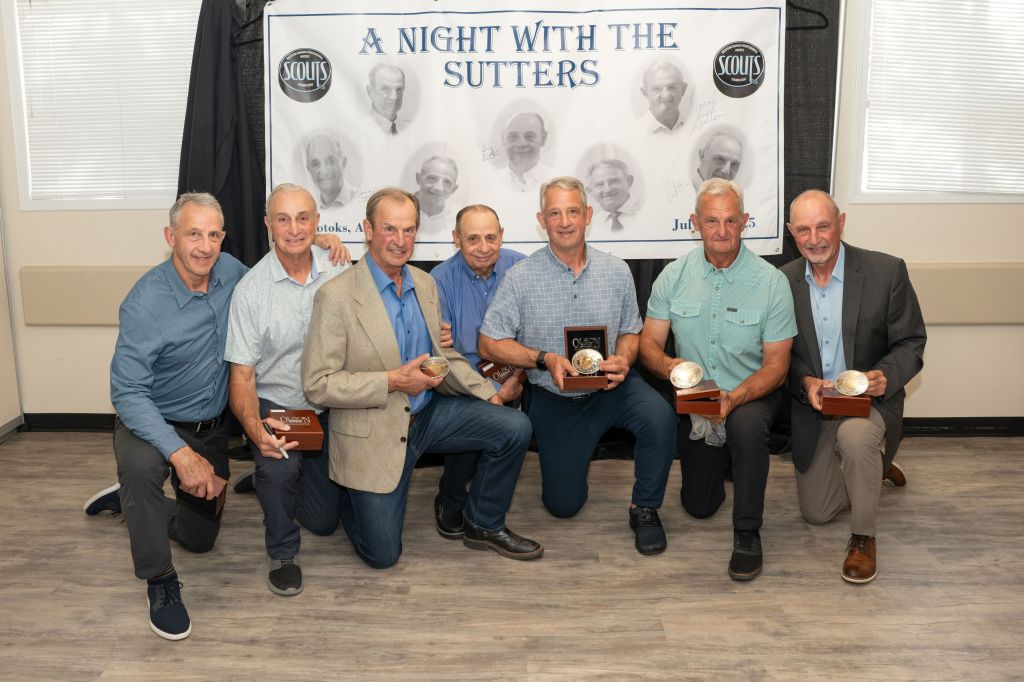
That’s Gary Sutter in the middle of his brothers — Rich (left), Duane, Brian, Ron, Darryl and Brent — at the Western Canada Professional Hockey Scouts Foundation’s 2025 induction dinner in Okotoks.
The Western Canada Professional Hockey Scouts Foundation is mourning the loss of Gary Sutter after the first family of hockey’s eldest son died on Wednesday (Dec. 31) in Viking, Alta. He was a week from his 71st birthday.
“The Foundation joins in hockey fans from around the world in offering deepest condolences to Gary’s family and friends,” said Garth Malarchuk, the WCPHS Foundation’s chairman of the board. “We all know how much the Sutters have meant to hockey and Gary was an integral part of the family.”
Grace and Louis Sutter, who lived on a farm southeast of Edmonton, near Viking, had seven sons, all born from 1954 to 1963. Six of them would play in the NHL.
Gary, who family members say may have been the best of them all, was the lone defenceman. He also was the only one not to play in the big league, choosing instead to stay home and work on the farm.
Gary is survived by his mother, Grace, and brothers Brian, 69; Darryl, 67; Brent, 63; Duane, 65; and twins, Rich and Ron, 62,
Duane was inducted into the Foundation’s Wall of Honour in 2025; Rich and Ron will be inducted in 2026.
The 2025 induction dinner in Okotoks was billed as A Night With the Sutters and included a couple of Hot Stove sessions. Gary was in the house and seemed especially pleased when the Foundation presented him with a commemorative belt buckle.
Gary has been a member of the Alberta Hockey Hall of Fame since 2017 when his entire family was inducted.
According to the family, a private funeral will be held at a later date.
In lieu of flowers, the family asks that, if you are so inclined, donations be made to God’s Acre Cemetery, the Viking Minor Hockey Association or the Viking Health Foundation.
OKOTOKS, Alta. (Nov. 19, 2025) — Jim Bzdel, a veteran of more than 30 years in the scouting game, and Garnet (Ace) Bailey, who was part of seven Stanley Cup-winners as a player and/or scout, headline the Class of 2026 that will be inducted into the Western Canada Professional Hockey Scouts Foundation’s Wall of Honour next summer.
The induction dinner is to be held in Okotoks on Aug. 28.
All told, the Foundation will induct 20 scouts — one (Bzdel) from the early era (1968-80), 17 from the modern era and two from the major junior game.
“I want to congratulate all of the individuals and their families on being selected to the WCPHS Foundation’s Wall of Honour,” said Scott Bradley, one of the Foundation’s directors and the chairman of the Wall of Honour selection committee. “This will be our third induction banquet, and there are still many more individuals to be honoured in the years ahead.”
Bzdel, 91, has lived in Regina since 1954. He spent 24 years working for the City of Regina, choosing to retire in 1993 and get into scouting on a full-time basis. He had started his scouting career with the WHA’s Los Angeles Sharks in 1972, and also worked with that league’s Cincinnati Stingers. In the NHL, he scouted for the Hartford Whalers, Toronto Maple Leafs, St. Louis Blues and San Jose Sharks before retiring in 2002.
Bailey was the Los Angeles Kings’ director of pro scouting and was en route to training camp on Sept. 11, 2001, when his flight was commandeered and flown into the South Tower of the World Trade Center in New York City. He was 53. As a player, he won a Memorial Cup (Edmonton Oil Kings, 1966), Calder Cup (Hershey Bears, 1969) and two Stanley Cups (Boston Bruins, 1970, 1972). He worked as a pro scout with the Edmonton Oilers for 13 seasons, helping them win five Stanley Cups, before moving to the Kings in 1994.
The WCPHS Foundation’s Ace Award is named in honour of Bailey. It is awarded annually to a person, or persons, who have exceeded expectations in helping those in the scouting fraternity.
Also included in the Wall of Honour’s Class of 2026 are Mike Barnett, once Wayne Gretzky’s long-time agent and now a senior executive with the New York Rangers; Dan Ginnell, whose father, the late Pat Ginnell, and brother Erin both are in the Wall of Honour; and twin brothers Rich and Ron Sutter, whose brother Duane was inducted in July.
The list is rounded out by Craig Channell, Paul Charles, Marcel Comeau, Jeff Crisp, Marshall Davidson, the late Laurence Ferguson, Thomas Gradin, Randy Hansch, Ryan Jankowski, Kelly Kisio, the late Jack McIlhargey and John Williams. Ray Dudra and the late Mark Johnston will be inducted as major junior scouts.
“Congratulations to the members of the outstanding Class of 2026 who have been selected to the WCPHS Foundation’s Wall of Honour,” offered Foundation president Erin Ginnell. “It’s always a tremendous honour to be recognized by your peers, especially with so many deserving scouts.
“I’m looking forward to a great evening and catching up with all involved.”
The Foundation has been in existence since 2023. It will hold its third annual Wall of Honour induction ceremony during a dinner in Okotoks on Aug. 28. The dinner has been moved from late July in order to strengthen the Foundation’s partnership with the Yuill Foundation, which is to hold its second annual Golf Classic in Medicine Hat on Aug. 27.
The Wall of Honour, featuring a rolling video display that includes brief bios of each inductee, is located in the Viking Rentals Centre in Okotoks.
The 20-member Class of 2026 will bring the total number of Wall of Honour members to 94.
Information on ticket availability for the banquet will be released early in 2026.
MEDICINE HAT (Nov. 10, 2025) — The Western Canada Professional Hockey Scouts Foundation, a beneficiary of the inaugural Yuill Foundation Golf Classic, is spreading some of that largesse around the Medicine Hat community.
The WCPHS Foundation received $93,000 from the Yuill Foundation after the Golf Classic was held at Desert Blume Golf Course on Sept. 11.
In turn, the WCPHS Foundation has chosen to make donations to the Senior Home Pet Visit Program, the 2026 Special Olympics Canada Summer Games, the Equestrian Gymkhana Winter Series and the Hockey Hounds bantam tournament.
“We are deeply grateful to the Yuill Foundation for their outstanding generosity and continued support,” said Garth Malarchuk, the WCPHS Foundation’s chairman of the board. “Their unwavering commitment and exceptional efforts are unparalleled and have set a remarkable standard for others to follow.
“And we are more than pleased to support community programs in Medicine Hat. As our Foundation’s Vision Statement reads, ‘. . . we feel a strong obligation and commitment to give back to charities, communities and individuals, who could benefit from our support and financial assistance.’ ”
The Senior Home Pet Visit Program, which supports those who reside in 11 senior facilities in Medicine Hat and one in Bow Island, was given $15,000 to cover administrative costs for one year. Programs such as this bring comfort and joy to seniors through pet visits, helping with mental health care and well-being. The Medicine Hat program also involves special needs youth from the REDI Enterprises Foundation in the care and handling, thus creating an inclusive and compassionate experience.
The 2026 Special Olympics Canada Summer Games are to be held in Medicine Hat from Aug. 11-15. The WCPHS Foundation donated $5,000 to the organizing committee to help cover costs associated with playing host to an event of this magnitude. The Games are expected to attract more than 1,500 athletes, coaches and officials to the city, with more than 1,000 local volunteers involved in keeping things on track.
The Equestrian Gymkhana Winter Series, which was given $1,000, is a new program that allows youngsters to experience the therapeutic benefits of working with horses. The money will help cover the costs of essential riding props for the inaugural event. Working with horses has proven beneficial to the mental health of young people, many of whom are dealing with anxiety issues and/or come from dysfunctional family environments.
The Hockey Hounds tournament, one of the longest-running bantam tournaments in Western Canada, also received $1,000. The money will help cover costs associated with the organizing and operation of the 2026 tournament.
The WCPHS Foundation’s man behind the scenes in Medicine Hat is associate director Blair Reid, who was a long-time scout and was a part of the Wall of Honour’s inaugural class in 2024.
“It’s wonderful that the scouts foundation has this relationship with the Yuill Foundation that includes participation in the annual Golf Classic,” Reid said, “and for us to be able to help out four organizations that give so much back to Medicine Hat and area is terrific.”
The WCPHS Foundation is continuing its relationship with the Yuill Foundation and, in fact, is working to make things bigger and better. As a result, the third annual Wall of Honour induction dinner will be held in Okotoks on Aug. 28 to allow an easier connection to the Golf Classic, which is scheduled for Aug. 27 in Medicine Hat. The first two induction dinners, in 2024 and 2025, had been held late in July.
Every year, for Remembrance Day, I post the story of Lyman (Hick) Abbott. From Regina, he was a wonderful athlete, a sportsman and a real Canadian hero.
I wrote this story while at the Regina Leader-Post, and it really is a favourite.
It all came about because of J. Lyman Potts, a gentleman who was named after Abbott. J. Lyman’s father, Joe, was something of a mentor to Hick. J. Lyman, who died on Dec. 9, 2018, was a legend in the Canadian broadcasting and music industries. He would have turned 107 on Nov. 11, so this always was a special week for him, too.
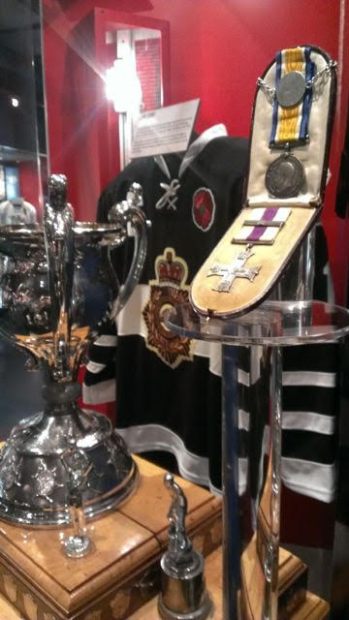
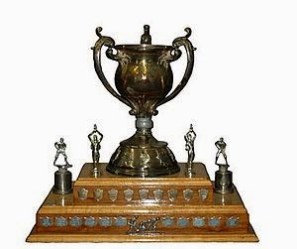
It was J. Lyman who acted when he realized in the mid-1990s that the Abbott Cup — originally funded by Potts’ father and named after Abbott — no longer was being given the respect it deserved. He wrote to old friend Tom Melville, a former Regina Leader-Post sports editor, and the two of them mounted a lengthy campaign that resulted in the Abbott Cup being retired to the Hockey Hall of Fame in Toronto.
Potts contacted me, one thing led to another and I ended up writing this story. Originally, I had a few pictures to include with the post. Then, I later received a handful of additional photos from Mark Abbott, a member of the Abbott family who has been in contact with me from his home in Guelph, Ont., and was able to include some of them.
Here, then, is the story of Lyman (Hick) Abbott . . .
Edward Lyman Abbott was, they all agreed, one of a kind.
He was a superb athlete and, just as important, he was a true sportsman. Everyone in southern Saskatchewan knew Abbott as Hick, which was shortened from Hickory, and he was loved by young and old alike.
LYMAN (HICK) ABBOTT
In the early part of the 20th century, Hick Abbott was the best athlete in Regina and maybe all of Western Canada. To this day, it may be Abbott who is the best athlete Regina has seen.
According to the Regina Leader:
“Previous to going to the war Abbott was one of the greatest hockey players that this Dominion every saw. He also was a stellar lacrosse, rugby and soccer player. He piloted Regina to a western championship in rugby in 1915 and what he did to bring the Allan Cup to Regina any of the old-time fans know.”
As we pause at the 11th hour of the 11th day of the 11th month, his story is but one of many worth remembering. This, then, is that story. Or, at least part of it.
————
The gentlemen of Regina’s sporting scene would gather at Joe Potts’ Rose Athletic Parlours on the east side of the 1700 block Rose Street. They would go there for a shave, maybe a trim and, most definitely, to talk about how their sporting world turned.
The Rose Athletic Parlours — the name was in honour of a Potts penpal, Philadelphia Athletics manager Connie Mack — was a seven-chair operation, with each barber having his own washbasin and mirror. There were two other huge mirrors — floor to ceiling — and a circular leather seat that surrounded a pole on which was beautiful leather backing. A long glass counter was home to a gold-coloured cash register and boxes of chocolate bars. Mahogany-veered cabinets behind the counter were full of tobacco products.
JOE POTTS
And there were photographs — they didn’t call them pictures then — everywhere. Photographs of prominent athletes. Many of them autographed.
The billiard room was separate and featured Boston tables, although there was one billiard table. Each table had its own mahogany cabinet in which players hung their hats and coats.
This is where doctors, dentists, lawyers and businessmen came. This is where they talked about the exploits of their favourite son.
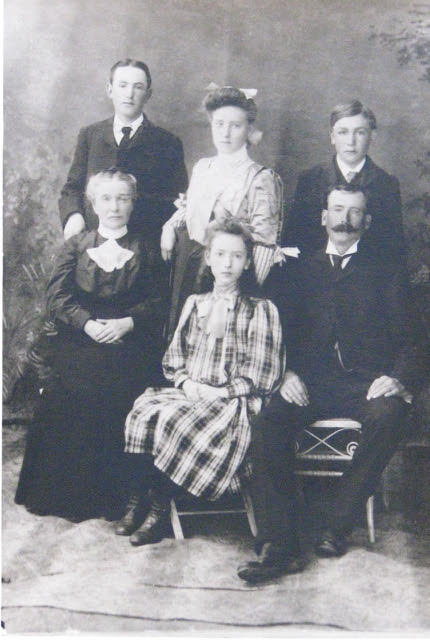
The Abbott family circa 1906 — Back row, left to right, Simon (brother), Rosa (sister) and Lyman (Hick). Front row, Mary Ann (mother), Rebena (sister) and James (father).
Hick Abbott played football (rugby football, it was frequently called then), hockey, baseball, lacrosse, soccer, basketball. He excelled at them all. He played in high school. He played for club teams. He played on playgrounds or in a gymnasium. It didn’t matter. He just wanted to play. He had to play.Hick Abbott was of fair complexion. He had gray eyes that, in a blink, would steal a young girl’s heart. And that hair. Oh, that light brown hair that always had that naturally tousled look. Born in Orillia, Ont., in the Hovering parish, on May 1, 1891, Abbott, who was of the Methodist faith, moved to Regina for some reason long since lost. His father, James Henry Abbott, lived his last days in Toronto. In a file folder full of documents, notes, papers and photographs, there isn’t a mention of a mother. Perhaps Hick Abbott’s mother died and he moved to Regina to live with his sister, Rebena Myrtle, who was a provincial government employee. A brother, Samuel Percival Abbott, lived near White Bear, Sask.
But hockey was his game. He was a right winger who played for as many teams as he could.
He played for the Regina Bees Capital Hockey Club, which won the Valkenburg Cup as the province’s 1911-12 amateur champions.
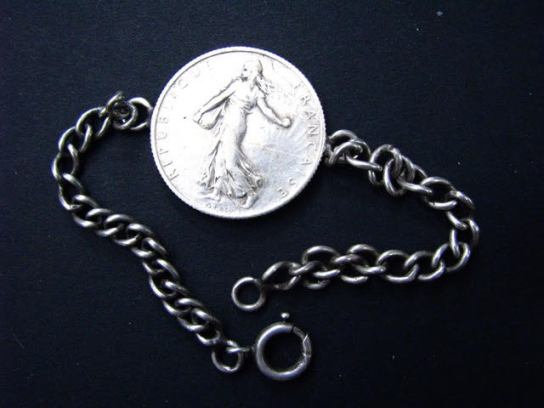
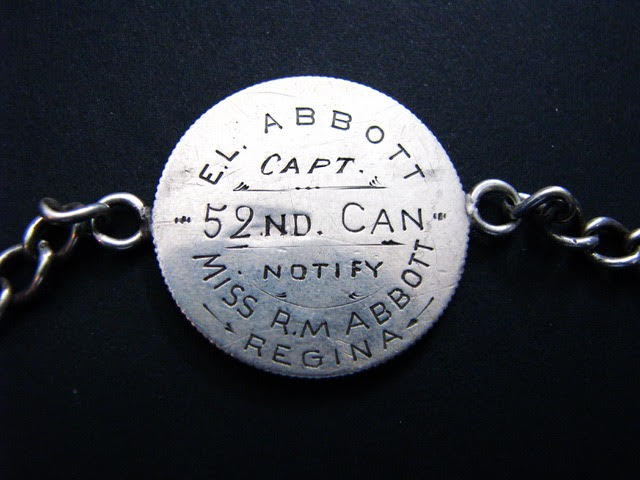
This a bracelet that ended up with Rebena at some point after Hick’s death. It is believed that he had it made out of a French coin while in France not long before he was killed. He recently had been promoted to Captain, and likely was wearing it when he was shot. The bracelet joined the medals that were secured with Dave Thomson’s help in 2014, just in time for it all to go on display with the Abbott Cup at the Hockey Hall of Fame as part of their First World War-themed display.
But how was he to know that the highlight of his athletic career would come in the spring of 1914 when he helped the Regina Victorias to the 1914 Allan Cup title? The team photo refers to the Vics as World’s Amateur Champions 1914. There’s Abbott — bottom row, third from the right, next to Joe Potts, the Vics’ manager. The newspaper refers to Abbott as “the speedy and consistent right wing who is the sharpshooter of the team.”
But there was trouble in Europe where, before long, the First World War would be raging. Soon, newspapers were full of casualty reports. Regina’s sons were dying over there.
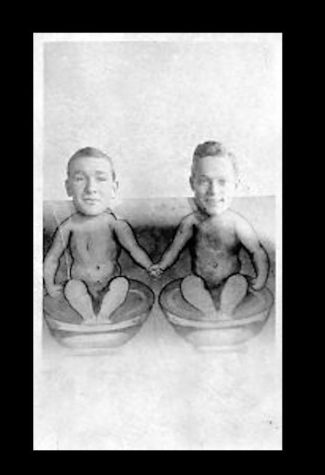
A novelty photo from early in the 20th century that shows Hick and Joe Potts as infants, sitting in washtubs and holding hands.
Naturally, Abbott heard the call, as did many of his teammates from that 1913-14 team, including goaltender Fred McCulloch, defencemen Charlie Otton and Austin Creswell, who was the team captain, and rover Freddy Wilson.
Abbott took officer training in Winnipeg, qualifying for the rank of lieutenant. He returned to Regina and enlisted with the 68th Battalion.
On the day Abbott enlisted — Sept. 23, 1915 — he was a 24-year-old student at law who lived in Regina at 2254 Rose St.
Seven months later, on April 28, he was on the S.S. Olympic as it sailed from Halifax. Abbott headed overseas as a platoon commander and officer in charge of records.
Abbott was a true warrior. Whether it was on the field of play or on the field of war, there wasn’t any quit in this man.
Upon his arrival in England, he quickly transferred to the 52nd Canadian Infantry Battalion, a trench unit. In the ensuing 26 months, shrapnel was the only thing that kept him from the front.
He was first injured on Oct. 7, 1916, while in action near Courcelette, about 30 miles northeast of Amiens, in what came to be known as the Battles of the Somme.
Four days later, Abbott was admitted to No. 14 General Hospital at Boulogne with a wound to his left shoulder. Two days later, he was in England, safely ensconced in a war hospital in Reading, a few miles west of London.
A doctor noted a “shrapnel bullet localized near wound.” That shrapnel was removed on Oct. 24; he was discharged from hospital on Nov. 13.
Abbott rushed back to the front and stayed until June 3, 1917, when he was granted 10 days leave, which he spent in Paris.
The medals and bracelet are shown while on display in the case next to the Abbott Cup at the Hockey Hall of Fame. They were there as part of a six-month exhibit.
On July 26, 1917, following the Battle of Vimy Ridge, Abbott was awarded the Military Cross “for conspicuous gallantry and devotion to duty. He handled his men in the most able manner, and successfully led them through an intense hostile barrage. He set a fine example of courage and initiative.”
Three months later, on Oct. 27, he was awarded a Bar to his Military Cross.
The Bar, according to a letter Potts received from Abbott in early November, was “just for a little trench raiding affair.”
Abbott also mentioned that he now was wearing “a pair of plate glass spectacles on account of recent injuries to my eyes.”
The glasses were the result of his being wounded for a second time. He took a bullet — or a piece of shrapnel — in the right temple on Sept. 4, 1917, while raiding enemy trenches near Leuze, just over the border from France in the southwest part of Belgium.
A medical report indicates this was a “Severe G.S.W. (gunshot wound) near right eye.” Before he reached the hospital in Boulogne, the shrapnel//bullet was “removed with giant and small magnet.”
The Sept. 11 edition of The Leader reported, under the headline Popular Regina Young Man Is Among Wounded:
“As the casualty lists come in, more and more Regina soldiers are listed either as killed, wounded or gassed. In the list of yesterday appears the name of one of the best known and popular young men of the city, Lieut. Edward Lyman Abbott, as being wounded. This is the second time within 10 months that ‘Hick’ . . . has suffered injuries on the battlefield.”
The story continued:
“. . . he has written to friends in the city and appeared to be carrying on without much worry. Abbott was one of the finest athletes and best sportsmen in the city, standing at the head in every branch of sport he entered. He was particularly noted for his prowess at hockey, and football, two games in which he had no superior in the west.”
By Sept. 15, he had been “invalided, wounded and detached” to the Manitoba Regimental Depot and was being cared for in the 3rd London General Hospital in Wandsworth.
A doctor’s report noted: “Recommended for convalesence . . . to report back in three weeks.” Abbott was discharged on Sept. 24, 1917, and spent the next month at St. Mark’s College, leaving there on Oct. 25, 1917.
The next entry in his medical record is dated Sept. 14, 1918. It is short and to the point: K. in A.
Killed in Action.
It was, in the words of General Erich Ludendorff, the “black day of the German army.”
It was Aug. 8, 1918. It was the day on which the Battle of Amiens began. It was the battle in which Hick Abbott died.
After recovering from his head wound, Abbott returned to France on Dec. 24, 1917. A week later, he was back with his unit.
With Capt. G.M. Thomson heading for England, application was made for Abbott to be an acting captain with the 52nd Battalion. That was approved on March 16, 1918.
Abbott, then, was a captain when the Battle of Amiens, one of the war’s most decisive battles, began. The German’s spring offensive had been stopped only eight miles from Amiens. Now it was time to push them back. Later, after the Armistice had been signed on Nov. 11, 1918, it was generally acknowledged that this was where the tide had turned. In two weeks, 46 German divisions were defeated — 34,250 prisoners and 270 heavy guns were captured.
“It was,” said Ludenhoff, “the black day of the German army in the war . . . To continue would be a gamble. The war would have to be ended.”
On Aug. 14, with the battle almost won, Abbott — always the leader — was first out of a trench as he led a charge towards the enemy.
According to Earl Longworthy, an acquaintance of Abbott’s, he was killed by a sniper’s bullet to the head.
Longworthy was with Abbott’s battalion the day after his death and reported the platoon “worshipped the ground Abbott walked on and were in sorrowful spirits because of his death.”
A testimonial, author unknown, reads in part:
“Abbott was the type of Canadian, and the type of Britisher, that the Germans cannot understand; the type that fights with a silent fury and yet that does not hate; too much of a sportsman to fight unfairly, but more dangerous in attack than their finest products of hate-inspiration because of utter recklessness combined with a deadly skill and total inability to recognize defeat.”
By the time of his death on Aug. 14, 1918, Abbott’s father also was dead. Hick’s medals went to his sister, Rebena, who was living in Regina at 2072 Angus St. A plaque and scroll went to his brother, Samuel, at White Bear.
Abbott’s will, dated July 1, 1916, indicated that there may have been another woman — besides his sister — in his life.
His will appointed his sister and R.D. MacMurchy, a Regina barrister, as executors. It read in part:
“I give and bequeath unto my sister Rebena Myrtle Abbott all property, real and personal in my possession or due me at the time of my decease and in the advent of her prior decease all said property, real and personal to Miss Edith May Longworthy, 2035 Hamilton St., Regina, Canada.”
Word of Abbott’s death was reported in The Leader of Aug. 22, 1918:
“The death of the popular young Regina officer came as a great shock to his many friends in the city and to the hundreds who knew him through the province particularly as one of the finest athletes who ever appeared before the public in the province.”
Joe Potts was devastated by the news and wrote an appreciation that appeared in The Leader:
“The world of sport of Regina, and for that matter the entire province of Saskatchewan, is the poorer today by the loss of Hick Abbott.
“As long as Regina is, the name of Abbott will live. To the present generation his name stands supreme as a monument to the best that was in sport. To the future generation he has left an ideal for them to attain.
“The citizens of Saskatchewan have lost one of nature’s gentlemen, one who held dear the traditions of his land and one who ever had at heart one thing — the interest of his fellows.
“A hero among his fellows he was equally loved by the boys. No business was ever too pressing to prevent him claiming their comradeship. To the younger lads of Regina his life and glorious death will be an inspiration.
“In expressing these thoughts I am but giving voice to those of everyone in the city who knew him. As one who knew him intimately from the time he grew out of boyhood the loss is personally great.”
Potts had named his first-born son after Abbott — J. Lyman Potts was born on Nov. 11, 1916 — and would make certain that Hick wouldn’t be forgotten.
The Abbott Memorial Cup
Late in 1918, Joe Potts started a fund-raising drive, the result of which would be the Abbott Memorial Cup, which for years would go annually to the champion of western Canadian junior hockey.
When the subscription drive started, the first name on the list was Lyman Potts ($10). The second name was that of Lieut. Austin Creswell, the captain of the 1914 Victorias.
E.A. Jolly, a prominent Regina druggist, sent in $5, along with a note:
“Captain Abbott was one of the highest types of Canadian citizens and his record on the ice and subsequently on the battlefield proved him a man of whom all of us should be proud. I remember the great games with Melville when Abbott worked so valiantly and well for victory, and I also remember what a great power Abbott was to the Victoria team when they won the Allan Cup on that great night in Winnipeg nearly five years ago.”
Dick Irvin, who would later prove to be one of the NHL’s great coaches, wrote from Belgium where he was a private “doing despatch work on a motorcycle . . . and seeing the sights of France and Belgium over the handle bars.”
Irvin was a 21-year-old centre on the Winnipeg Monarchs team that lost the 1914 Allan Cup final to the Vics.
Lyman (Hick) Abbott’s headstone has his age wrong — it shows him as being 25 when he died; he was 27. The family later paid to have a few words added to the bottom of the headstone. It reads: “Hickory . . . a true & gallant gentleman . . . his life still shall speak.”
“I am interested in what you say about the proposed Abbott Cup and you can put (me) down for a five spot,” Irvin wrote. “I think the idea splendid for junior hockey in the west and, as far as the memorial is concerned, you couldn’t have picked on a better name as Abbott was a . . . man all through.”
Hector Lang, the principal of Regina’s Central Collegiate during Abbott’s high school years who later moved to Medicine Hat and would be the Alberta trustee for the Abbott Cup, wrote that Abbott “at his studies, in his games, and on the field of battle, displayed always in the highest degree the character of the true sportsman. I remember, too, the other boys who studied and played with him — all good boys and true sports, and all of them better because of the influence of the big-hearted and fair-minded Hick Abbott.”
Sid Smith wrote from Gull Lake, Sask., expressing the hope that “this trophy will not be handled in such a way that it will fall into disregard, be forgotten as is often the case with such.”
Almost 80 years later, the Abbott Memorial Cup no longer could be considered a prominent trophy. Where it once went to the winner of a best-of-seven series, in its last years it was presented to the winner of one round-robin game between two western representatives during what was then the Royal Bank Cup — aka the national junior A championship.
“I know absolutely nothing about the Abbott Cup,” admitted one member of the Melfort Mustangs, Abbott Cup winners for 1996.
“It’s just an appetizer (for the Royal Bank Cup),” added another player.
It seems, alas, that Sid Smith’s worst fears were recognized.
——
Hick Abbott, who left Regina to fight for his country’s freedom, never returned to his adopted home town.
He is buried in Roye New British Cemetery, a few miles north of Paris.
Plot 1, Row B, Grave 13.
——
Hick Abbott was inducted into the Saskatchewan Sports Hall of Fame in 2014.
The Western Canada Professional Hockey Scouts Foundation held its second annual Wall of Honour induction dinner in Okotoks on Tuesday (July 29). . . . Thirty past and present-day scouts were inducted into the Wall of Honour, and that included Duane Sutter. He didn’t have any idea that this was going to happen until he arrived for the dinner, which was billed as A Night With the Sutters and included a couple of hot stove sessions. . . . Over the past while, we introduced you to all of the inductees, so here’s a chance to meet Duane Sutter. . . .
DUANE SUTTER
(March 16, 1960 — )
From Viking, Alta., he is one of six brothers to have played in the NHL. . . . Selected by the New York Islanders with the 17th overall pick in NHL’s 1979 draft. . . . Had 34 points in 21 games with the 1979-80 Lethbridge Broncos when the Islanders recalled him. Won four Stanley Cup titles in his first four seasons with them (1980-81-82-83). . . . Spent two seasons (1990-92) scouting with the Chicago Blackhawks before getting into coaching and working with the Medicine Hat Tigers (WHL), Indianapolis Ice (IHL) and Florida Panthers. . . . Returned to scouting in 2003 and worked with Florida, the Calgary Flames (three seasons as director of player development), Edmonton Oilers (five seasons as pro scout, three as VP of hockey ops) and Pittsburgh Penguins. . . . Left the scouting game after one season (2019-20) as pro scout with Pittsburgh.











 Search for:Search

 TAKING NOTE