Welcome to a site where we sometimes provide food for thought, and often provide information about the Western Canada Professional Hockey Scouts Foundation.
Two veteran scouts — Mike Penny and the late Barry Fraser — will be saluted at the Western Canada Professional Hockey Scouts Foundation’s second annual Wall of Honour induction dinner in Okotoks on July 29.
The Foundation announced today that the two will be presented with its most-prestigious honour, the Ace Award. In honour of the late Garnet (Ace) Bailey, the award is given annually to a member of the scouting fraternity or someone involved with the scouting community for contributions above and beyond what might have been expected.
Bailey, an incredibly popular member of the scouting family, was the Los Angeles Kings’ director of pro scouting when he died aboard the plane that crashed into the South Tower of the World Trade Center in New York City on Sept. 11, 2001. He was 53.
After ending his playing career, Bailey split a 20-year scouting career between the Edmonton Oilers and the Kings. He was on the Oilers’ scouting staff for 12 seasons under Fraser.
Fraser, a native of Kirkland Lake, Ont., passed away on Dec. 4, 2022. He was 82. Fraser spent two seasons scouting for the WHA’s Houston Aeros before joining the Oilers as director of scouting in 1978. He retired in 2000.
“Barry Fraser was a legend and an icon in the world of the NHL scouting community,” Archie Henderson, a member of the selection committee, said. “He set the gold standard for ALL scouts at ALL levels of the game of hockey with his unrivalled scouting contributions to the Edmonton Oilers leading to five Stanley Cups.
“His resume of identifying talent is among the best in the history of the game.”
Penny, who was born in Montreal, has been scouting at one level or another since 1969. He went to work for the Vancouver Canucks in 1980 and spent time with them as a scout, director of amateur scouting and assistant general manager. He moved on to the Toronto Maple Leafs as director of player personnel in 2002 and now is a member of their pro scouting department.
“Mike Penny has worn many hats in the game of hockey over his long career,” said Henderson, a long-time scout who retired in 2022. “He has been a mentor to many of the present-day NHL scouts. His experience and gentle hand in so many roles at different levels of hockey has provided a template for the modern-day scouts to follow.
“He is a true gentleman and a professional at his craft, and is someone other scouts have always looked to for advice and guidance.”
Fraser and Penny both were included in the 2024 Wall of Honour induction class. Penny, 77, is to be inducted into the B.C. Hockey Hall of Fame in Penticton on July 12.
The first recipients of the Ace Award were Dennis Beyak and Gregg Drinnan. Beyak, best known as a long-time play-by-play voice with TSN, is an associate director with the Foundation and also emcee of its dinners. Drinnan is the Foundation’s editor and historian.
Tickets for the second annual induction dinner are available on the Foundation’s website — hockeyscoutsfoundation.com.
There’s good news if you are wanting to attend the Western Canada Professional Hockey Scouts Foundation’s second annual Wall of Honour induction dinner.
It is to be held in Okotoks, Alta., on July 29 — in the Event Hall at the Viking Rentals Centre — with the theme of A Night With the Sutters, featuring hockey-playing members of the game’s first family from Viking.
Yes, tickets and tables now are available off the Foundation’s website — hockeyscoutsfoundation.com.
Tickets to the general public are available at a cost of $250 each, with standard tables of eight going for $1,600.
With emcee Dennis Beyak in charge of the agenda, the evening also will include the induction of 29 past and present-day scouts into the Wall of Honour, along with auctions featuring various autographed sweaters and event packages.
If you have any questions, please contact Tim Lenardon or Garth Malarchuk.
The Western Canada Professional Hockey Scouts Foundation is to hold its second annual Wall of Honour induction dinner in Okotoks, Alta., on July 29. On that evening, we will honour 29 scouts, from past and present — three Pioneers of Scouting, seven from the Early Era (1968-80), 17 from the Modern Era (1981-Present) and two from the world of junior hockey.
In the leadup to the dinner, we will be introducing each of the honourees.
Let’s get started by meeting the late Denis Ball, who had a lengthy career as an NHL scout.
BTW, we haven’t been able to locate any of Denis’s family members to let them know of his impending induction and to invite them to the induction dinner. If you are related to Denis or know someone who is, please contact Garth Malarchuk, the Foundation’s chairman of the board, at gmalarchuk@torontomapleleafs.com.
DENIS BALL
(June 24, 1926 — April 22, 2003)
A native of Winnipeg, he split 34 years between the New York Rangers and St. Louis Blues. . . . Started part-time with the Rangers in 1949 and was hired on a full-time basis in 1953. The Rangers promoted him from scout to assistant general manager and farm director in 1969. . . . Signed with the Blues as general manager and vice-president of hockey operations in 1975. Then was assistant GM and VP of hockey ops from 1976-83. Retired later in 1983 as assistant to the president. . . . Founded and owned the junior Winnipeg Rangers for 11 years before selling to Ben Hatskin in 1966. The Rangers won the MJHL title in 1961 and 1966. . . . Inducted in Manitoba Hockey Hall of Fame (builder) in 1990. . . . As his obituary noted: “Denis knew everyone in hockey and his friends were legion.”
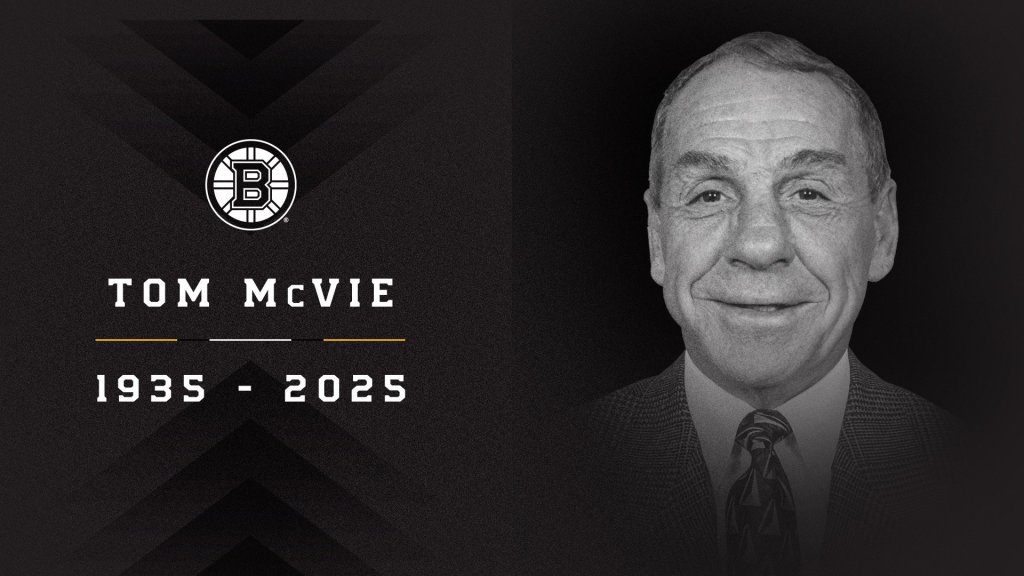
Members of the Western Canada Professional Hockey Scouts Foundation are in mourning today following the death of Tom McVie.
McVie, 89, died on Sunday night in Portland, Ore.
McVie is one of 29 scouts who will be go into the Foundation’s Wall of Honour at its second annual induction dinner in Okotoks, Alta., on July 29.
“We lost a legend,” said Scott Bradley, a member of the Foundation’s board of directors and a longtime McVie friend and associate. “I was fortunate to have been able to work with him for most of my career.”
Bradley is in his 32nd season as part of the Boston Bruins organization and his sixth as senior advisor to the general manager. He was inducted into the Wall of Honour in 2024, as was his father, Bart, who also had a long career with the Bruins.
“My Dad worked with him . . . they had a long-time association,” Scott added. “They were in Dayton together (with the IHL’s Gems) . . . I’ve been part of Tommy’s circle for a long time.”
A native of Trail, B.C., McVie had an 18-year playing career with most of it in the old Western Hockey League where he played with the Seattle Totems, Portland Buckaroos, Los Angeles Blades and Phoenix Roadrunners. He also played in the EHL and IHL before retiring after 1973-74.
Dwight Jaynes, a long-time Portand, Ore., journalist and friend of McVie’s, wrote on Monday that “he wanted to coach but said that he was told the stories of his drinking were going to keep him out of that job pool. So he flat-out quit — never to drink again. He then set off on a coaching journey through the minor leagues, to prove that a guy who never played in the NHL could coach there.”
McVie spent the next 27 seasons as a coach.
He was the head coach of the WHA’s Winnipeg Jets when they won the Avco Cup to end the 1978-79 season. By the next season, the Jets were in the NHL. They started 1-20-7 and were on a 25-game winless skid when McVie was replaced.
“When we won the Avco Cup championship,” McVie would tell people, “there’s a bridge near the old barn that they wanted to name after me. After 15 games in the National Hockey League, they wanted to throw me off that same bridge.”
He also spent time as the head coach of three NHL teams — the Washington Capitals, New Jersey Devils and Boston.
McVie didn’t get into scouting until 1998, by which time he was 63 years of age, when he joined the Bruins as a pro scout. He worked in that capacity and as a Bruins ambassador through 2019-20, getting his name on the Stanley Cup when Boston won the 2011 title.
In all, McVie was part of the Bruins organization for 37 years.
“The Bruins,” Scott Bradley said, “will miss him. He lit up a room when he was in it. There wasn’t a better story-teller or joke-teller.”
In a statement, Bruins president Cam Neely offered:
“The entire Boston Bruins organization is deeply saddened to learn of the passing of Tom McVie. Tom was a huge part of our Bruins family, having served as a coach, scout and ambassador for more than 30 years. His hockey mind, colorful personality, gruff voice, and unmatched sense of humor livened up every room he entered and will be dearly missed. Our thoughts and prayers are with Tom’s family and many loved ones.”
During his career, Tim Lenardon, a former scout and the Foundation’s co-ordinator, played for McVie in the AHL. Lenardon will be inducted into the Wall of Honour, along with McVie, in July.
“Tommy was a great person and a great coach,” Lenardon said. “He knew how to get the best out of everyone. He was like a second dad to me . . . hard but fair.”
Lenardon especially remembers some advice that he got from McVie: “Hey, Kid, you gotta shoot the (bleeping) puck more . . . and when you shoot hit the damn net” and “Don’t go offside for F sakes; it’s like back-checking for the other team.”
Garth Malarchuk, the Foundation’s chairman of the board, also remembers playing for McVie.
“He was a big-time competitor . . . no bullshit . . . you knew where you stood with him for sure,” Malarchuk said.
According to Jaynes, McVie was more than that, though.
“He was one of the best damn people I knew — a hilarious public speaker, loyal friend and all-around good guy to everyone he met,” Jaynes wrote. “He campaigned so hard to get his Buckaroo teammate and long-time friend Connie Madigan into the Oregon Sports Hall of Fame and accomplished it prior to Madigan’s death.”
Madigan and McVie were the best of friends, and both of them were legends in hockey circles. Madigan died just over a year ago — on Jan. 2, 2024. Scott Bradley said McVie was never the same after the loss of his friend.
————
Among McVie’s pearls of wisdom from over the years . . .
“My late wife always used to say to me ‘you love hockey more than you love me.’ I always said ‘Yeah, but I love you more than I love baseball.’ ’’
——
How long would it take for him to join a new team if offered a coaching job: “I can be out of town in 20 minutes. Thirty if I have stuff at the cleaners.”
——
“Two places never to make a drop pass: At home, and on the road.”
——
If I wasn’t coaching hockey,” he once told the Boston Globe’s Kevin Paul Dupont, “then I’d probably be driving the Zamboni.”
——
And then there was this story related to The Athletic in 2018:
“This writer, a young fellow, comes along and I’ve never seen him before. He was carrying a recorder, comes in and sticks the microphone in the face and asked, ‘Are you Tom McVie?’ Like, who doesn’t know who I am? Everyone knows who I am (laughter). So, I said, ‘Yeah.’ He said, ‘Well, let me ask you something. Are you the Tom McVie that coached the Washington Capitals and they set a league record for losing games?’ I said, ‘Yes. I’m Tom McVie.’ He said, ‘Are you the Tom McVie that coached the Winnipeg Jets and you broke that losing record? Now, you’re coaching the New Jersey Devils and you’re in danger of setting a new losing record?’ I said, ‘Yeah.’
“He said, ‘Did you ever think of quitting?’ And I said, ‘F–k, no. This is the only thing I’m really good at.’ ”
————
Tom McVie . . . hockey lifer . . . Wall of Honour inductee . . . dead at 89.
OKOTOKS, Alta. (Jan. 7, 2025) — The Western Canada Professional Hockey Scouts Foundation will add 29 names to its Wall of Honour when it holds its second induction dinner this summer.
The foundation announced today that the 2025 class will include three pioneers of scouting, seven from the early era (1968-80), 17 from the modern era, and two from the major junior ranks.
The 2024 class featured 44 inductees — five Pioneers, 17 from the modern era, 20 from the modern era, and two major junior scouts.
The Wall of Honour, which features a rolling video display with a brief bio of each inductee, is located in the Viking Rentals Centre in Okotoks, Alta. The induction dinner will be held there at a date yet to be announced.
“It’s a difficult process,” said Scott Bradley, who is a member of the Wall of Honour selection committee. “It’s an honour to be one involved in the Foundation and the process.”
Bradley is in his 32nd season with the Boston Bruins and now is in his sixth season as senior advisor to the general manager. His father, Bart, was a long-time Bruins’ scout who was inducted into the Wall of Honour in 2024.
“A lot of us have worked with all of these guys,” Scott added. “I come from a scouting family. The founding fathers . . . the pioneers . . . these men are legends to me.”
The three pioneers to be inducted this summer spent more than 70 years in the scouting business. Denis Ball, Jeep George and Jimmy Walker, all deceased, were true legends of the game.
The early era inductees feature Dennis McIvor, Tom McVie and Doug Overton Sr., along with the late Larry Hornung, Jim Pedersen, Larry Popein and George Wood.
The modern era scouts to be inducted are Darwin Bennett, Jim Benning, Shane Churla, the late Glen Cochrane, Milt Fisher, Ernie Gare Jr., Erin Ginnell, Brian Gross, Dennis Holland, the late Brad Hornung, Tim Lenardon, Stu MacGregor, Ray Payne, Brad Robson, Carter Sears, Marty Stein and Al Tuer.
The major junior scouts to be honoured in 2025 are Keith Wilson and the late Al Macpherson.
“It’s exciting to be included in the Wall of Honour,” said Gare Jr., who wrapped up his scouting career by spending 15 seasons with the New York Rangers.
The Hornungs, Larry and Brad, are father and son. Ginnell is the Foundation’s president; his late father, Pat (Paddy), was part of the inaugural induction class in 2024, as were Tuer’s late father, Graham, and Benning’s late father, Elmer.
“I was very surprised and honoured when Ron Delorme called me with the news,” said Payne, who has been scouting for more than 30 years.“I wasn’t aware of how the selection process worked, or who was part of the selection group. It was nice to know that it was something that was voted on by peers.”
Stein, who won four Stanley Cups while scouting for the Detroit Red Wings for 25 years, said: “I’m very honoured to receive this accolade on the Wall of Honour.”
Stein, who now is with the Buffalo Sabres, added that he really wanted “to thank the Wall of Honour committee for this tribute.”
The inductees are chosen by the foundation’s selection committee, which comprises Dennis Beyak, Scott Bradley, Ron Delorme, Gregg Drinnan, Erin Ginnell, Ross Mahoney, Garth Malarchuk, Shane Malloy, Mike Penny and Blair Reid, all of whom are on the board of directors or act as advisors to the board.
In making its choices, the committee looks at such things as longevity and dedication within the industry.
“Scouting is a tough and demanding job that requires a lot of travel and time away from your family,” said Mahoney, the Foundation’s vice-president who is an assistant general manager with the Washington Capitals. “I had the privilege of knowing most of the honourees from this 2025 class of inductees. They all were committed and dedicated individuals who represented their respective teams in a professional and classy manner.”
An especially poignant column from Jim Murray with a note from the Jim Murray Memorial Foundation . . .
We thought we’d kick off 2025 with a fan favorite from 1979 titled ‘If You’re Expecting One-Liners, Wait a Column’ where Jim shares the loss of his “good eye.”
Over the years, Jim saw more with one not so good eye than most of us see with a pair of working eyes. This column touches on some of the amazing moments he and his good eye enjoyed over the years.
—————
SUNDAY, JULY 1, 1979, SPORTS
Copyright 1979/THE TIMES MIRROR COMPANY
JIM MURRAY
If You’re Expecting One-Liners, Wait a Column
OK, bang the drum slowly, professor. Muffle the cymbals. Kill the laugh track. You might say that Old Blue Eye is back. But that’s as funny as this is going to get.
I feel I owe my friends an explanation as to where I’ve been all these weeks. Believe me, I would rather have been in a press box.
I lost an old friend the other day. He was blue eyed, impish, he cried a lot with me, laughed a lot with me, saw a great many things with me. I don’t know why he left me. Boredom, perhaps.
We read a lot of books together, we did a lot of crossword puzzles together, we saw films together. He had a pretty exciting life. He saw Babe Ruth hit a home run when we were both 12 years old. He saw Willie Mays steal second base, he saw Maury Wills steal his 104th base. He saw Rocky Marciano get up. I thought he led a pretty good life.
You see, the friend I lost was my eye. My good eye. The other eye, the right one, we’ve been carrying for years. We just let him tag along like Don Quixote’s nag. It’s been a long time since he could read the number on a halfback or tell whether a ball was fair or foul or even which fighter was down.
So, one blue eye is missing and the other misses a lot.
So my best friend left me, at least temporarily, in a twilight world where it’s always 8 o’clock on a summer night.
He stole away like a thief in the night and he took a lot with him. But not everything. He left a lot of memories. He couldn’t take those with him. He just took the future with him and the present. He couldn’t take the past.
I don’t know why he had to go. I thought we were pals. I thought the things we did together we enjoyed doing together. Sure, we cried together. There were things to cry about.
But it was a long, good relationship, a happy one. It went all the way back to the days when we arranged all the marbles in a circle in the dirt in the lots in Connecticut. We played one-old-cat baseball. We saw curveballs together, trying to hit them or catch them. We looked through a catcher’s mask together. We were partners in every sense of the word.
He recorded the happy moments, the beauty of a Pacific sunset, snow-capped mountains. He allowed me to see most of the major sports events of our time. I suppose I should be grateful that he didn’t drift away when I was 12 or 15 or 29 but stuck around over 50 years until we had a vault of memories. Still, I’m only human. I’d like to see again, if possible, Rocky Marciano with his nose bleeding, behind on points and the other guy coming.
I guess I would like to see Reggie Jackson with the count 3 and 2 and the Series on the line, guessing fastball. I guess I’d like to see Rod Carew with men on first and second and no place to put him, and the pitcher wishing he were standing in the rain someplace, reluctant to let go of the ball.
I’d like to see Stan Musial crouched around a curveball one more time. I’d like to see Don Drysdale trying not to laugh as a young hitter came up with both feet in the bucket.
I’d like to see Sandy Koufax just once more facing Willie Mays with a no-hitter on the line. I’d like to see Maury Wills with a big lead against a pitcher with a good move. I’d like to see Roberto Clemente with the ball and a guy trying to go from first to third. I’d like to see Pete Rose sliding into home headfirst.
I’d like once more to see Henry Aaron standing there with that quiet bat, a study in deadliness. I’d like to see Bob Gibson scowling at a hitter as if he had some nerve just to pick up a bat. I’d like to see Elroy Hirsch going out for a long one from Bob Waterfield, Johnny Unitas in high-cuts picking apart a zone defense. I’d like to see Casey Stengel walking to the mound on his gnarled old legs to take the pitcher out, beckoning his gnarled old finger behind his back.
I’d like to see Sugar Ray Robinson or Muhammad Ali giving a recital, a ballet, not a fight. Also, to be sure, I’d like to see a sky full of stars, moonlight on the water, and yes, the tips of a royal flush peeking out as I fan out a poker hand, and yes, a straight two-foot putt.
Come to think of it, I’m lucky. I saw all of those things. I see them yet.
Jim Murray Memorial Foundation | 25 Main St | Cooperstown, NY 13326
From all of us at the Jim Murray Memorial Foundation, we wish you a very Merry Christmas, Happy Holidays and a Happy New Year!
It is tradition here at the JMMF to share with you at Christmas time a 1995 Jim Murray column we like to call “the fruitcake column.”
Enjoy!
—————
December 24, 1995, SPORTS
Copyright 1995/THE TIMES MIRROR COMPANY
JIM MURRAY
He’d Rather Get Fruitcake
Stop me if you’ve heard this, but are you as tired as I am of the upbeat Christmas letters, the look-at-us, hurray-for-our-side family chronicles you get this time of year?
You know what I mean. The ones that start out something like this:
“Well, it’s been a banner year for the Mulligans. Christin finally had our first grandchild, a bouncing baby girl, 9 pounds 7 ounces, who’ll probably grow up to be our first woman President.
“John has taken over the Federal Reserve System. Paula is still working on a cancer cure at Johns Hopkins and we expect a breakthrough any day now. A Nobel Prize, perhaps?
“Dad and I are enjoying our retirement. He has produced a new hybrid rose for our garden that is hailed by horticulturists everywhere.
“I am still busy with my charity work, saving the whales, protecting the spotted butterflies, supporting a Hottentot village in the South Pacific, and still have time to combat illiteracy in our universities and lobby for outlawing the death penalty but legalizing abortion. Dad thinks I take on too much but I was on Howard Stern twice last year and am taking dead aim on Oprah Winfrey.
“Phil got his PhD in optical engineering and is working on the telescope with which they hope to bring in Heaven by the end of the century. Rita is in the Peace Corps some place where they can only get a message out by bottle but finds her life fulfilling and thinks the dysentery is only temporary. Harriet is still into archaeology and they have found the lost city of an Aztec sun god of the second century BC, but she can’t find her car keys.
“So, all in all, it’s been a joy and we look forward to more of the same in 1996 and hope you all are enjoying the happiness and success that has been our fortunate lot this year.”
Well, when I read those, I have this irresistible urge to pen the kind of letter I dream of receiving:
“Well, it’s been a good year on balance for the Mulligans. Clarence got out of prison in time for Christmas and the good news is, he likes his parole officer.
“Hilda got another divorce, her ninth, and she has moved back home with her 11 kids. We don’t know where her ex-husband is. Neither do the police. He’s two years behind in child support to Hilda and 10 years behind to his other five wives.
“Paul has stopped sucking his thumb. We’re proud of him. He’s only 16.
“Carl is doing better. He’s happy to say he cleared $30,000 last year begging from cars at the corner of Crescent Heights and Santa Monica Boulevard. He is buying a new Mercedes. He loves it when they yell at him, ‘Get a life!’
“Frank lost his job at the factory. They’re downsizing. Particularly with guys like Frank who they said was late 47 times last year, didn’t show up at all on 20 other days and got caught making book in the company cafeteria.
“Tom goes around burning flags. He’s not unpatriotic. He says it’s a good way to meet girls.
“Alice’s movie career is progressing nicely. She got to wear clothes in her last flick — a garter belt. She also got a speaking part — all moans. It’s not Shakespeare but it’s a start.
“Jonathan flunked out of another college. The dean explained, ‘Jonathan missed the question “What year was the War of 1812?” but he only missed by 2.’ We tell him if he had a good jump shot, he could miss it by a century and still graduate cum laude.”
Face it. Wouldn’t a letter like that be a welcome relief? So, have a great New Year. Just don’t tell us about it, eh?
Jim Murray Memorial Foundation | 25 Main St | Cooperstown, NY 13326 US
This is the third of a three-part look at some of the books I read over the past year. Nothing brought back more memories than That Old Gang of Mine, featuring Bill Spunska and some of the gang from Scrubs on Skates. Oh, those were the days! . . . I hope you were able to find a title that intrigued you over the past three days, and here’s to a Merry Christmas and a Happy New Year.
——
Nocturne — Ed McBain is the author of a series of books on the 87th Precinct. This is No. 48 in the series, and it begins with the murder of an elderly woman who once was a renowned concert pianist. It isn’t long before there are more bodies and some missing money. Oh, and there’s a dead cat; it was shot alongside the old woman. Lots of good gritty stuff here.
——
Playing for Keeps: Michael Jordan and the World He Made — As much as this book, which was published in 2000, is about Michael Jordan’s climb to the top of the NBA’s world and his life in the business world, primarily with Nike, it’s about basketball’s changing times as money took over. Author David Halberstam wrote this terrific book without sitting down with Jordan, who agreed to be interviewed but later changed his mind. There is lots here about basketball under coach Dean Smith at North Carolina, what the arrival of ESPN meant to the NBA, the bad boy Detroit Pistons, the importance of Phil Jackson to Jordan’s career, the enigmatic Jerry Krause, who was the Chicago Bulls’ general manager, and a whole lot more. I highly recommend this book.
——
Playing for Pizza — One day, while in Italy, John Grisham, the author of so many legal thrillers, happened upon a football game — as in American football. This book came out of that experience. It’s fluff, but there is some good fun between the covers as QB Rick Dockery tries to rediscover some positives with the Parma Panthers. No, there really aren’t any surprises. The good news is that the book isn’t especially long.
——
Raylan — Published in 2012, this was author Elmore Leonard’s last book before his death in 2013. The book, which chronicles the adventures of U.S. Marshal Raylan Givens, is highlighted by Leonard’s usual gift for dialogue and whacky characters. Leonard had featured Givens in earlier works (Pronto, Riding the Rap, Fire in the Hole), which led to the TV series Justified. Raylan, Leonard’s 45th novel, was written after Justified already was on the small screen.
——
Resurrection Walk — You can’t go wrong with a book by Michael Connelly, can you? In this one, Harry Bosch, retired from the LAPD, is working for his half-brother, Mickey Haller, the Lincoln Lawyer. And this one is all about whether a young woman killed her husband, who was a cop, and was wrongfully convicted in a conspiracy involving more cops.
——
The Rise and Fall of the Press Box — Leonard Koppett had a lengthy career as a sports writer with stints at The New York Times, New York Herald Tribune, New York Post, Palo Alto Times and Oakland Tribune. Yes, he knew the way to a whole lot of press boxes. In this book, finished two weeks before he died on June 22, 2003, at 79, he walks the reader through the rise and fall of the newspaper industry, while detailing the differences faced by today’s sports writers as compared to those who were on the beats 70 and 80 years ago. Insightful and entertaining.
——
The Street Lawyer — Published on Jan. 1, 1998, this was author John Grisham’s ninth novel. Michael Brock, one of 800 lawyers with a high-powered firm in Washington, D.C., is at the plot’s centre as Grisham takes aim at such firms and the homeless issue. It’s good Grisham, and will keep you out of trouble for a day or two.
——
Taking Down Trump: 12 Rules for Prosecuting Donald Trump by Someone Who Did it Successfully — Tristan Snell, the author of this book, was an assistant attorney general for the state of New York who led the team that beat Donald Trump in court in a case involving the defrauding of hundreds of students to the tune of US$42 million by Trump University. In his book, Snell details how things went down — from start to finish — and really explains all that went into it. Yes, it’s a blueprint for the legal community. It’s also a good look into what is a seriously flawed justice system.
——
Texas — Another magnificent work of historical fiction from the prolific James Michener, this one, published in 1985, covers the Lone Star State’s history, starting with the Spanish explorers. It goes on to explore the impact of, among other things, religion, slavery, missions, immigration, ranching, education and, yes, football on the state. Keep in mind that it’s 1,076 pages long so isn’t exactly a two-day read. But it’s well worth whatever time you might want to invest in it. (P.S.: It took me almost three weeks as I finished it 21 hours before it was due back at the library.)
——
That Old Gang of Mine — If you are of a certain vintage, you will have fond remembrances of reading Scrubs on Skates, Boy on Defense, and Boy at the Leafs’ Camp, author Scott Young’s trilogy about Bill Spunska and a handful of other Winnipeg high school hockey players. The first of those, Scrubs on Skates, was published in 1952. A couple of months ago, I rediscovered That Old Gang of Mine, which was published in 1982. Canada’s national men’s hockey team has perished in a plane crash and the Winter Olympics, set for Moscow, are fast approaching. What to do? Why not get the gang from Daniel Mac in Winnipeg back together, fill in a few holes and have them represent Canada? That’s exactly what happens in a book that brought back a lot of childhood memories. Unlike the first three books, this one is an adult read that even includes a federal minister having an affair with the national team’s coach.
——
Traitors Gate — This is the sixth book in author Jeffrey Archer’s series that chronicles the life of William Warwick, who by now is Chief Superintendent with London’s Metropolitan Police. This time, Miles Faulkner, Warwick’s long-time protagonist, is working on a heist that involves lifting the Crown Jewels as they are being transported from the Tower of London to Buckingham Palace. The characters are familiar and there are a couple of subplots, involving Warwick’s wife and a fellow officer, but there isn’t much in the way of surprises. Still, like the first five books in the series, it’s a nice, comfortable read.
——
12 Months to Live — Jane Smith is a defence lawyer with a client she despises who has been charged with the deaths of three people from one family. She also has been diagnosed with cancer and given 12 months. Oh, and people connected to the trial keep disappearing or being killed. Authors Mike Lupica and the ultra-prolific Richard Patterson spin a gritty tale that is quite readable. . . . I also read the sequel, Hard to Kill, which is similar to the opener. And with the way Hard to Kill ended, it would seem there will be a third entry in the series.
——
A Year in the Sun: The Games, The Players, the Pleasure of Sports — George Vecsey, a sports columnist with The New York Times, chronicles his travels through 1986, including soccer’s World Cup in Mexico City, the Mets’ World Series victory (hello, Bill Buckner), some tennis, some basketball and hockey and a whole lot more. Vecsey wasn’t a hack-and-slash columnist; rather he had a soul, and he shows it here. This is a favourite and I can’t believe that I only discovered it in May. Having spent more than 40 years in newspapers, always in sports, there are parts of this book to which I could relate, especially when it came to lugging equipment on road trips.
The second part of this year’s Book Shelf includes a baseball book that should be on every fan’s to-be-read list. Tyler Kepner’s The Grandest Stage: A History of the World Series is truly a diamond gem.
——
The Golden Spruce: A True Story of Myth, Madness and Greed — Published in May 2005, this is author John Vaillant’s best-selling story of a special tree and how it met its bitter end. But, like Vaillant’s Fire Weather, it’s more like three or four books in one, because it’s about the Haida Gwaii’s fight to avoid extinction in the Pacific Northwest and the quandary in which the logging industry finds itself as it destroys the very thing that keeps it alive. This was Vaillant’s first book.
——
The Grandest Stage: A History of the World Series — This one, published in 2022, should be on the book shelf or in the ereader of any sporting fan. Author Tyler Kepner was The News York Times’ national baseball writer when he wrote this one and it’s a diamond gem. There are all kinds of interesting anecdotes about some of the best- and least-known incidents in World Series history.
——
Hawaii — Magnificent. Author James Michener’s historical look at Hawaii comes in at more than 1,000 pages. And it’s a wonderful 1,000 pages. He apparently took four years to research the subject, then three years to write the book. It took me a month to read it because I was wanting to savour it; like a lovely pinot noir, I refused to rush through it.
——
The Heat Will Kill You First: Life and Death on a Scorched Planet — What is climate change-induced heat doing to our planet, and what does the future hold? Author Jeff Goodell, an environmental journalist, has the answers in this book that was published in 2023, meaning it’s quite up to date. Here’s what Jennifer Szalai wrote in a New York Times review: “As this terrifying book makes exceptionally clear, thinking we can just crank up the A.C. is a dangerous way to live.” . . . If you’re one of those climate-change deniers, you don’t want to read this one because it’s got all of the evidence.
——
Heaven and Hell in the NHL: Punch Imlach’s Own Story — Published in 1982, this is Punch Imlach’s story in his own words, as told to writer Scott Young. Imlach focuses mostly on his time with the Buffalo Sabres and his second-go round with the Toronto Maple Leafs. And, no, he doesn’t pull any punches. This was another book I rediscovered; I only wish I knew what kind of impact it had in 1982 because he certainly names a lot of names, including Darryl Sittler, if you know what I mean.
——
Hotel — In researching this 1965 novel, author Arthur Hailey actually lived in the Roosevelt Hotel in New Orleans for two months. The research paid off because this book about the St. Gregory Hotel and its staff over a five-day period is absorbing with a whole lot of angles. It later became a movie and then a TV series that ran for five years.
——
The Housekeepers — Author Alex Hay’s first novel involves a heist set in 1905 London. It’s not your average heist, either. A group of women, led by a fired housekeeper, decide to rob a mansion during a gala affair that is being held right there. They not only want to rob the joint; they want to clean it right out. Some good fun here.
——
Inside The Empire: The True Power Behind the New York Yankees — With the 2024 Yankees in the MLB playoffs in October, I dug into Inside the Empire. It’s a look at all aspects of the Yankees’ organization, with authors Bob Klapisch and Paul Solotaroff wrapping it all around the 2018 season. This is a riveting look at what many baseball fans refer to as the Evil Empire.
——
In the Galway Silence — Ken Bruen’s writing style takes a few pages to get used to, but Irish PI Jack Taylor, who put the rude in crude, makes it all worthwhile. Taylor has a whole lot of skeletons in his closet and if you can be addicted to something he likely is. But Bruen’s Taylor-centred books are worth reading just for Taylor’s repartee.
——
Let Me Finish — Roger Angell, who died on May 20, 2022, at the age of 101, was a wonderful baseball essayist. However, there is little about baseball in this work, which was published in 2006. Instead, he writes about his life, family and a whole lot more, and it is emotional and wonderful. If you enjoy great writing and a lot of nostalgia, this one’s for you.
——
Lightfoot — Published in 2017, author Nicholas Jennings’ book on Gordon Lightfoot is an intriguing and honest chronicle of the life and loves of a man who struggled with many demons. Lightfoot, who died on May 1, 2023, was one of the greatest singer/songwriters we have known. But he struggled with booze and family life, and after reading this you are free to wonder if he was ever really happy before the last few years of his life — yes, after he had stopped drinking. You also will find yourself wondering just how much of a role the booze played in the writing of all those marvellous songs.
——
The Longmire Defense — In years past, I frequently watched episodes of Longmire, the TV show based on author Craig Johnson’s novels. However, I hadn’t read any of the books. Until this one, that is. Walt Longmire is the sheriff of Wyoming’s Absaroka County, and is working a cold case with all signs pointing towards the involvement of his grandfather. Published in 2023, this is the 19th of Johnson’s books in the Longmire series. I enjoyed it enough that there will be more of these books in my future. . . . During 2024, I also read The Highwayman and The Dark Horse, both books in the Longmire series. Quite enjoyed both of them.
While I stopped writing here on a regular basis quite a while ago, I have continued to compile thumbnails of some of the books I have read over the past year.
So . . . with Christmas on the horizon, the annual three-part Book Shelf feature is appearing here this week.
I hope you enjoy it, even though it’s far from featuring all sports-related books — and perhaps it will help with your Christmas shopping.
Enjoy!
————
If you haven’t already read it and are only going to read one book in the next while, you should make it author John Vaillant’s Fire Weather: The Making of a Beast.
I re-read it as June was turning into July, finishing it while we were under a heat warning and waiting for the thermometer to hit 40C. This was the best book I read in 2023 and it’s at the top of the list again this year.
This is an accounting of the 2016 fire that swept through Fort McMurray, Alta., but it really is a whole lot more than that, including more than ample evidence that big oil is complicit in the climate change that we now are experiencing.
Fire Weather is right out of Stephen King country, only it isn’t fiction. It’s frightening; it’s glorious; it’s devastating. It’s all of that and so much more. It also was a finalist for the 2024 Pulitzer Prize for general nonfiction.
From the nomination: Fire Weather is “an unsparing account of the rapacious Alberta (oil sands) fire, fuelled by an overheated atmosphere, dry forest and omnipresent petroleum products, that consumed the town of Fort McMurray at the heart of Canada’s oil industry, which brings the global crisis of carbon emissions and climate change into urgent relief.”
Vaillant supplies all the scientific evidence needed in explaining to where we earthlings are headed. He also explains that what we don’t know is this — is it too late?
At one point he writes:
“There have been five major extinctions in Earth’s history, but only the end-Permian has been called ‘the Great Dying.’
“It is to this terminal catastrophe — caused, not by meteorites, or by shifts in Earth’s orbit, but by unrelenting combustion — that geoscientists are comparing our own Petrocene Age. Our fire-powered civilization is now in the early stages of replicating that ‘one-in-a-lifetime’ extinction event. It is widely understood in the scientific community that a sixth major extinction is under way, and that it is wholly due to human activity. As confronting as this idea may be, it shouldn’t come as a surprise: never in Earth’s history has there been a disruption like us: billions of large, industrious primates whose evolving behaviour is almost entirely dependent on the universal burning of hydrocarbons. Nor has Earth ever had to carry (at the same time, no less), billions of methane-emitting livestock the size of pigs and cattle.
“There is a terribly symmetry in this. What we are allowing to happen now with carbon dioxide and methane is what cyanobacteria did with photosynthesized oxygen billions of years ago: gassing the planet to death.”
—— OK. Enough of that kind of talk. On to Part 1 (of 3) of The Bookshelf, a look at most of the books that I read in 2024. . . .
Bad City: Peril and Power in the City of Angels — Paul Pringle, a Pulitzer Prize-winning investigative reporter with the Los Angeles Times, has stumbled on a drug-riddled scandal involving the head of USC’s prestigious medical school. Write the story. Print the story. Right? Not so fast. It seems there were people at the Times with ties to USC and they threw up one roadblock after another. After more than a year, the story got printed, and this book, which brings to mind Spotlight and All the President’s Men, tells the story of all that went into the investigative reporting, which uncovered two other USC scandals before it was done, and all that went into getting it into print.
——
Billy the Kid: The War for Lincoln County — As someone whose early reading habit was fuelled by Louis L’Amour, I have long had a weak spot for good westerns. And make no mistake — this is a really good one. In this novel, author Ryan C. Coleman explores how a young man came to be William Bonney, aka Billy the Kid, one of the wild west’s most-notorious gunfighters.
——
Bury My Heart at Wounded Knee — In this best-seller that was published in 1970, author Dee Brown tells the story of the settling of the American West, and he does it from the side of the numerous Indian tribes, many of which ended up being wiped from the planet. From Time magazine’s review: “Compiled from old but rarely exploited sources plus a fresh look at dusty Government documents, (it) tallies the broken promises and treaties, the provocations, massacres, discriminatory policies and condescending diplomacy.” This is a thoroughly engrossing read, but, oh my, is it painful!
One quotation from Sitting Bull really stayed with me:
“And so, in the summer of 1885, Sitting Bull joined Buffalo Bill’s Wild West Show, travelling throughout the United States and into Canada. He drew tremendous crowds. Boos and catcalls sometimes sounded for the ‘Killer of Custer,’ but after each show these same people pressed coins upon him for copies of his signed photograph. Sitting Bull gave most of the money away to the band of ragged, hungry boys who seemed to surround him wherever he went. He once told Annie Oakley, another one of the Wild West Show’s stars, that he could not understand how white men could be so unmindful of their own poor. ‘The white man knows how to make everything,’ he said, ‘but he does not know how to distribute it.’ ”
——
Collision of Power: Trump, Bezos and The Washington Post — Author Martin Baron was the executive editor of the Washington Post when Amazon honcho Jeff Bezos purchased the newspaper. Baron was in that office through Donald Trump’s first four-year presidency. Those four years included all kinds of verbal attacks by Trump on Bezos and the Post. All of that, and more, is chronicled in great detail here, as is the impact of social media on young people entering newsrooms, something that ultimately led to Baron’s retirement.
——
A Cool Breeze on the Underground — I’m a big Don Winslow fan; the man can write, for starters. Also, he has great characters and does a wonderful job of developing them. Such is the case here, in one of his earliest works, the first of five books featuring Neal Carey as the main character that was published in 1991. A pick-pocket as a youngster, Carey now is a private detective of sorts; in this one, he is tasked by a U.S. senator and his wife with bringing back a teenage runaway from London. Lots of grit in this one, too. . . . I also read While Drowning in the Desert, the fifth of Winslow’s Neal Carey books. It also was a fun read.
——
The Country and the Game: 30,000 Miles of Hockey Stories — Everyone is well aware that hockey plays a rather large role in the lives of many Canadians. But just how large? And what about in some of the places that are somewhat off the beaten path? Author Ronnie Shuker wanted to find out, so he packed up his car — named Gumpy, after, yes, Gump Worsley — and went coast to coast to coast, taking notes the whole time. The result is an entertaining piece of hockey lore.
——
The Daybreakers — When I was a whole lot younger than I am today, I was a huge fan of Louis L’Amour’s western novels. I revisited his work in the heat of July 2024 and I wasn’t at all disappointed. This book, from 1960, is the first of 17 he wrote about the Sackett family, and it’s just really good storytelling. There are a whole lot of L’Amour books out there, and they are quick and entertaining reads. . . . I also revisited another Sackett book, The Quick and the Dead, and it didn’t disappoint, either.
——
The Deep Blue Good-by — While I had heard of Travis McGee, for some reason I had never read any of writer John D. MacDonald’s 21 books in which he is featured. Well, this one is the first, published in 1964, and it is terrific. McGee is a salvage consultant, whatever that means, who is a PI when he needs the dough. He lives on a houseboat in Florida. While McGee searches for a fraudster who specializes in feasting on vulnerable females, the reader should be prepared for MacDonald’s delicious habit of pontificating on the woes of society, with many of those thoughts still in play all these years later. . . . (BTW, the first four books in the series all were published in 1964.)
——
The Diamond Eye — Author Kate Quinn’s book — it’s historical fiction — tells the story of Lyudmila Pavlichenko, who went from aspiring Russian historian/librarian to a sniper known as Lady Death in the early days of the Second World War. An engrossing story that involves a friendship between Lady Death and Eleanor Roosevelt, the wife of the then-U.S. president. This one was rather different from my usual reading tastes, but I quite enjoyed it. I had it finished before I discovered that it was based on a true story, too.
——
Even Dogs in the Wild — Author Ian Rankin’s John Rebus is one of the really good characters in crime fiction. And the Rankin-Rebus connection comes through, as usual, in Even Dogs in the Wild. Rankin also manages to surround Rebus with interesting characters and that certainly helps make his books so readable.
——
The Exchange — The prolific John Grisham offers this one up as a sequel to The Firm, which introduced us to Abby and Mitch McDeere. However, this one doesn’t nearly approach The Firm as a tense legal thriller. I really was expecting a twist or two, but . . .
——
Fer-de-Lance — This book, written by Rex Stout and published in 1934, introduced the world to Nero Wolfe. It also gave us Wolfe’s assistant, Archie Goodwin, who gets more print time than Wolfe and definitely steals the show. Yes, it’s a mystery novel — there has been a murder on a golf course and Wolfe wants the 50-grand reward being offered by the widow to solve it — and a great one. BTW, before Stout was done, according to Wikipedia, he had Wolfe in 33 books, along with 41 novellas and short stories.
——
Five Seasons: A Baseball Companion — “Lifelong Phillies fans closely resemble the victims of a chronic sinus condition; they sometimes feel better but never for long.” That is just one sentence from this gem of a book by Roger Angell, perhaps the No. 1 baseball essayist of our time. Here, he writes about the MLB seasons from 1972 through 1976, and he does it with wit, clarity and a real love for the game. He also takes MLB — especially the owners — to task on more than one occasion for what it has done to a game that now decides its champion on frigid fall nights. Great stuff!










 TAKING NOTE