Welcome to a site where we sometimes provide food for thought, and often provide information about the Western Canada Professional Hockey Scouts Foundation.
The Western Canada Professional Hockey Scouts Foundation will be inducting 45 past and present-day scouts into its Wall of Honour at its inaugural dinner at the Centennial Arena in Okotoks, Alta., on July 30. Meet three three of the inductees . . .
LORNE DAVIS
(July 20, 1930 — Dec. 20, 2007)
LORNE DAVIS
From Regina, he is mostly recognized for 29 seasons on the Edmonton Oilers’ scouting staff. Started with 10 seasons with the St. Louis Blues, beginning in 1966. Also worked with the WHA’s Houston Aeros and the NHL’s New York Rangers. . . . Joined the Oilers for 1979-80 and stayed until his death. Was on their staff for five Stanley Cup titles — 1984-85-87-88-90. . . . Had 15-season pro career as a player, winning a Stanley Cup with the 1952-53 Montreal Canadiens. Also played with the Chicago Black Hawks, Detroit Red Wings and Boston Bruins. . . . Won bronze medal playing with Canada at the 1966 World championship and was one of Canada’s co-coaches at the 1980 Olympic Winter Games. . . . Inducted into Regina Sports Hall of Fame in 2003.
CHARLIE HODGE
(July 28, 1933 — April 16, 2016)
CHARLIE HODGE
A native of Lachine, Que., he was an NHL goaltender for 17 seasons, split between the Montreal Canadiens, Vancouver Canucks and Oakland Seals. . . . Won the Stanley Cup eight times — six with Montreal and two as a scout with the Pittsburgh Penguins. . . . Went into real estate once playing career concluded. That ended after 10 years when Winnipeg general manager John Ferguson hired him to scout Western Canada for the Jets, a stint that lasted six seasons. . . . Later spent 16 years with the Penguins and five with the Tampa Bay Lightning. . . . A seat in Pacific Coliseum, former home of the Canucks and the WHL’s Vancouver Giants, carries this plaque: “Reserved for Charlie Hodge, Canucks Alumni and NHL scout.” . . . In his younger days, he was a world-class canoe racer.
BARRY TRAPP
(Aug. 14, 1941 —)
BARRY TRAPP
Born in Balcarres, Sask., he is known throughout the hockey community as Trapper. . . . After spending 10 seasons with NHL Central Scouting, five as chief scout, he left in 1996 to take over as Hockey Canada’s director of scouting. That relationship lasted six seasons. Won one gold medal, two silver and two bronze with Canada’s national junior team and six straight titles with Canada’s U18 summer team. . . . Left Hockey Canada to take over as director of amateur scouting with the Toronto Maple Leafs and spent four seasons there. . . . Also was with the Phoenix Coyotes for one season. . . . Finished up scouting for the WHL’s Regina Pats, a team with which he had a long association. . . . Retired in 2023 after more than 60 years in hockey.
The Western Canada Professional Hockey Scouts Foundation will induct 45 members of the scouting fraternity into its Wall of Honour this summer.
The banquet is scheduled to be held in Okotoks, Alta., on Monday, July 29.
Comprising three Matrix screens, the WCPHSF Wall of Honour video presentation will be on permanent display at the Centennial Arena in Okotoks.
The first inductees feature five pioneers of the scouting fraternity, including Danny Summers, who returned from the Second World War to play for the CFL’s Winnipeg Blue Bombers before getting into scouting, and Murray (Torchy) Schell, who spent summers as an assistant equipment manager with the CFL’s Saskatchewan Roughriders while he was scouting.
Also being inducted will be 17 scouts from the Early Era (1968-80), including Elmer Benning, who put more than 1 million miles on one car while on the scouting trail; Pat (Paddy) Ginnell, who was a legendary junior coach before turning to scouting; and Del Wilson, a long-time scout who also was a founding father of the major junior WHL.
There also will be 20 scouts from the Modern Era (1981-present) inducted, including Vaughn Karpan, who has been a key figure with the Vegas Golden Knights; Al Murray, one of the architects of the Tampa Bay Lightning’s success; and Barry Trapp, who retired in August 2023 after more than 60 years in the game.
Rounding out the inaugural class will be Lorne Frey and the late Graham Tuer, both of whom had lengthy scouting careers in junior hockey.
Garnet (Ace) Bailey also will be honoured. Bailey scouted for the Edmonton Oilers and then the Los Angeles Kings. He was en route to the Kings’ training camp aboard United Airlines flight 175 when it crashed into the South Tower of the World Trade Center in New York City on Sept. 11, 2001.
“Our selection committee did an excellent job of recognizing these candidates for the Wall of Honour,” Foundation president Erin Ginnell said. “These scouts are not only builders of the game that put thousands of players into the NHL and pro ranks, but also represented their teams and the game with class, professionalism and determination to succeed. “A lot of these honorees were real mentors to people like myself when I first started; they were always there with help travelling, directions, and generally just made you feel a part of the fraternity.”
The complete list of inductees (* – denotes deceased):
EARLY ERA (1968-1980): *-Elmer Benning, *-Bart Bradley, *-Lorne Davis, *-Gerry Ehman, *-Barry Fraser, *-Pat Ginnell, Ted Hampson, *-Charlie Hodge, Earl Ingarfield Sr, *-Lou Jankowski, Marshall Johnston, Bill Lesuk, *-Ian McKenzie, *-Gerry Melnyk, Bob Owen, *-Clare Rothermel, *-Del Wilson.
MODERN ERA (1981-present): Scott Bradley, Craig Button, John Chapman, George Fargher, Tony Feltrin, Bruce Franklin, Bruce Haralson, Archie Henderson, Les Jackson, Vaughn Karpan, Ross Mahoney, Bert Marshall, Wayne Meier, Al Murray, Gerry O’Flaherty, Kevin Prendergast, Blair Reid, Glen Sanders, Peter Sullivan, Barry Trapp.
JUNIOR: Lorne Frey, *-Graham Tuer.
As well, five scouts from Western Canada were honoured at the Sept. 30 startup banquet in Okotoks with the WCPHSF’s Recognition and Dedication Service Award. Those five are Ron Delorme, Glen Dirk, Garth Malarchuk, Don Paarup and Mike Penny.
——
“Our committee’s selections were primarily based on years of combined service as a scout and/or an association to the scouting process,” Garth Malarchuk, the Chairman of the Foundation’s board of directors, said. “I think everyone who has been associated with the scouting fraternity will agree that this is a pretty impressive group of individuals that we will be honouring. “Trust me, our committee could easily have added another 15-20 deserving individuals to this list, but we had to cut it off somewhere.” Moving forward, we certainly don’t want to miss anyone and the plan is to keep adding individuals to our Foundation’s Wall of Honour on an annual basis.”
——
The startup banquet on Sept. 30 was a rip-roaring success, highlighted by a roast of Hockey Night in Canada host Ron MacLean, along with silent and live sweater auctions. If you weren’t fortunate enough to attend, you are able to find a highly entertaining video of Sportsnet’s Elliotte Friedman roasting MacLean at hockeyscoutsfoundation.com.
——
Planning is well underway for the inaugural induction banquet on July 29 in Okotoks. Banquet details, including information on tickets, will be announced in the near future.
It's being reported that the Vancouver Giants will announce on Thursday that they've hired Manny Viveiros as their new head coach. Viveiros played four seasons with the Prince Albert Raiders in the 80's and was named an All-Star three times. Successful WHL coaching resume too. pic.twitter.com/zmYxKCLFWV
— New West Bruins – WHL History Page (@NewWestBruins) August 22, 2023
It would appear that Manny Viveiros is back in the WHL. Steve Ewen of Postmedia, citing “multiple sources,” reported on Monday that the Vancouver Giants are expected to introduce Viveiros as their new head coach during a news conference at their annual golf tournament at Tsawwassen Springs on Thursday. . . . Viveiros 57, spent the past three seasons as head coach of the Henderson Silver Knights, the AHL affiliate of the NHL’s Vegas Golden Knights. . . . Michael Dyck, who had been the Giants head coach through five seasons, now is an assistant coach with the AHL’s Toronto Marlies. . . . Ewen wrote: “According to sources, Viveiros was one of the first people Giants general manager Barclay Parneta reached out to when Dyck signed on with the Marlies. Viveiros was a Giants’ rival in the WHL the season before the Henderson stint, guiding the Spokane Chiefs in the COVID-19-shortened 2019-20 campaign. His top assistant coach there was Adam Maglio, 37, who is currently getting ready for his second season with Vancouver.” . . . Viveiros was the GM and head coach of the 2017-18 Swift Current Broncos, who won the WHL championship. Following that season, his second with the Broncos, he joined the Edmonton Oilers as an assistant coach. After one season there, he signed with Spokane. . . . With Viveiros in Vancouver it leaves the Lethbridge Hurricanes as the only one of the WHL’s 22 teams without a head coach.
Bob Strumm, whose involvement with the WHL goes back to 1976, is among the Regina Sports Hall of Fame’s newest inductees who were announced on Tuesday. . . . Strumm, who is from Saskatoon, was an assistant to Ed Chynoweth, then the WHL’s president, when it opened its Calgary office in 1976. . . . Now a Las Vegas resident, Strumm was with the Regina Pats for seven seasons (1979-86), at various times serving as co-owner, GM and head coach. . . . Kevin Gallant, the Pats’ play-by-play voice back in the day, points out that Regina won one WHL title and three Eastern Conference championships under Strumm and also had the six highest-scoring seasons in franchise history. . . . Strumm also worked in the WHL with the Billings Bighorns (general manager, 1977-79) and Spokane Chiefs (GM, 1987-90). . . . Also among the 2023 inductees — it’s the 20th anniversary class — is Rob Vanstone, who covered the WHL and the Pats during his lengthy stay at the Regina Leader-Post. He now is the senior writer/historian with the CFL’s Saskatchewan Roughriders. . . . Strumm will be inducted as a builder, with Vanstone going in as a patron.
They’ve re-released this but, sadly, now your pitcher has to come out after five innings to avoid digital arm injury. pic.twitter.com/NNczVU1yMy
The Portland Winterhawks, who lost two senior members of their scouting staff earlier this summer, have added five scouts to their organization — Rjay Berra, who will be a B.C. regional scout out of Prince George; Josh Bonar, who will do the same out of the Okanagan; Ed Fowler, who also will scout in B.C., but out of Surrey; Alex Overhardt in Colorado; and William Wrenn in Alaska. . . . Overhardt spent four seasons (2014-18) playing for the Winterhawks; Wrenn, who is from Anchorage, joined them from the U of Denver during the 2010-11 season and was team captain in 2011-12 before going pro. . . . Bonar also is a former WHL player, having been with the Kamloops Blazers, Vancouver Giants and Regina Pats (2000-03). . . . Berra played with the BCHL’s Prince George Spruce Kings and the AJHL’s Grande Prairie Storm. . . . Fowler spent nine years with the Victoria Royals, including three (2019-22) as their director of player personnel. . . . On Aug. 4, the Winterhawks announced that Brad Davis, who had scouted out of Manitoba for 16 years, and Ray Payne, who had been with them for six years, both had left the organization.
A HUGE thank you to former Pats Assistant Coach, Assistant GM and Scout Barry Trapp for his dedication and years of service to the organization!
Spencer Trapp, the 37-year-old grandson of Barry Trapp, has joined the junior B Fort Knox franchise of the Prairie Junior Hockey League as an assistant coach. . . . Spencer’s father, Doug, played with the WHL’s Regina Pats and is a former Fort Knox head coach. . . . As a player, Spencer spent three seasons with the SJHL’s Notre Dame Hounds before going on to player NCAA hockey at Holy Cross.
Jack Todd, writing in the Montreal Gazette: “After 115 games, 24-year-old Vladimir Guerrero Jr. is hitting .265 with 18 home runs and 72 RBIs. At that age, his father had 193 hits for the season, including 42 home runs and 37 doubles, drove in 131 runs and hit .316 while swinging at everything in his area code. There is no comparison.” . . .
——
Todd, again: “Why are we not surprised to see Angela price wearing a T-shirt touting ‘Kennedy for President’? Meaning anti-vaxxer Robert F. Kennedy Jr.”
Morten Kjolby has signed on as the general manager and head coach of the Summerland Steam, who play in the Kootenay International Junior A Hockey League. . . . Kjolby, 33, is from Denmark, and has coached there and in Spain at the U18 and U20 levels. Last season, he was on staff with the Cold Lake, Alta., Aeros of the Canadian-American Junior Hockey League. . . . John DePourcq, who spent seven seasons (2012-19) as the Steam’s head coach, is returning after three years away to serve as an assistant coach and advisor. . . . There isn’t any mention in the Steam’s news release of James McEwan, who was named general manager and head coach on July 23. It would appear that the Steam-McEwan arrangement was rather short-lived.
Brad Flynn, who has WHL coaching experience, has joined the OHL’s Kitchener Rangers as an assistant coach. Flynn, 38, is a rarity in that he has coached in all three major junior leagues. . . . That includes a three-season stint (2018-21) with the WHL’s Red Deer Rebels. . . . In 2021-22, he was an associate coach with the OHL’s Saginaw Spirit. Last season, he was an assistant coach with the Brock University Badgers of USports.
If you are interested in being a living kidney donor, more information is available here:
The man known throughout the hockey world as Trapper has announced his retirement.
Barry Trapp said on Friday that “after more than 60 years involved with hockey, I have decided to step away from the game I love so much. It has been a great ride for this guy from the small town of Balcarres, Sask.”
Trapp, who will turn 82 on Aug. 14, was a defenceman in his playing days and saw time in the WHL, AHL and CPHL.
But it was in the world of coaching and scouting that he really made his mark.
He got into the coaching business with the U-18 Regina Pats Capitals and the Regina Pats Canadians.
By 1981-82, he was working as the head coach of the SJHL’s Regina Pat Blues. At the same time, he was with the Regina Pats as assistant general manager and assistant coach.
He moved to the Moose Jaw Warriors as general manager and head coach for 1985-86, before spending six seasons with Hockey Canada as its director of scouting.
His scouting career also included 10 years with NHL Central Scouting, the last five as their chief scout; four years with Toronto Maple Leafs as director of amateur scouting; and one year scouting for the Phoenix Coyotes.
The last years of his career were spent scouting for the Pats.
“It is,” he wrote, “only fitting to end up where I started.”
Trapp continued:
“I have met so many great people during this time travelling Canada, the U.S., and Europe — managers, coaches, players, media, agents and, of course, fans.
“I have many great memories that I will cherish for the rest of my life, plus many lifelong friendships. I would be remiss if I didn’t mention the people who were important parts of my journey.”
He went on to salute Bob Strumm, John Paddock and Dale McMullin, Regina Pats; the late Jim Gregory and Frank Bonello, NHL Central Scouting; Bob Nicholson and Denis Hainault, Hockey Canada; the late Pat Quinn and Mike Penny, Toronto Maple Leafs; and, from the media, the late Bob Hughes, Mal Isaac and Warren Woods, along with Bob McKenzie, Jim Swanson, Gregg Drinnan, Tim Wharnsby, Chris Clarke, Rob Vanstone, Glen Reid, Marc Lachapelle and Peter Loubardias.
“There are so many others,” he added, “but these are the ones who supported me the most.
Thanks to you all and may God bless.
Yours in hockey,
Trapper”
The Finnish newspaper Ilta-Sanomat reports that D Brennan Menell, a former WHLer, has received Russian citizenship. According to the newspaper, Vladimir Putin, Russia’s president, “granted Menell citizenship with a decree he signed” on Thursday. . . . The Moscow Times and Sport-Express also reported on the story. . . . Menell, 26, is an American from Woodbury, Minn., who signed a three-year contract with the KHL’s Dynamo Moscow in April. Menell apparently has expressed a desire to play for the Russian national team, thus the request for citizenship. . . . After signing with Dynamo, Alexei Sopin, the team’s athletic director, told RIA Novosti that Menell “really likes Russia and Moscow, so he’s ready to stay for a long time.” Sopin also said that Menell getting Russian citizenship “will be good PR for Russian sports.” . . . According to Sport-Express, Menell applied for citizenship “immediately” upon arriving in Russia early in July. The newspaper also reported that Menell is “actively” learning to speak Russian. . . . Menell played three seasons (2014-17) in the WHL, the first two with the Vancouver Giants and the third with the Lethbridge Hurricanes.. . . Last season, he had two goals and 22 assists in 44 games with Dynamo. He split the 2021-22 season between the AHL’s Toronto Marlies and Lehigh Valley Phantoms.
Vancouver had two first round picks in 2024 – their own and Wenatchee's (from the Ostapchuk trade).
None of the Giants, Warriors, or WHL articles about the trade specify which pick it was. 🙄🤦♂️
The Moose Jaw Warriors and Vancouver Giants got together on Friday and cut a deal that included six assets. . . . The Warriors acquired F Ethan Semeniuk and three WHL draft picks — a first in 2024, a fifth in 2024 and a second in 2025. . . . The Giants got back D Marek Howell and a fourth-round pick in 2024. . . . Semeniuk, 18, is from Fort St. John, B.C. Last season, his second in Vancouver, he had 12 goals and 10 assists in 54 games. In 2021-22, he finished with eight goals and five assists in 56 games. . . . The Giants selected him in the third round of the 2020 WHL draft. . . . Howell, a 17-year-old from Calgary, was a freshman last season and finished with one goal and three assists in 44 games. Moose Jaw selected him 16th overall in the 2021 WHL draft. . . . Howell was one of four Warriors who sat out the final 17 games of the 2022-23 regular season for what the WHL said was violations of team rules and the league’s standard of conduct.
JUNIOR JOTTINGS:
The Wenatchee Wild has acquired F Gabe Ludwig, 19, from the Prince Albert Raiders for an eighth-round selection in the WHL’s 2027 draft. The Raiders had acquired Ludwig from the Seattle Thunderbirds last season. He had two goals and seven assists in 37 games with Prince Albert. . . . The Wild also added F Luka Shcherbyna, 17, getting him from the Spokane Chiefs for a third-round pick in the 2007 WHL draft. From Vancouver, Shcherbyna played one game in each of the past two seasons with the Chiefs. He has yet to record his first WHL point. . . . Spokane selected him in the second round of the WHL’s 2021 draft. . . .
Nolan Kowal, who had been the play-by-play voice of the SJHL’s Estevan Bruins, will be calling games for the WHL’s Prince Albert Raiders in the upcoming season. Pattison Media made the announcement on Friday. Kowal, from Winnipeg, was the Bruins’ radio voice for two seasons. . . . In Prince Albert, he takes over from Rob Mahon, who now is with the Brandon Wheat Kings. . . .
F Zach Benson of the Wenatchee Wild has signed a three-year entry-level deal with the Buffalo Sabres, who selected him 13th overall in the NHL’s 2023 draft. . . . Benson, 18, had 36 goals and 62 assists in 60 games with the Winnipeg Ice in 2022-23. His 98 points left him third in the WHL’s scoring race. . . . Because he’s 18, Benson will have to be returned to the Wild unless he cracks the Sabres’ roster. . . .
The NHL has signed referee Graedy Hamilton for the 2023-24 season. He will work primarily in the AHL, but also is expected to get some NHL games early in 2024.Hamilton, 23, has worked AHL games for the past two seasons and has been in the WHL for four seasons. He also worked in the BCHL for six seasons. . . . Hamilton, from the Cowichan Valley Minor Hockey Association, was BC Hockey’s official of the year for 2022-23.
If you are interested in being a living kidney donor, more information is available here:
There won’t be any WHL teams roaring back from being down 3-1 to win a series in the first round of these playoffs.
So, at least for now, the number of teams to have erased such a deficit in order to win a series remains at 15 . . .
A few years ago, Dean (Scooter) Vrooman, the long-time radio voice of the Portland Winterhawks, filled my inbox with a whole lot of WHL playoff history. It included information on WHL series that went the distance, either seven or nine games. (Yes, there was a time — back in the good old days — when there were best-of-nine series in this league.) . . .
(ASIDE: Not to tell the WHL what to do, but Scooter should be the next person honoured with the Bob Ridley Award for Media Excellence.)
So I did some fact-checking and have since updated some of the information to include the most-recent playoff years. . . . What follows is a brief look at the 15 series in WHL history in which a team rallied from a 3-1 deficit to win Game 7, with two of those being the only ones to erase a 0-3 deficit and win a series. . . .
(ANOTHER NOTE: To anyone so inclined to keep track of this stuff into the future, you should go right ahead and clip-and-save whatever you see here now and in the next little while. Because my days of keeping track of things such as this and, say, coaching victories have come to an end.)
Anyway . . . on to the Fab 15 . . .
1980 — Brandon vs. Calgary (first round) — Brandon trailed 3-1. Brandon (68 points) beat Calgary (88 points) on the road in Game 7. Brandon won Game 7, 10-3, in Calgary.
1981 — Victoria vs. Calgary (league final) — Victoria trailed 3-1. Victoria won Games 5 and 6 in Calgary, then won Game 7 at home. First time team erased 3-1 deficit in league final to win title. They played a 3-3-1 format. . . . Victoria won 7-4 and 4-2 in Calgary to get to 3-3, then won Game 7, 4-2 at home. The last three games were played on consecutive nights.
1996 — Portland vs. Spokane (first round) — Spokane rallied from down 3-0 to win Game 7 at home. . . . Spokane won Game 5, 4-3 in 2OT, in Portland. F Joe Cardarelli tied it on PP at 19:29 of third period. F Randy Favaro won it at 3:50 of 2OT. . . . Spokane won Game 7 at home, 4-3 in OT. F Darren Sinclair scored at 0:58.
1996 — Prince Albert vs. Regina (conference semifinal) — Regina was up 3-1 and Prince Albert rallied to win the next three, including Game 7 at home. . . . Prince Albert won 8-5 at home and 5-0 in Regina to get to 3-3, then won Game 7, 5-1, at home.
1998 — Calgary vs. Swift Current (conference semifinal) — Swift Current was up 3-1 and Calgary won the next three. Calgary (84 points) beat Swift Current (97 points) at home in Game 7. Calgary was division champion, and thus had home-ice advantage. . . . Calgary won 3-2 at home, then 4-1 in Swift Current to get to 3-3, then won Game 7, 1-0, at home. . . . F Brad Mehalko scored at 5:35 of the first period. Alexandre Fomitchev stopped 28 shots for the shutout.
1998 — Prince George vs. Kamloops (first round) — Kamloops was up 3-1 and Prince George won the next three, including Game 7 at home. Prince George won 4-1 at home and 4-3 in OT in Kamloops to get to 3-3, then won Game 7 at home, 2-1.
2002 — Red Deer vs. Brandon (conference final) — Brandon was up 3-1 and Red Deer won the next three, including Game 7 at home. . . . Red Deer won 4-0 at home and 3-2 in 2OT in Brandon, then won Game 7, 5-2, in Red Deer.
2003 — Spokane vs. Portland (first round) — Portland was up 3-1 and Spokane won the next three, including Game 7 at home. . . . Spokane won 8-3 at home and 3-2 in OT in Portland to get to 3-3, then won Game 7, 4-2, at home.
2004 — Everett vs. Kelowna (conference final) — Everett won the opener, then Kelowna won the next three to go up, 3-1. . . . Everett won the next three, including Game 7 on the road, with the last three all decided in overtime. . . . Everett won Game 5, 1-0, in Kelowna (D Bryan Nathe, 5:50); Game 6, 2-1, in Everett (F John Dahl, 2:44); and Game 7, 2-1, in Kelowna (F Jeff Schmidt, 7:56).
2005 — Brandon vs. Calgary (conference semifinal) — Calgary was up 3-1 and Brandon won the next three, winning Game 7 at home. . . . Brandon won 6-4 at home and 3-1 in Calgary, getting to 3-3, then won Game 7, 3-1, at home.
2010 — Calgary vs. Moose Jaw (first round) — Moose Jaw was up 3-1 and Calgary won the next three, winning Game 7 at home. . . . Calgary won 5-2 at home and 7-3 in Moose Jaw to get to 3-3, then won Game 7, 6-2, at home.
2013 — Kelowna vs. Seattle (first round) — Kelowna rallied from down 3-0 to win Game 7 at home. . . . Kelowna won Game 6, 4-3 in OT, in Kent, Wash. Teams were 3-3 after one period. F Myles Bell won it at 10:39 of OT. . . .Kelowna won Game 7, 3-2 in OT, at home when F Tyson Baillie scored his third goal of the game at 5:10.
2014 — Medicine Hat vs. Kootenay (conference semifinal) — Kootenay was up 3-1 and Medicine Hat won the next three, including Game 7 at home. . . . Medicine Hat won 9-2 at home and 2-1 in Cranbrook, getting to 3-3, then won Game 7, 4-1, at home.
2017 — Lethbridge vs. Red Deer (first round) — Red Deer was up 3-1. Lethbridge won Game 7 at home. . . . Lethbridge got to 3-3 by winning 5-3 at home and 4-1 in Red Deer, then won Game 7, 6-2, at home.
2017 – Regina vs. Swift Current (conference semifinal) — Swift Current led series 3-1 after winning Game 4 in 3OT. Regina won Game 7 at home. . . . Regina won 3-2 at home and 5-3 in Swift Current to get to 3-3, then won Game 7, 5-1, at home.
With six of the WHL’s eight first-round series having been decided in four or five games, there are only two series still active.
In Saturday night’s lone game, Vancouver visited Everett one night after the Giants lit up the Silvertips to the tune of 11-6 to forge a 2-2 series tie. ICYMI, Vancouver scored the game’s last five goals in that one. . . . Should Everett win the series, it would face the Seattle Thunderbirds in the second round, with the Kamloops Blazers and Portland Winterhawks facing off in the other one. . . . A Vancouver series victory would put Kamloops against the Giants, while Portland clashed with Seattle. . . .
In the Eastern Conference, the Red Deer Rebels hold a 3-2 series lead as they go into Brandon to face the Wheat Kings in Game 6 today (Sunday). Should Red Deer win the series, it would set up a second round featuring the Winnipeg Ice against the Moose Jaw Warriors and the Edmonton Oil Kings against Red Deer. . . . A Brandon victory would put the Ice against the Wheat Kings, while the Oil Kings took on the Warriors. . . .
Stay tuned. . . .
——
SATURDAY IN THE WHL:
Western Conference
In Everett, G Jesper Vikman stopped 50 shots — yes, 50! — to lead the Vancouver Giants to a 3-0 victory over the Silvertips. . . . The Giants hold a 3-2 series lead and get their first chance to end it on Monday in Langley, B.C. . . . In the regular season, Everett finished atop the Western Conference with 100 points (45-13-10); the Giants (24-39-5, 53) tied for sixth but wound up eighth after going through two tiebreakers. . . . Everett scored 95 more goals than Vancouver in the regular season, while allowing 64 fewer. . . . Vikman, who turned 20 on March 11, is from Stockholm. The Vegas Golden Knights selected him in the fifth round of the NHL’s 2020 draft. . . . This season, with the Giants, he was 17-15-2, 3.05, .903 with three shutouts. However, he didn’t play after March 4 before returning for the playoffs. He has appeared in four of the first-round games, going 3-1-0, 3.85, .887. . . . Last night, F Adam Hall, who scored 17 times in 60 regular-season games, opened the scoring with his sixth goal of the series, at 10:42 of the first period. . . . F Fabian Lysell (4) made it 2-0 at 7:48 of the third, and D Connor Horning (1) added a PP score at 18:33. . . . Hall also had an assist on Lysell’s goal. . . . G Braden Holt blocked 28 shots for Everett.
I woke up Saturday to a note from an old friend . . .
“Really enjoy your Taking Note. I do still remember I owe you lunch. Just want to bring you and my hockey collection up to speed. Came into (Regina General Hospital) for neck surgery on Wednesday where they were going to insert a rod and 4 screws that would take 3 hours. Instead it came to 2 rods, 10 screws and 7 hours of surgery. Glad to hear your wife is a kidney survivor. Keep up the great work.”
Now you’re up to date on the recent adventures of Barry Trapp, a familiar face in hockey arenas across the west for a long, long time. . . . If you would like to wish him well, drop him a note at btrapp@sasktel.net.
My wife, Dorothy, is preparing to take part in her ninth Kamloops Kidney Walk. . . . It will be held on June 5, but thanks to the pandemic it again will be a virtual event. . . . If you would like to sponsor her, you are able to do so right here.
——
If you are interested in being a living kidney donor, more information is available here:
Here is the fifth and final piece on the WHL’s first 25 years. The five stories were written in the late 1990s, while I was the sports editor at the Regina Leader-Post. I had pretty much forgotten about it until recently when I was asked if I might post it again. So I have done just that over the past couple of weeks. . . . As you read each piece, please remember that I wrote them more than 20 years ago and they cover only the league’s first 25 years. It isn’t an all-encompassing history, but hits on some of the highlights and a few lowlights. . . . The stories are pretty much as originally written. . . . Here, then, is Part 5 of 5. Thanks for reading along. I hope you have enjoyed these stories, and thank you for all of the positive feedback. . . .
——
The fifth five-year segment was easily the best of the WHL’s first 25 years.
There was success in the stands, particularly in the Pacific Northwest corner of the United States, and in Saskatoon where the Blades welcomed a new facility.
There was stability, too. Recent additions, like the Tri-City Americans and Lethbridge Hurricanes, settled in for what appeared to be long stays.
But the greatest success came on the ice where the WHL won four Memorial Cup championships during the five seasons, opening with three in a row and closing with a victory by the Spokane Chiefs.
The 1986-87 season actually started on something of a strange note. The Regina Pats signed Doug Sauter, who was under contract to the Medicine Hat Tigers, to a two-year deal as general manager/head coach. The result was that the Pats agreed to compensate the Tigers.
The compensation turned into two veteran players — defenceman Kevin Ekdahl and forward Kevin Clemens. It was the first time in WHL history that a coach had, in effect, been traded.
The Pats also welcomed back another familiar face with Dennis Sobchuk, the greatest and most-popular player in franchise history, signing on as assistant coach/assistant manager.
This was a time of great change in the front offices and behind the benches. Barry Trapp left the Moose Jaw Warriors, saying, “I wasn’t fired. It was just a mutual agreement. It was a very friendly parting.”
Medicine Hat signed Bryan Maxwell to replace Sauter, while Peter Esdale was the new coach in Spokane and Wayne Naka took over the Cougars in Victoria. In New Westminster, John Olver was the GM, with Ernie McLean the coach. Harvey Roy was out as the Bruins’ director of marketing, but he would surface in Moose Jaw as the GM and would hire Greg Kvisle to coach the Warriors. In Prince Albert, GM/head coach Terry Simpson left to coach the NHL’s New York Islanders and Rick Wilson took over.
Perhaps the biggest news in the summer of 1986 came on June 2 when the WHL announced it was doing away with round-robin playoff series in the East Division. Instead, the top two teams would get first- round byes.
In the WHL office, Richard Doerksen’s title was upgraded from executive assistant/referee-in-chief to vice-president.
There was trouble in Brandon, where the Bank of Nova Scotia called in a $77,000 demand loan, asking for payment on July 31. This resulted in the Wheat Kings’ board recommending to shareholders that the franchise be sold.
BOB CORNELL (Photo: Manitoba Hockey Hall of Fame)
In August, shareholders voted 1,411-404 in favour of selling the Wheat Kings. Offers were received from two groups — one in Edmonton headed by Vic Mah, the other comprising Brandon businessmen Bob Cornell and Stuart Craig, and Winnipeg businessman Dave Laing.
Cornell’s group purchased the Wheat Kings for more than $300,000 and then added a unique twist to the situation by signing a 10-year working agreement with the Keystone Centre. The Keystone took over operation of the club, and hired Bill Shinske to run the front office. Shinske hired Marc Pezzin as coach.
The WHL also welcomed the Swift Current Broncos to the fold. Behind the bench was Graham James, who had recently reached an out-of-court settlement with the Warriors over a lawsuit he had started the previous year.
“If we continue to average close to 2,000, we’ll have a real successful year and we’ll show a profit of about $80,000,” Gary Bollinger, the Broncos’ vice-president and alternate governor, said. “That doesn’t include playoff revenue. We were budgeting for an average of 1,600. If we averaged that, we’d still make a bit of a profit.”
The first coaching change of the 1986-87 season took place on Dec. 8 in Seattle when Sheldon Ferguson gave up the Thunderbirds’ coaching reins, but stayed on as GM. Dan McDonald was the new head coach, with former Portland Winter Hawks star Jim Dobson as the assistant.
When the Swift Current Broncos’ bus crashed on Dec. 30, 1986, the hockey world lost Chris Mantyka (left), Trent Kresse, Scott Kruger and Brent Ruff. (Photo: Swift Current Broncos)
Disaster struck on Dec. 30 when the Broncos, en route to Regina to play the Pats, were involved in a bus accident. Four players — Scott Kruger, Trent Kresse, Brent Ruff and Chris Mantyka — were killed.
ED CHYNOWETH
“There has never been anything more devastating that has happened to me personally,” Ed Chynoweth, the WHL president, said. “The question I keep asking myself is ‘Why?’ My heart goes out to all the parents and the people involved. I wish someone would call and say this is all a mistake.”
John Foster, the Broncos’ publicity director, said: “This team will band together and win it for those guys who died. The (survivors) were absolutely professional under stress. If the people of Swift Current could have seen them, they would have been proud.”
There was never any thought of the team not continuing. As team president John Rittinger said: “It’s up to the players and the fans now. We aren’t ready to throw in the towel.”
Defenceman Ed Brost, talking about the club’s next game, stated: “It will be difficult. To go right back out on the ice would be cheating ourselves emotionally and physically. Right now people have to remember athletes are human beings, not robots.”
Moose Jaw centre Theoren Fleury was in Czechoslovakia with Canada’s national junior team at the time of the accident.
“I just can’t believe it,” Fleury said. “I just sat on the bus all the way to practice today thinking about what’s going on with all those guys on that team right now. It just blows me away. I don’t know what to say. There’s nothing we can do about it and I think being helpless is the most frustrating thing about it.”
As if losing four players in the accident wasn’t enough, Herman Kruger, 67, suffered a fatal heart attack as he entered the church for his great-grandson’s funeral.
And later the same day, Sauter and Regina trainer Stan Szumlak came to the rescue of Keith Giles, a member of the Prince Albert executive, who was choking on some food.
Donations in memory of the players poured into the Broncos’ office and an education fund was set up in their memory. Another fund was started to raise money that would go towards the cost of replacing the bus.
On Feb. 2, a longtime veteran of the WHL’s coaching wars returned for one last fling when John Chapman replaced Wally Kozak behind the bench of the Calgary Wranglers. Chapman also was the Calgary GM.
On Feb. 15, Portland won a game in Spokane and Ken Hodge took over as the winningest coach in WHL history. His 547 victories were one more than Ernie McLean.
BRAD HORNUNG (Photo: University of Regina)
Tragedy struck the WHL again on March 1 when Regina centre Brad Hornung was checked into the end boards at the Agridome and suffered a broken neck.
Dr. Chris Ekong, a neurosurgeon, said Hornung suffered a burst fracture of the third cervical vertebrae and a crushed spinal cord. “Brad has no feelings in his arms and legs,” Dr. Ekong said. “He is completely paralysed from the neck down.”
Hornung would never regain the use of his arms and legs, but that didn’t stop him from going on with his life.
As the WHL completed its 25th season, Hornung was continuing with his education, taking courses at the University of Regina.
Despite the bus accident, Swift Current made the playoffs in its first season. But there wouldn’t be a Cinderella story as the Broncos dropped a best-of-five series to Prince Albert, 3-1.
April was highlighted by three coaching changes — Esdale’s contract wasn’t renewed by Spokane, Kvisle resigned in Moose Jaw and McLean stepped aside in New Westminster.
And Medicine Hat won the WHL championship. The Tigers faced elimination twice in each of their last two series, and dumped visiting Portland 7-2 in the seventh game of the championship final.
The Tigers would win their first of two consecutive Memorial Cup championships, the first under Maxwell, the second under Barry Melrose. Both came with Russ Farwell as general manager.
John Van Horlick took over as coach in New Westminster for 1987-88, with
Butch Goring the coach in Spokane. Jim Harrison was the new head coach in Moose Jaw, with Ed Staniowski his assistant. Harrison and Roy, the GM, were friends from their days in Estevan, while Staniowski was a former all-star goaltender with Regina.
And the WHL was returning to Lethbridge. The Tier One Junior Hockey Club of Lethbridge purchased the Wranglers for about $350,000 from Brian Ekstrom. The Lethbridge franchise would be called the Hurricanes, causing Lethbridge Herald columnist Pat Sullivan to wonder if the logo would be an overturned mobile home.
The sale also meant that there wouldn’t be a franchise in the city in which the WHL office was located. But the office wasn’t about to be moved.
“It was decided that it was certainly the most central location for our league,” Chynoweth said.
Going into the new season, the WHL passed a rule cracking down on checking from behind.
“We do use (NHL) rules and the NHL doesn’t have hitting from behind instituted in its rule book,” Chynoweth said, “but I predict that within two years the NHL will have the same rule.”
That is exactly what happened.
There was change in the WHL’s boardroom, too, as Portland’s Brian Shaw stepped down as chairman of the board and was replaced by Saskatoon’s Rick Brodsky.
On June 5, Swift Current celebrated its first birthday by revealing the franchise was no longer in debt.
Rittinger said: “We bought the franchise and we borrowed money to buy the franchise. So we took the season-ticket money to pay the bank loan off. The bank loan is paid off. We don’t owe the bank anything. And that’s incredible because we just got the franchise last year.”
Maxwell left Medicine Hat, joining the Los Angeles Kings as an assistant coach. Lethbridge named Glen Hawker as its first GM/head coach. Before the season started, Lethbridge reorganized, with Wayne Simpson taking over as GM.
On July 6, Hornung, in his first interview since being injured, told the Regina Leader-Post: “You have to accept it. Life goes on and you do the best with what you have. At first, it was a time of change, shock really, but right now, it’s actually gotten easier because you get used to the adjustments. Like everybody else, I have my good days and bad days. But I don’t have many bad days.”
Separate pregame warmups came to the WHL on Sept. 28.
With Seattle off to a 2-15-0 start, owner Earl Hale told Ferguson, the GM, to take a leave of absence. On Nov. 16, Ferguson was fired. A couple of weeks later, Hawker was fired in Lethbridge, where Blaine Galbraith took over. And on Dec. 8, Moose Jaw fired Harrison and hired Gerry James, the only person to have played in a Grey Cup game and Stanley Cup final in the same season.
On Feb. 2, Saskatoon beat Regina 7-2 before 3,308 fans in the final game at the Saskatoon Arena. Regina coach Doug Sauter, for one, was glad to see the end of the old barn: “I get screwed every time I come in here and I haven’t been kissed yet.”
One week later, on Feb. 9, Saskatoon beat Brandon 4-3 in front of 9,343 fans at Saskatchewan Place. Chynoweth announced prior to the game that the 1989 Memorial Cup would be played in Saskatoon.
On March 11, amidst rumours that the Warriors were on the verge of major financial problems, it was announced that Roy’s contract wouldn’t be renewed.
WHL attendance figures compiled by the Regina Leader-Post showed that Swift Current drew 82,080 fans to 36 home games, which was 99 per cent of capacity. Portland led in total attendance — 200,911. The league drew 1,405,874 fans, an increase of almost 80,000 over the previous season.
For the first time in league history, the scoring race ended in a dead heat.
Two centres — Fleury and Swift Current’s Joe Sakic — finished the regular season with 160 points. Sakic had 78 goals, Fleury 68. But there was nothing in the WHL bylaws to deal with the situation so the scoring race was ruled a tie.
JOE CELENTANO
The rumours were true — there were financial problems in Moose Jaw. The Warriors began sorting things out by separating the hockey side of things from the business side. With an accumulated debt of $234,000, Joe Celentano, a former referee with basketball’s Harlem Globetrotters, was hired as business manager.
On April 17, Medicine Hat beat visiting Saskatoon 3-0 to win its third straight East Division title. The only other team to win three consecutive East titles was the Flin Flon Bombers, beginning in 1968-69.
On May 3, the Tigers beat visiting Kamloops 5-2 to win their second straight WHL title, this one in six games.
The very next day, Bob Vranckaert, who was in the construction business in Alaska, said he would like to put an expansion franchise in Anchorage in time for the 1990-91 season. Born in Drumheller, Alta., and raised in Burnaby, B.C., Vranckaert spent more than 20 years in general commercial construction 800 miles north of Anchorage.
The WHL said it would play two exhibition and four regular-season games in Anchorage and use that, plus the 1989 world junior championship, which was to be held in Anchorage, as a barometer.
On May 8, the Pats announced that Sauter’s contract wouldn’t be renewed.
A week later, Sauter’s old team, the Tigers, beat the Windsor Spitfires 7-6 in Chicoutimi to become the sixth team in the 70-year history of the Memorial Cup to win back-to-back championships.
The board in Moose Jaw put H.J. (Toby) Tobias in charge and then resigned en masse. Tobias was empowered to chair a committee whose immediate responsibility was to carry on a fund-raising campaign aimed at erasing the club’s debt. The immediate goal was to raise $150,000.
Tobias said he would look into the team’s accounting procedures, recommend constitutional changes and appoint an auditor to present a year-end statement at the club’s annual meeting.
“To me it’s a four-stage project,” Tobias said. “Stage 1: Solve the immediate debt crisis and give us some breathing room. Step 2: Have a look at the front office and see if there are some things we can tighten up. Stage 3: Come up with a budget we can live with in years to come. Stage 4: Make sure fund-raising becomes a year-round effort.”
In mid-May, Pezzin resigned as coach in Brandon. He would be replaced by Sauter, who was reunited with Shinske. The two were old friends, going back to the Estevan and New Westminster Bruins. Sobchuk replaced Sauter in Regina.
Celentano resigned in Moose Jaw, saying: “By my staying I become just another liability, one of those accounts payable that they have to make every day, and they don’t have the money.”
On May 31, Tobias announced that the Warriors had reached their goal of $151,800. That figure covered debts accrued up until March 31. Tobias said: “The phoenix has risen from the ashes. The financial health of the club remains fragile . . . but it’s business as usual from here on in.”
Indications were that New Westminster owner Ron Dixon would move the franchise to the Tri-Cities area of Washington State. He just happened to be building an arena, the Tri-Cities Coliseum, there.
TIM SPELTZ
In July, Farwell and Melrose resigned in Medicine Hat. Shortly after, they signed in Seattle. Wes Phillips was named GM in Medicine Hat and hired Ron Kennedy, a former Estevan player, as coach. Before the season started, Phillips quit, citing business and family pressures, and Tim Speltz replaced him.
Peter Anholt was named head coach in Prince Albert, where Wilson quit to join the L.A. Kings as an assistant coach. Brad Tippett was the GM in Prince Albert.
The WHL arrived in Anchorage on the weekend of Sept. 24 and 25, 1988.
Kamloops and Portland played two exhibition games in Anchorage, drawing 2,100 to the first game and 1,750 the next night.
A shakeup occurred in Spokane. It started on Oct. 14 when Spokane GM Bob Strumm acquired six players while giving up four others in trades that involved three other teams. The Chiefs were 1-4-0 and had given up 33 goals in those five games.
Twelve days later, with the Chiefs 2-9-0, Strumm relieved Goring of his duties. Strumm, with a three-year contract extension that would take him through the 1991-92 season, went behind the bench, went 2-4-0 and immediately installed Gary Braun as coach.
On Nov. 11, Moose Jaw dumped Gerry James and installed Kvisle as head coach/director of hockey operations.
Three days later, Regina shook up things. Sobchuk moved from coach to GM, with Bernie Lynch moving up from assistant coach to head coach.
It was announced on Nov. 17 that Vranckaert had purchased the Victoria Cougars from Fraser McColl. Ownership actually had changed hands 10 days after the end of the season.
“Bob has been after me for a long time,” McColl said. “He wants to get into the business with a passion. And, perhaps, that’s the type of enthusiasm this team needs right now.”
On Nov. 20, the Tri-City Americans, having played their first 17 games on the road because the Coliseum wasn’t ready, opened at home with a 4-3 overtime victory over Seattle in front of a sellout crowd of 6,004.
Swift Current started the season with 12 straight victories, and went into the Christmas break at 28-5-0 and on a 10-game winning streak. Referring to the bus accident of two years previous, James said: “I think the bus accident galvanized the spirit of the community. I think that was a catalyst. Since then we’ve had to provide a product that’s been worthy of fans coming, but I think that incident certainly rallied the community.”
Added centre Tim Tisdale: “That’s all anybody in town talks about. It’s hard to believe. You go downtown and you’re eating in a restaurant and everybody at the next table is talking about the Broncos. It definitely helps your hockey.”
There was big news out of Calgary on Jan. 3, 1989, when Petr Nedved, a centre with a midget team from Litvinov, Czechoslovakia, defected after a midget tournament. His WHL rights belonged to Moose Jaw, but the Warriors would deal them to Seattle.
The season wasn’t over when Spokane owner Vic Fitzgerald said that Braun wouldn’t be returning.
On March 14, Chynoweth revealed that the WHL “had an inquiry from Terry Simpson about putting a team in Red Deer. They would have to get a new building.” A conditional franchise was sold to Simpson on Aug. 12, 1991. The Rebels would begin play in the fall of 1992.
Attendance figures compiled by The Regina Leader-Post showed that attendance was up 232,951 over 1987-88. Most of that was attributable to the first-year Americans who attracted 203,532 fans, which was 156,149 more than they drew the previous season in New Westminster.
There was a change in Seattle on April 11 when Medicine Hat businessman Bill Yuill bought the Thunderbirds from Earl Hale of Calgary.
The usual spate of front-office changes began in earnest with the news that: 1. Galbraith would not be back in Lethbridge; 2. Al Patterson, who quit in Victoria after the season ended, had signed as Tri-City’s GM; 3. Ron Byrne had signed as the GM in Victoria; 4. Sobchuk had resigned as GM in Regina; 5. Shinske had resigned in Brandon; and, 6. Tippett had quit in P.A.
Swift Current won 4-1 in Portland on April 30 to sweep the Winter Hawks in the championship final. The Broncos became the first team to sweep its way to the WHL championship — they also got past Moose Jaw and Saskatoon in four games each. The Broncos, just a season and a half after having four players killed in a bus accident, went 55-16-1, the best record in the CHL.
“This is a great accomplishment for our franchise,” James said. “But I don’t want the Memorial Cup to decide if we had a great year.”
Tisdale added: “We have the team to do it this year. If we can’t get up for four games, we don’t belong there. I’ll be disappointed if we don’t win the Memorial Cup.”
On May 14, Tisdale’s goal at 3:25 of the first sudden-death overtime period gave the Broncos a 4-3 victory over Saskatoon in the final game of the Memorial Cup. The game was played in front of 9.078 fans in Saskatchewan Place and brought to an end the most successful Memorial Cup tournament ever played.
Shortly after the Memorial Cup, the changes continued: 1. Lynch found out his contract in Regina wouldn’t be renewed; 2. Rick Kozuback signed a two-year contract as coach with Tri-City; 3. Simpson returned to Prince Albert as GM/head coach; 4. Bill Hicke was named GM in Regina; 5. Tippett signed as Regina’s head coach; 5. Maxwell returned from L.A. to sign as co-coach and director of hockey operations in Spokane; 6. Braun was Spokane’s co-coach and assistant director of hockey operations; 7. Melrose left Seattle to become head coach of the AHL’s Adirondack Red Wings; 8. Marcel Comeau signed a two-year deal in Saskatoon but shortly after resigned to become head coach of the AHL’s New Haven Nighthawks; 9. Anholt quit in P.A. to join Seattle as head coach; 10. Rob Daum signed as assistant coach/assistant manager in P.A.; and, 11. Terry Ruskowski signed to coach the Blades.
On June 14, 1989, Moose Jaw, so close to financial ruin just one year earlier, revealed at its annual meeting that there was a paper profit of $119,722 and that the Warriors had about $40,000 in the bank.
At its annual meeting, the WHL had two major announcements. It had decided for the first time to use full-time referees. “We’re hoping it leads to more consistent, professional refereeing,” Regina governor Ted Knight said. By the time all was said and done, the WHL had hired eight full-time and four part-time referees.
The WHL also said it would no longer allow teams to list 13-year-old players. From that point on, 14-year-olds would count for two spots on a list, players 15 and older for one.
Seattle set a single-game attendance record on Oct. 7 when 12,173 fans showed up to watch the Thunderbirds edge Portland, 4-3. “We could have sold 2,000 more tickets,” Seth Landau, the club’s director of marketing and public relations, said. “We were sold out the day before the game.” The previous attendance record belonged to Portland, which had attracted capacity crowds of 10,437 to Memorial Coliseum on numerous occasions.
The first coaching change came on Oct. 15 when Naka resigned in Victoria. Lyle Moffat replaced him.
On Nov. 1, Ken Hitchcock, 36 years of age and in the neighbourhood of 400 pounds, went public with the news that he was going on a serious diet.
“There comes a time in life when it becomes a case of now or never,” said the popular coach of the Kamloops Blazers. “I look down the road four or five years from now, what do I want to be doing? If that’s what I have to do to move up the ladder, that’s what I have to do.”
Victoria made another coaching change on Nov. 13 with Garry Cunningham becoming the Cougars’ third coach of the season. Moffat stayed on as marketing director.
A lawsuit launched by Hornung was settled out of court in November. Thirteen defendants, including the WHL, were named in the suit launched in July of 1987. Details of the settlement weren’t made public.
At a WHL board of governors’ meeting on Nov. 20, the chair switched bodies again. It was a case of deja vu, with Shaw taking over from Brodsky.
KELLY McCRIMMON (Photo: Brandon Wheat Kings)
On Dec. 17, Sauter was diagnosed with Guillain-Barre Syndrome, a disorder that strikes at the central nervous system. He would not return to coaching until late in the 1990-91 season when he finished the winter with the SJHL’s Estevan Bruins. Brandon GM Kelly McCrimmon moved in behind Brandon’s bench.
There was a player revolt in Tri-City when Dixon named Bill LaForge director of player personnel. LaForge said he had a five-year contract.
On Dec. 31, with Portland scheduled to play in Tri-City, the Americans players refused. A statement signed by 19 players read in part: “We will definitely not participate in any further games without the termination of Mr. Bill LaForge from the Americans organization.”
The players ended their holdout the next day, winning 8-4 in Portland. Dixon had contacted players earlier in the day and said LaForge would no longer have any contact with them.
Defenceman Colin Ruck later explained the Tri-City deal: “He came into the dressing room screaming and cutting guys down. To get to us, he said we had to call him Coach. He had (coach) Rick Kozuback picking up pucks during practice. That really upset us. Bill came out and ran a really brutal practice. We felt we had to do something.”
Byrne was gone as Victoria’s GM before January ended, while Cunningham was out as coach on Feb. 5. Moffat went back behind the bench. The Cougars would set a CHL record, losing 29 in a row.
On Feb. 7, Seattle centre Glen Goodall had an assist in a 5-3 victory over visiting Tri-City to break the WHL record for most points in a career. That lifted his point total to 530, one more than Craig Endean, who had played with Seattle and Regina.
Two nights later, Seattle broke the WHL single-game attendance record as 12,253 fans watched a 5-3 victory over Spokane.
Figures compiled by the Regina Leader-Post showed that attendance totalled 1,678,651, up about 40,000 over the previous season. Tri-City, which sold out every home game, led the way with total attendance of 216,360. Saskatoon, in its first full season in Saskatchewan Place, played in front of 209,542 fans. Seattle, which finished with its best-ever record (52-17-3; the best previous was 32-28-12 in 1977-78), drew 181,211 fans, up 66,189 from a year previous.
On March 28, Chynoweth admitted that two groups had applied for an expansion franchise for Tacoma, Wash.
The Spokane franchise changed hands on April 10, with Fitzgerald selling to the Brett brothers — Bobby, George and Ken — for more than $600,000. Bob Brett wouldn’t say what they paid, other than to say it was “too much.”
The postseason changes started in April when Speltz and Kennedy learned that Medicine Hat wouldn’t renew their contracts, and Rick Hopper was named head coach/director of hockey operations in Victoria. Jack Shupe, the Tigers’ first GM/head coach in 1970-71, was the new GM in Medicine Hat. He hired Tim Bothwell as coach.
On April 29, Kamloops scored a 6-5 overtime victory in Lethbridge to win the WHL final in five games. Kamloops lost the opener and then won four straight. The Blazers struck out at the Memorial Cup, though, as the Oshawa Generals, with Eric Lindros, won it all in Hamilton.
There was much expansion talk in the WHL, resulting in this comment from Brodsky: “It’s sort of like being in love. If you have to ask yourself whether you’re in love, you’re probably not. If we’re wondering why we should expand, then maybe we’re forcing the issue a bit. If expansion is right, we’ll know it.”
DENNIS BEYAK
Farwell left Seattle to become GM of the NHL’s Philadelphia Flyers. Anholt added the GM’s nameplate to his door, and hired assistant GM Dennis Beyak from Saskatoon. Beyak had been in Saskatoon since 1981 and was the person deemed most responsible for the success of the 1989 Memorial Cup in Saskatoon.
Simpson left Prince Albert again, this time to become an assistant coach with the Winnipeg Jets. Daum was promoted to replace him.
There were shockwaves in Kamloops when Hitchcock resigned after six seasons with the Blazers. He signed as an assistant coach with Philadelphia. Tom Renney replaced Hitchcock, who left with a 291-125-15 regular-season record over six seasons, his .693 winning percentage the highest of any coach in WHL history.
Leaving wasn’t easy for Hitchcock, who said: “I got cold feet a couple of times. I almost went into (GM) Bob Brown’s office and said, ‘Call the whole thing off, I don’t want to go.’ ”
On Sept. 30, Chynoweth chatted about expansion: “There are what I like to call tire-kickers in Boise, Idaho; Eugene, Oregon; and, Tacoma, Washington. The WHL is in good shape and we’re aggressive to expand by one, possibly two teams in the West Division sometime soon. We are coming off our second record-setting attendance season. We’re also proud of the fact that this is the third year in a row we aren’t opening a new site. Believe it or not, but we’re stable.”
Bruce Hamilton, a former player and scout with the Blades, headed a group of Saskatoon and Tacoma investors who were eventually granted a franchise for Tacoma to start with the 1991-92 season.
On Oct. 30, with the 1990-91 season one month old, one night before Halloween, James went wild in Swift Current. Upset with referee Kevin Muench after the Broncos turned a 7-3 second-period lead into a 9-8 loss to visiting Medicine Hat, James went on to the ice in pursuit of Muench, then returned to the bench and threw sticks and water bottles onto the ice. James then removed his jacket, tie, shirt and one shoe and threw them onto the ice before his players escorted him to the dressing room.
Bothwell summed it up: “All I can say is, ‘Wow.’ I don’t know what words can describe what happened out there, from a lot of different aspects.”
James was suspended for six games and fined $2,000. “At least they didn’t ask me for the shirt off my back,” he said. The incident would show up on video on The Tonight Show with Johnny Carson, and the David Letterman Show among others.
GERRY JOHANSSON
There was some silliness in Spokane, too. On Dec. 6, with Tri-City visiting Spokane, Maxwell and Americans assistant Gerry Johannson got into it after first period.
Here’s Maxwell: “He was waiting for me. He was yapping at me. He challenged me and I accepted the challenge.” Maxwell was said to have out-punched his opponent, 4-0.
Here’s Johansson: “He throws punches like marshmallows.”
Maxwell was suspended for three games and fined $500. Johansson got hit for $1,000 and four games.
Remember that $1 parking fee in Regina? Well, on Dec. 17, Regina Exhibition Park announced it was doubling it to $2. “I don’t think our fans will take very kindly to it if it does happen,” said co-owner/GM Bill Hicke. “If that’s the case it’ll drive another nail in the coffin.”
The Pats’ lease would expire after the 1990-91 season and Hicke had already made at least one trip into the Pacific Northwest to scout buildings.
A change in Prince Albert had Dale Engel move in as GM, with Rob Daum giving up that title but staying on as coach. It was no surprise when Daum left P.A. for Swift Current at season’s end.
On Feb. 4, Saskatoon fired head coach Terry Ruskowski, replacing him with former Blades defenceman Bob Hoffmeyer.
On March 17, Seattle was awarded the 1992 Memorial Cup.
The Leader-Post’s attendance figures showed that Tri-City, with 36 sellouts, again topped the WHL with 216,360 fans. Seattle was next at 215,248, up 34,037 from the season previous. But overall attendance was down 22,861 to 1,655,790.
LORNE FREY
On April 17, Marcel Comeau was named the first head coach of the Tacoma Rockets. Hamilton would be the GM, with Lorne Frey, most recently with Swift Current, as director of player personnel.
Spokane scored a 7-2 victory over home-town Lethbridge to sweep the WHL final. The Chiefs would go on to win the Memorial Cup, with goaltender Trevor Kidd and right-winger Pat Falloon wrapping up dream seasons. Both played for the Canadian junior team that won the gold medal in Saskatoon.
One thing more than any other summed up the WHL as it headed into its second 25 years. When the 1991-92 season opened, the league not only had the same 14 teams for the fourth consecutive season, but it had welcomed the Tacoma Rockets to the fold.
At some point in the late 1990s, while I was the sports editor at the Regina Leader-Post, I put together a brief history of the Western Hockey League. I had pretty much forgotten about it until recently when I was asked if I might post it again. So I am doing just that. . . . As you read each piece, please remember that I wrote them more than 20 years ago and they cover only the league’s first 25 years. It isn’t an all-encompassing history, but hits on some of the highlights and a few lowlights. . . . The stories are pretty much as originally written. . . . Here is Part 4 of 5, and it’s a long one (but not as long as Part 5). I hope you enjoy it. . . .
——
When the WHL headed into the 1981-82 season, which was the beginning of its fourth five-year segment, stability was not exactly a strong suit.
For example, of the 13 teams that came out of the gate in the fall of 1981, only two — the Portland Winter Hawks and Saskatoon Blades — wouldn’t undergo a change in ownership or location over the next 10 years.
But had you predicted the WHL would be as healthy and as stable as any league in existence just 10 years later, well, not many people wouldn’t have scoffed.
Hockey in the early 1980s was fighting to leave its fightin’ image behind.
The WHL was no different. The days of the Broad Street Bullies were coming to an end. Unfortunately for the WHL, it took some people longer than others to realize that.
BILL LaFORGE
For starters, the Regina Pats hired Bill LaForge as their head coach on May 20, 1981. At the time, he was under an OHL-imposed suspension that was to last until Jan. 1, 1982. LaForge, while with the Oshawa Generals, had become physically involved with Peterborough coach Dave Dryden and then with Petes player Doug Evans in a pregame brawl.
Neither the suspension nor LaForge’s reputation scared off Regina general manager Bob Strumm, who gave LaForge a two-year contract.
Of his OHL suspension, LaForge said: “I’ve never been suspended in 12 years of coaching and I have no intention of it ever happening again.”
Before the 1981-82 season ended, LaForge would be suspended three times. And he would also be in a Lethbridge courtroom, facing an assault charge.
RUSS FARWELL
At the same time, there were other changes that would mean a lot to this league as its history continued. For starters, Russ Farwell moved into
Calgary as the Wranglers assistant coach and assistant GM. He would later prove to be as astute as any hockey man who has ever sat behind a WHL desk.
An NHL team also became involved in the WHL at the ownership level. Peter Pocklington, the owner of the Edmonton Oilers, purchased the New Westminster franchise and moved it to Kamloops as the Junior Oilers.
Pocklington owned 70 per cent, with 35 shareholders holding the rest.
“They seem to be an enthusiastic group,” WHL president Ed Chynoweth said. “And a new building there in the future would be a plus for us. I know the franchise moved out of Kamloops in the past. But I think that was a case of people looking for greener pastures after seeing the success that was achieved in Portland.”
On Aug. 19, the WHL began shaping its office for the future when Richard Doerksen, the league statistician for three seasons who was named referee-in-chief midway in the 1980-81 season, was given the title of executive assistant.
There was an ugly incident in Medicine Hat on Oct. 14 when, during a bench-clearing brawl against the Lethbridge Broncos, Tigers general manager/coach Pat Ginnell got into it with linesman Gary Patzer. According to The Canadian Press, Ginnell “exchanged blows” with Patzer.
The next day, Medicine Hat RCMP laid an assault charge against Ginnell. One day later, Ginnell and Patzer were suspended indefinitely. Ginnell would later charge Patzer with assault, and both would plead not guilty. Ginnell eventually pleaded guilty and was fined $350, while the charge against Patzer was withdrawn by the Crown. Ginnell ended up serving a 36-game suspension.
There were serious problems in Spokane. And on Dec. 2, the WHL suspended the franchise. A proposed sale fell through and the 3-23-1 Flyers were done for the season.
One of the WHL’s great success stories began on Jan. 19, 1982, when, during meetings at the all-star game in Winnipeg, an expansion application from Prince Albert was accepted.
It was a sad night, March 23 was, in Regina. It was Fan Appreciation Night and by the time the ice chips cleared, the Pats and Calgary had done it up right. When the WHL office got through, the teams were hit with $1,250 in fines and 36 games in suspensions. Regina got 27 games and $1,000.
On April 8, it was revealed that Bill Zeitlin of Chicago, a minority owner with baseball’s White Sox, had bought the Billings Bighorns from Joe Sample for $300,000. Zeitlin promptly moved the team to Nanaimo.
Regina brawled its way into the WHL final, but not before LaForge landed in a Lethbridge courtroom.
LaForge became physically involved with Alfred Gurr, a fan, while players brawled on the ice during the first period of Game 1 of the East final.
LaForge was charged with assault causing bodily harm. Ultimately, LaForge was acquitted as the judge ruled it was hard to convict a person of assault for hitting “an obnoxious person trying to get into the coach’s area.”
Charges against the fan were dropped on June 22 when LaForge, the chief witness, didn’t appear in Lethbridge Provincial Court.
On April 29, Farwell was named GM of the Tigers and, just like that, the foundation was laid for back-to-back Memorial Cups.
Portland defeated visiting Regina 9-2, at home on May 2, to take the WHL final, 4-1. Regina was without Brent Pascal, Al Tuer and Dale Derkatch, who were suspended after a Game 4 brawl, the third time in the playoffs that the Pats were involved in a donnybrook.
Four days later, LaForge resigned. He later signed as GM/head coach in Kamloops.
Kelowna got into the league when Kelowna Sports Enterprises Ltd., headed up by Chris Parker, was sold an expansion franchise. Parker had operated the BCJHL’s Penticton Knights. The Wings named Marc Pezzin coach and Joe Arling GM. The Wings were bad — really bad. They were 1-26-2 at the Christmas break.
On June 22, the WHL approved the sale of the Wranglers to Wilf Richard and Jim Kerr from Pat Shimbashi and the Calgary Flames.
Regina landed defenceman Rick Herbert, 15, one of the most-wanted players in WHL history on Sept. 20, 1982, but it cost the Pats seven players. It happened during a draft that was held as teams cut their lists from 60 to 50 players. Regina traded Byron Lomow, Tim Brown and Kevin Pylypow to Kamloops for the draft’s third pick. Darryl Watts, Scott Wilson, Peter Hayden and Scott Gerla were given to Kelowna and the Wings agreed to pass on Herbert with the first pick. Due to draft rules, Prince Albert, with the second pick, couldn’t take Herbert. The Pats held pick No. 4.
Seattle picked up a 12-year-old from Thompson, Man., in that draft. His name? Glen Goodall.
On Oct. 18, the WHL admitted it had on file franchise applications from Moose Jaw, Edmonton, Red Deer and New Westminster. The Moose Jaw group included Lorne Humphreys, Bill Kelly, Jim Little, Barry Webster and Emmett Reidy. Other groups were headed by: Bill Burton and Ron Dixon, New Westminster; Vic Mah, Edmonton; and, Alf Cadman, Red Deer.
On Jan. 19, 1983, newspaper headlines everywhere read: Player swapped for bus.
Here’s what happened: The Seattle Breakers dealt the rights to left-winger Tom Martin to the Victoria Cougars for a used bus. “Actually, just the down payment,” said Breakers’ owner John Hamilton. “It might have been the best deal I ever made.”
At the time, Martin was playing at Denver University but said he wanted to play in his home town. The bus in question was purchased by the defunct Spokane Flyers from Trailways in 1981 for $60,000. The Flyers spent $15,000 on inside renovations. When that franchise folded, the Cougars bought the bus but it was sitting in the U.S., because Victoria was not prepared to pay customs, excise and sales taxes. Hamilton said he got the bus for Martin and $35,000.
Brandon owner Jack Brockest pulled the plug in March, selling the Wheat Kings to a group of local businessmen. “I simply, as an individual, could not have survived much longer,” said Brockest, who sold just four years after buying the franchise. Average attendance had fallen below the 1,500-mark.
Calgary lost out to Lethbridge in the East final, and Wranglers coach Doug Sauter resigned. He later signed with the AHL’s Springfield Indians.
Lethbridge went on to beat Portland in the WHL final. Both teams advanced to the Memorial Cup, the Winter Hawks getting in as host team. And, lo and behold, the Winter Hawks became the first host team to win the tournament.
On June 14, Bill Burton and Ron Dixon announced they had bought the Nanaimo franchise. They moved it to New Westminster. Yes, major junior hockey was back in Queen’s Park Arena.
On Aug. 28, Brandon traded centre Blaine Chrest to Portland for five players — centre Ray Ferraro, defenceman Brad Duggan, right-winger Derek Laxdal, and left-wingers Dave Thomlinson and Tony Horacek. Ferraro would set a WHL record with 108 goals and, in the process, may have saved the Brandon franchise.
As the 1983-84 season opened, it was revealed that a familiar face had returned to New Westminster. Bill Shinske was back as vice-president of operations.
Early in the season, Kamloops coach Bill LaForge, after beating Kelowna 7-5, said he was tired of facing little opposition: “It’s no fun taking two points off a team that gives you no resistance. They have no breakout, no forechecking, no system, nothing. The only adjustment you have to make is to duck.”
RAY FERRARO
Meanwhile, out east, Ferraro was having a glorious season. He scored his 50th goal in his 32nd game, the second fastest 50 goals in WHL history. Bill Derlago had 50 in 27 games with Brandon in 1977-78. “The trade was the best thing that could have happened to me,” Ferraro said. “I wasn’t going to play that much in Portland. At the start of the season, we wrote down our goals and I wanted to have 35 goals by Christmas.”
It was a Merry Christmas in Moose Jaw as it was announced that Moose Jaw Tier One Inc. had purchased the Winnipeg Warriors Hockey Club Inc., and that the franchise would move for the 1984-85 season. Winnipeg would go on to finish with a 9-63-0 record, losing its last game 14-1 to visiting Regina on March 21.
LES JACKSON
Brawls were few and far between, but there was one with a difference in Regina on March 7. Brandon GM Les Jackson was fined $1,000 and suspended indefinitely for leaving the press box and attacking Strumm, Regina’s GM/coach, at the Pats’ bench, all this while players were fighting on the ice.
“I just wanted to let him know that if the kids are going to fight, I’m going to stick up for the guys, too,” Jackson said.
On March 12, Ferraro became the first player in WHL history to score 100 goals in a season when he scored twice in an 11-9 victory over visiting Winnipeg.
Swift Current was hot on the heels of another franchise, this time offering $360,000 to the Edmonton Oilers for Kamloops. Local businessmen rode to the rescue and kept junior hockey in Kamloops.
The story in the playoffs had to do with the failure of the Pats. It’s doubtful any team has ever been so close to the Memorial Cup and then not made it. Regina was 12 seconds away from eliminating Kamloops in the sixth game of the final. But Dean Evason tied the game 3-3 at 19:48 of the third period in Kamloops and Ryan Stewart won it at 13:03 of overtime. One night later, the Oilers won 4-2 and were off to the Memorial Cup.
Brian Ekstrom, president of Oakwood Petroleum, headed a group that purchased the Wranglers from Jim Kerr for $300,000. Kerr bought the team from Shimbashi in 1982 but still owed $200,000 to the former owner. Ekstrom didn’t renew Marcel Comeau’s contract as coach (Comeau went to Saskatoon), and named Hank Bassen as GM and Sandy Hucul as coach.
Another franchise changed hands in late May when Dennis Kjeldgaard and Al Foder bought Lethbridge from Ross McKibbon of Taber.
And in mid-June, Sauter returned to the WHL, this time as head coach in Medicine Hat.
In Regina, Herb Pinder Jr. assumed controlling interest of the Pats.
Before the 1984-85 season started, LaForge left Kamloops for the NHL’s Vancouver Canucks. Kamloops dipped into the midget coaching ranks in Sherwood Park, Alta., and signed Ken Hitchcock.
GLEN GOODALL (Photo: Seattle Thunderbirds)
Goodall, just 14, played his first game with the Seattle Breakers on Oct. 10, 1984. It was a 12-3 loss in Regina. “My parents were here tonight,” Goodall said, “and they’ll follow us around on the rest of our eastern swing, and they might take a trip out to Seattle and I’ll see them at Christmas, so it won’t be too bad.”
As for his first game, he said: “I thought I played OK in the third period. When you’re down by a lot of goals, it’s hard to keep it up.”
He would play 399 regular season games by the time his career ended.
A rivalry was born on Nov. 13, 1984, when Moose Jaw scored its first victory over Regina, winning 6-4 in Moose Jaw. But referee Darren Loraas was forced to call the game with 26 seconds left.
“I was surprised and disappointed,” Moose Jaw head coach Graham James said. “I thought the league was past that. It’s not necessary to play like that. The whole thing was disgusting. If Bob (Strumm) really wants to do battle like that, let the generals do the fighting and let’s leave the troops on the bench. We’re trying to sell the game here and I don’t think this helps it.”
The Pats were fined $1,500 and hit with 21 games in suspension; Moose Jaw got $200 and four games.
The under-age draft was playing havoc in Portland, where the Winter Hawks were missing a few players. Here’s Portland co-owner/GM Brian Shaw: “We should have had 11 returning players this year from the team that won the Memorial Cup. We have one — John Kordic — and that’s through no fault of our own.” Ken Yaremchuk, Richard Kromm, Alfie Turcotte and Cam Neely were in the NHL, while five other players walked away from the game.
The Winter Hawks gained some publicity, too, when their policy on drug and alcohol use was revealed. Here’s Shaw, again: “Everybody says there’s drugs in sport and nobody does anything about it. We are trying to do something about it. We take urine tests approximately every two weeks, and we also take spot tests, to assure ourselves that there’s no alcohol or drug involvement.”
Shaw said parents were fully aware of all of this: “We sent them a letter saying: “For the benefit of your boy and our organization each boy takes a urine test.” If he wants to refuse to take the test, he can do it. Nobody refuses . . . why would they want to refuse?” And, according to Shaw, no parents objected.
On Dec. 3, Prince Albert, in its third season, moved into first place in the East for the first time. The Raiders got into the WHL for $100,000 and then paid $75,000 for what was left of Spokane’s player list. You see, when the dispersal draft of the Flyers was held on Dec. 3, 1981, WHL teams were allowed to select only players on the active roster. The Raiders, then, bought the list and got three future stars — centre Dan Hodgson, right-winger Dave Pasin and defenceman Manny Viveiros.
CLIFF RONNING
On Dec. 12, New Westminster’s Cliff Ronning set a WHL record with a goal in his 16th consecutive game, a 3-2 home-ice victory over Medicine Hat.
It was revealed in January that Seattle owner John Hamilton was having financial problems and — surprise, surprise — Swift Current made him an offer.
“When I got into the hockey business, I was $60,000 short of being a millionaire,” Hamilton said. “Now I’d take the $60,000.” He said he had lost $500,000 since getting involved in 1979.
Swift Current struck out, again, on Jan. 14 when the WHL board of governors, not wanting to lose a West Division team, voted against the sale of the Breakers.
Hallelujah! On Jan. 22, 1985, the WHL did away with round-robin series in the playoffs, choosing to go strictly with best-of-five/seven series in the East, and best-of-nines in the West.
Rumours involving Swift Current surfaced in late March when the Bank of Nova Scotia asked the Wheat Kings for a written financial plan. Swift Current would strike out again when three Brandon businessmen bought the team.
TERRY SIMPSON
The Raiders, 16-55-1 and last in their first season, were 41-29-2 and fifth the next season. In their third season, though, they went 58-11-3 and went on to win the WHL championship, sweeping Kamloops in the final.
“Winning the world championship was a thrill, but winning the WHL title is more satisfying,” said Terry Simpson, the Prince Albert GM/head coach who had led Canada to a world junior gold medal earlier in the year. The Raiders then won the Memorial Cup, cruising past the Shawinigan Cataractes 6-1 in the final game.
New Westminster beat Victoria 5-4 on March 22 and Ronning had four assists, giving him 197 points, one more than the WHL record set by Brandon’s Brian Propp in 1978-79.
In April, the WHL announced 12-year-olds were no longer eligible for its player lists. The league also decided to allow its teams to use three 20-year-olds, rather than two, in the 1985-86 season.
On April 2, the WHL took over the Seattle franchise, later selling it to Calgary businessman Earl Hale.
HERB PINDER JR.
The end of Pinder’s association with the Pats began on May 1 with a story in the Regina Leader-Post. The May 1 story began: “Regina Pats fans are going to have to dip into their pockets for an extra dollar to cover parking charges announced by the Pats’ landlord, the Regina Exhibition Association.”
Pinder said he was “very disappointed and very concerned” by the decision. “We’re disappointed because they made a policy and then came and told us after it was in place.”
On May 6, Strumm resigned as GM/head coach in Regina, ending a six-year association with the Pats. He later accepted an offer to join the Sudbury Wolves but changed his mind before leaving for the Ontario city.
And there was trouble brewing in Moose Jaw where James was offered a position as co-coach and assistant GM by general manager Barry Trapp. Here’s James: “The bottom line is they took away my head-coaching position and that is a breach of contract. I can’t work with Barry Trapp anymore.”
James resigned shortly thereafter, saying: “I didn’t quit as head coach. They took that away from me.” He later sued the Warriors for breach of contract, a suit that was settled before it got to court.
For the first time since the fall of 1975, the WHL was ready to open a season with the same teams that finished the previous season.
But before 1985-86 could begin Vic Fitzgerald, now the majority owner in Kelowna, moved to Spokane.
Pat Ginnell was back in the WHL, this time as head coach in New Westminster. On Sept. 11, in their first exhibition game, the Bruins brawled with Seattle in Chilliwack. Ginnell was suspended for five games and fined $500. He was also told that another bench-clearing incident would cost him 25 games and $2,500.
On Oct. 10, the WHL made half-visors mandatory for all players.
As the season began there were ominous signs in Regina. In 1984-85, there were only four (of 36) regular-season crowds under 2,000. In October of 1985, there had already been five crowds under that figure.
BILL HICKE
Regina businessman Bill Hicke, a former NHL and WHA player, admitted he almost bought the Pats in June for $450,000. But he said he wouldn’t pay that for the team in November with its apparent problems.
Hicke said the Pats were faring poorly at the gate because of poor marketing strategy and low season-ticket sales.
“I think the Pats have to get more aggressive in marketing,” he explained. “They don’t have enough people to do the marketing now. You have to go knocking on doors. I know, for a fact, that they’ve sold only 600 season tickets. I have three partners who would sell 500 season tickets apiece.”
On Nov. 21, John Chapman was fired as head coach in Lethbridge. He was in his sixth season with the Broncos. Earl Jessiman replaced him.
In New Westminster, there was a changing of the dinosaurs — Ginnell was out, replaced by Ernie McLean who said hockey has “gone too much European . . . and I don’t agree with it. I still believe in the Boston style of hockey.”
Things really started to happen in Regina in mid-December. First, GM/head coach Bill Moores confirmed that the Pats had informed their landlord, in writing, that they intended to vacate the Agridome by Jan. 6. By this stage, the team and the Regina Exhibition Association were embroiled in a messy lease negotiation, not the least of which concerned paid parking.
It was evident that Pinder intended to sell the franchise to Swift Current. Moores scheduled practice ice at various Regina arenas and made plans to move to Swift Current in mid-January.
On Dec. 30, Pinder ordered the postponement of the Pats’ first home game of 1986. Chynoweth agreed with the decision: “We thought it would be in the best interests of everyone to cancel the game until the situation is settled.”
But on Jan. 13 the WHL’s board of governors rejected Pinder’s sale of the Pats to Swift Current, choosing instead to purchase the franchise itself.
Hicke, still interested in buying the Pats, said he felt sorry for the people of Swift Current: “I believe down the line that Swift Current deserves a team, but they don’t deserve the oldest team in the league.”
By now, the Swift Current people had at one time or another tried to buy Winnipeg, Brandon, Kamloops, Kelowna, Seattle and Regina.
Ironically, on Jan. 14, about 12 hours after Pinder announced the sale of the Pats to the WHL, the exhibition association said it was dropping its controversial $1 parking fee for Pats games. Mike Kelly, REA general manager, explained: “We feel this is a positive step. While the Pats are in this transition period, we’d like to help out.”
To which Pinder responded: “I think the paid parking has ruined our business and I’ve had to relinquish our business.”
In late February, the WHL sold the Pats to four Regina businessmen — Hicke, Morley Gusway, Ted Knight and Jack Nicolle.
KEN HITCHCOCK (Photo: Kamloops Daily News)
Meanwhile, it was business as usual around the league. In Queen’s Park Arena, for example, Kamloops head coach Ken Hitchcock was seen, according to The Canadian Press, “holding a hand over his eye to mock New Westminster’s one-eyed mentor, Ernie McLean, while McLean brandished a sign depicting the heavy-set Hitchcock as a pig eating hotdogs.” They were later fined $250 each.
And still the Swift Current people weren’t done because on Feb. 23, 1986, Dennis Kjeldgaard revealed the Broncos were for sale.
Guess what! Yes, the WHL brought back the round-robin format, this time deciding that the East’s top six teams would play in a home-and-home round-robin with the top four teams moving on. This would prove to be a disaster, and last just one season.
On March 25, Chynoweth suffered a mild heart attack and was in intensive care in a Calgary hospital. He would return to work, on a part-time basis, early in May.
Finally, Swift Current was in. On April 11, the WHL returned to Swift Current when a group headed by Rittinger purchased the Broncos from Kjeldgaard and Foder.
And Strumm was back in the WHL, this time as the GM in Spokane. Chapman was back, too, as GM in Calgary.
But Lethbridge wasn’t done. By May 1, city officials had contacted Chynoweth, stating their desire for another franchise.
Swift Current moved quickly to get its organization moving. Rittinger announced on May 1 that James would be the club’s GM/head coach.
The WHL final featured Kamloops and Medicine Hat, the latter making the first of what would be three straight trips to the final. This time, Kamloops lost the opener and then won four straight, taking the last one 7-2 on May 5.
There wouldn’t be a WHL team in the Memorial Cup final — the OHL’s Guelph Platers beat the QMJHL’s Hull Olympiques, 6-2 — but Medicine Hat would solve that problem next season. And the season after that.

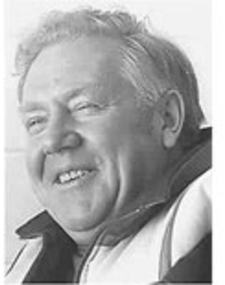


 earlier this summer, have added five scouts to their organization — Rjay Berra, who will be a B.C. regional scout out of Prince George; Josh Bonar, who will do the same out of the Okanagan; Ed Fowler, who also will scout in B.C., but out of Surrey; Alex Overhardt in Colorado; and William Wrenn in Alaska. . . . Overhardt spent four seasons (2014-18) playing for the Winterhawks; Wrenn, who is from Anchorage, joined them from the U of Denver during the 2010-11 season and was team captain in 2011-12 before going pro. . . . Bonar also is a former WHL player, having been with the Kamloops Blazers, Vancouver Giants and Regina Pats (2000-03). . . . Berra played with the BCHL’s Prince George Spruce Kings and the AJHL’s Grande Prairie Storm. . . . Fowler spent nine years with the Victoria Royals, including three (2019-22) as their director of player personnel. . . . On Aug. 4, the Winterhawks announced that Brad Davis, who had scouted out of Manitoba for 16 years, and Ray Payne, who had been with them for six years, both had left the organization.

 hockey, I have decided to step away from the game I love so much. It has been a great ride for this guy from the small town of Balcarres, Sask.”


 to win a series remains at 15 . . .
 Giants lit up the Silvertips to the tune of 11-6 to forge a 2-2 series tie. ICYMI, Vancouver scored the game’s last five goals in that one. . . . Should Everett win the series, it would face the Seattle Thunderbirds in the second round, with the Kamloops Blazers and Portland Winterhawks facing off in the other one. . . . A Vancouver series victory would put Kamloops against the Giants, while Portland clashed with Seattle. . . .
 Vancouver Giants to a 3-0 victory over the Silvertips. . . . The Giants hold a 3-2 series lead and get their first chance to end it on Monday in Langley, B.C. . . . In the regular season, Everett finished atop the Western Conference with 100 points (45-13-10); the Giants (24-39-5, 53) tied for sixth but wound up eighth after going through two tiebreakers. . . . Everett scored 95 more goals than Vancouver in the regular season, while allowing 64 fewer. . . . Vikman, who turned 20 on March 11, is from Stockholm. The Vegas Golden Knights selected him in the fifth round of the NHL’s 2020 draft. . . . This season, with the Giants, he was 17-15-2, 3.05, .903 with three shutouts. However, he didn’t play after March 4 before returning for the playoffs. He has appeared in four of the first-round games, going 3-1-0, 3.85, .887. . . . Last night, F Adam Hall, who scored 17 times in 60 regular-season games, opened the scoring with his sixth goal of the series, at 10:42 of the first period. . . . F Fabian Lysell (4) made it 2-0 at 7:48 of the third, and D Connor Horning (1) added a PP score at 18:33. . . . Hall also had an assist on Lysell’s goal. . . . G Braden Holt blocked 28 shots for Everett.


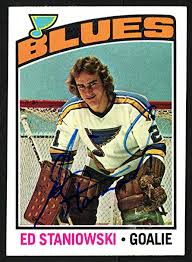


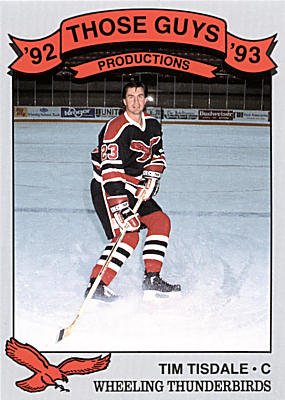




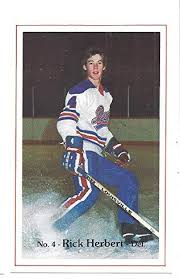


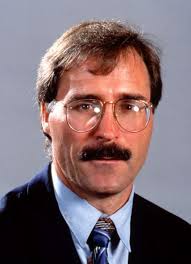


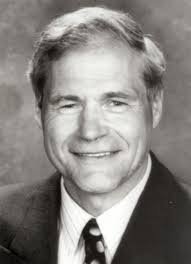


 TAKING NOTE