Welcome to a site where we sometimes provide food for thought, and often provide information about the Western Canada Professional Hockey Scouts Foundation.
Ken Campbell of The Hockey News posted an interesting piece on Tuesday involving F Brayden Point of the Tampa Bay Lightning. In it, Campbell explained how the Lightning came to draft Point and how Al Murray, the organization’s director of amateur scouting, led the charge. It’s great to see a veteran scout like Murray, who is from Regina, get some acknowledgement. . . . Campbell’s piece is right here.
On Wednesday, Campbell wrote about the Vegas Golden Knights and how George McPhee and Kelly McCrimmon were able to shape an expansion into a Stanley Cup contender is such a short period of time. . . . They certainly have done that, and it should be said that they got a considerable amount of help from Vaughn Karpan, their director of player personnel. . . . Karpan, a native of The Pas, Man., and Murray have one thing in common — they both are quiet men who love to work in the shadows. Oh, and one other thing — they may be the best in their field. . . . Campbell’s piece on Vegas is right here.
The good people of Chicoutimi and Baie-Comeau should be thrilled about paying this drop in the bucket. A one-time $267,000 charge in exchange for years of ripping teenagers off? Great deal! If their teams were forced to pay players a living wage, their taxes would be far higher. https://t.co/VcTgxFrxEn
Loosely translating the above tweet: Each of the Canadian major junior teams must pay $266,667 as its share of the settlement of the class-action lawsuit that the CHL decided to settle for $30 million earlier in the summer. The QMJHL’s Chicoutimi Sagueneens and the Baie-Comeau Drakkar are owned by their respective cities, so the citizens will pay the bill via their municipal taxes.
Blaine Peterson, a former WHL goaltender who played with the Brandon Wheat Kings and New Westminster Bruins, died suddenly on Sept. 3. He was 64 and living in Stonewall, Man. Peterson’s death came less than a month after he was profiled by Perry Bergson of the Brandon Sun as part of his excellent series on former Wheat Kings. . . . Peterson is survived by his partner Paulette and two adult children — Teague and Kael. . . . Peterson was with the Bruins for two Memorial Cup tournaments, losing in the 1976 final and winning it all in 1977. . . . He was a real contributor to minor hockey, coaching in Stonewall and doing a stint as president of the Manitoba Midget AAA Hockey League. . . . In lieu of flowers, the family asks that donations be made to the Heart and Stroke Foundation of Manitoba. . . . There won’t be a formal funeral service, but a celebration of life is to be held at a later date. . . . There is an obituary available right here.
COVID-19 CHRONICLES . . .
You will recall that Canadian OL Laurent Duvernay-Tardif of the Kansas City Chiefs opted out of the NFL’s 2020 season a while back. During the pandemic, the graduate of McGill U’s medical school has been working as an orderly at a long-term care facility near Montreal. From Mont-Saint-Hilaire, Que., he is planning to take online classes from Harvard U’s T.H. Chan School of Public Health. . . . Julian MacKenzie of The Canadian Press has more right here. . . .
Louisiana Tech and Baylor had to postpone their football game that was set for Saturday. Why? Because Louisiana Tech had 38 players test positive in the days following Hurricane Laura. . . . The game was to have been Fox-TV’s first Big Noon game of the season, but now has been replaced by Arkansas State-Kansas State. . . .
Australian tennis star Ash Barty, ranked No. 1 in the world, has opted out of the French Open, which is scheduled to open on Sept. 27. She is the tournament’s defending champion. She also chose not to play in the U.S. Open because of concerns about COVID-19. . . .
The U of Lethbridge has suspended its women’s soccer program after it was found to be violating some pandemic-related restrictions. With Canada West having cancelled the fall season, teams still are being allowed to practice, but they are to do it in cohorts. The women’s team was allowing players who were from outside to take part in practice sessions. . . . Justin Goulet of lethbridgenewsnow.com has more right here. . . .
The New York State Public High School Athletic Association, which covers more than 500 high schools, has postponed football, volleyball and cheer seasons until March.
JUST NOTES: Mark Recchi, one of five owners of the WHL’s Kamloops Blazers, is back in the NHL after a rather brief absence. Dumped as an assistant coach by the Pittsburgh Penguins on Aug. 12, he has joined the New Jersey Devils in the same role. The Devils gave Recchi a three-year contract. He had been with the Penguins for six seasons — three as development coach and the past three as assistant coach. . . . The BCHL’s Merritt Centennials have signed F Dylan Sydor, 17, whose father Darryl is a former WHL/NHL defenceman who also is a co-owner with the Blazers. Last season, Dylan had 17 goals and 20 assists in 40 games with the U-18 Thompson Blazers, who play out of Kamloops. . . . The Red Deer Rebels’ 15-year lease with Westerner Park, which operates the Centrium, was to have expired this year. Before it got to that, the two parties agreed on a seven-year lease. . . . Baseball’s West Coast League unveiled its newest franchise on Wednesday. The Kamloops NorthPaws will begin play in 2021 — Opening Day is set for June 4 — and it’ll be a 54-game regular season. The WBL is a short-season collegiate league. The NorthPaws are one of four Canadian teams, joining the Kelowna Falcons, Nanaimo NightOwls and Victoria HarbourCats. The NightOwls are another expansion team; they are owned by the group that operates the HarbourCats. The NorthPaws are owned by Norm Daley of the Kamloops accounting firm Daley & Company; Jon Pankuch, who owns a few Tim Hortons franchises; and Neal Perry of Westway Plumbing and Heating.
How will the Western Hockey League look without Kelly McCrimmon as a franchise owner?
That is the question today after McCrimmon sold the Brandon Wheat Kings to the J&G Group of Companies, a Brandon firm that is led by Jared Jacobson, who is the president and CEO. He will take over as the Wheat Kings’ governor, with McCrimmon staying involved as alternate governor.
The WHL’s board of governors has approved the sale, which is to close on Sept. 15.
“We believe this is the right decision,” McCrimmon said in a news release. “The game has been so good to my family, I am fortunate now to be part of a great organization in Las Vegas with the Knights, and it became apparent a succession plan was needed. I feel good for people in Brandon and western Manitoba that the Wheat Kings will be in great hands with Jared and will always be a big part of the City of Brandon.”
Jared Jacobson (quote continued) "We have great hockey ops staff in Darren Ritchie and Dave Lowry and all the coaches and scouting staff.” 2/2
Jacobson was born and raised in Brandon and, according to the news release, “has been actively involved in the Jacobson & Greiner third generation family business from an early age. Through Jared’s leadership, determination and vision, the organization has seen spectacular growth, expanding to 32 companies, encompassing all areas of construction.”
McCrimmon, from Plenty, Sask., played two seasons (1978-80) with the Wheat Kings. He returned to the organization in 1988, bought one-third of the franchise from Bob Cornell in 1992, and has been the sole owner since 2000.
However, McCrimmon, now 59, signed with the NHL’s Vegas Golden Knights as assistant general manager on Aug. 2, 2016. Then, on May 2, 2019, he was named general manager.
After dealing with the media and talking about the sale of the Wheat Kings earlier Tuesday, he spent the evening in the NHL’s Edmonton bubble watching the Golden Knights beat the Dallas Stars, 3-0, to even their Western Conference final, 1-1.
——
Gary Lawless, a former Winnipeg Free Press sports writer who now is the Golden Knights’ Insider, has more on the sale of the Wheat Kings right here.
——
If you haven’t seen this already, here’s a piece I wrote on McCrimmon for The Coaches Site five years ago . . .
Longtime Brandon Wheat Kings owner Kelly McCrimmon has sold the WHL franchise. (Photo: nhl.com)
Kelly McCrimmon is the owner of the WHL’s Brandon Wheat Kings.
He also is the team’s governor, general manager and head coach.
He also is the head coach of the Canadian U-18 team that will play in the Ivan Hlinka Memorial tournament in August.
Did we mention that McCrimmon is the chairman of the WHL’s competition committee?
Yes, the 54-year-old, who originally is from Plenty, Sask., wears a lot of hats, none of which has kept him from being successful.
He has been the Wheat Kings’ general manager since 1989 and now is acknowledged as perhaps the best GM in the WHL. With him at the helm, the Wheat Kings have become one of the WHL’s top franchises and best teams.
At the league level, McCrimmon has been a player for more than 20 years, serving on one committee or another, and always having a voice.
And let’s not forget that he is a married man with a family.
Whew! By now you are wondering where he finds the time. . . .
Well, the more you talk to McCrimmon, the more you realize that his working life is governed by all those clichés that you hear so much about . . . work ethic . . . surround yourself with good people and let them do their jobs . . . be true to yourself and always do what is best for the organization . . .
************
Perhaps the most interesting thing about McCrimmon is that it wasn’t supposed to be like this.
The original plan was for him to be a farmer.
“My plans,” he says, “were to get my degree and farm.”
After playing two seasons (1978-80) with the Wheat Kings, McCrimmon headed for Ann Arbor, Mich., where he played four seasons with the Wolverines while he earned a business degree.
(Yes, McCrimmon played NCAA hockey after spending two seasons in the WHL, but that’s another story for another time.)
McCrimmon and his brother, Brad, had been raised on the family farm that is operated by their parents, Faye and Byron, near Plenty. The brothers, who were teammates on the 1978-79 Wheat Kings, even bought some land that was an extension of the family farm.
“I graduated in 1983,” Kelly says. “I was married after my sophomore year, and by the time I graduated we were expecting our first child. I went back to the farm, as planned.”
McCrimmon, who has two grown children with wife Terry, spent two years there, during which time he also dipped his toes into the coaching pool for the first time, playing and coaching with the Kerrobert Tigers of the Wild Goose Hockey League. He could do that during the winter months and go back to farming in the spring.
He found that he quite enjoyed the coaching side of things and it wasn’t long before he was coaching the SJHL’s Battlefords North Stars. Still, he says, “I was fully committed to farming.”
What once had been a mixed farm (grain and cattle) now was grain only, which made it easier to spend winters with a hockey team. So spending two winters coaching in North Battleford, and another as head coach of the SJHL’s Lloydminster Lancers, didn’t compromise the farming side of things.
Then would come the offer that set him on the road that he still is on today.
The Wheat Kings were a franchise in transition, not finding much success on the ice or off. At this stage, they were being operated by the Keystone Centre. McCrimmon came on board and would spend half his time working on Keystone Centre affairs and the other half with the Wheat Kings.
“One year of doing that,” McCrimmon says, “and they approached me to be the general manager.”
McCrimmon pauses, then adds: “I was fully intending at that time to go back to farming and yet this meant moving away . . . and a deviation from the plans.”
Amazingly, he still considered himself a farmer, not a hockey man.
By now, Bob Cornell owned the Wheat Kings. Halfway through McCrimmon’s first season (1989-90) as general manager, head coach Doug Sauter fell ill with Guillain–Barré syndrome. You guessed it . . . McCrimmon stepped in as head coach.
In hindsight, McCrimmon admits that this was his awakening as a WHL general manager. The Wheat Kings of that era would get caught up every season in the race just to make the playoffs; if they got there, they would more often than not lose out in the first round. In one 10-season stretch, they didn’t qualify on eight occasions. Rinse, repeat. . . .
With McCrimmon coaching, the Wheat Kings finished tied for the last playoff spot with the Swift Current Broncos, who won the play-in game, 5-4.
“Our team was primarily 19-year-old players and three 20-year-olds,” McCrimmon says. “Swift Current had six 16-year-olds.” In 1993, the Broncos would win the WHL title and play in the Memorial Cup.
After that experience, McCrimmon came to the realization that what the Wheat Kings were doing “was wrong.” So he began working towards changing the franchise’s thought process.
The next season, the Wheat Kings won 19 games. Then they put up 11 victories. The howling in Brandon wasn’t all coming from the Prairie wind.
Despite what was happening on the ice, Cornell recognized that McCrimmon was moving things in the right direction. So Cornell offered McCrimmon one-third ownership in the franchise, a move that meant a whole lot to the young GM.
“That was as much belief as he could possibly show in me after winning 19 and 11 games . . . he felt comfortable enough with me running his hockey club to want to make me a partner,” McCrimmon says. By 2000, McCrimmon would be the sole owner.
McCrimmon becoming a partner meant one other thing.
“Me being a farmer wasn’t going to happen,” he says.
That summer (1992), Bob Lowes signed on as head coach. He would stay for nine years, nine years in which McCrimmon says he never once thought of going back behind the bench.
In Lowes’ first season, the Wheat Kings won 43 games, lending credence to McCrimmon’s building plans. That season, Brandon set a CHL record for the largest improvement from one season to the next.
By the spring of 1995, the Wheat Kings were in the Memorial Cup, having lost to the host team, the Kamloops Blazers, in the WHL’s championship final. The Wheaties were there again a year later, this time as WHL champions. And they were in the WHL final again in 1998.
One thing would lead to another and Lowes would leave. Dean Clark would coach the team to two final fours. Mike Kelly would replace Clark, with McCrimmon taking over from Kelly in March of 2004. McCrimmon had made some moves to strengthen the lineup, such as acquiring Erik Christensen, the reigning WHL scoring champion. McCrimmon didn’t like the way things were going, so he stepped in. Brandon was ousted in the second round, but was in the WHL final the following season.
Since then, McCrimmon has been the head coach for nine of 11 years, the two-year gap coming when former player and assistant coach Dwayne Gylywoychuk was in charge.
The Wheat Kings have missed the playoffs twice in the 23 seasons since that 11-victory winter. Yes, they’ve come a long way since missing the post-season eight times in 10 years.
************
During his voyage, McCrimmon learned the importance of having good people behind the scenes. Not only is it important to have them there, it’s important to keep them.
“I am pretty hands on with some things,” McCrimmon says, and some people will say that is something of an understatement. But, he adds, “the people in key positions have complete autonomy to run the business.”
That was never more evident than more than 10 years ago when McCrimmon decided it was important that he get his Master of Business Administration (MBA).
In the two years that took, the team was in good hands on the ice with Clark in charge. The other key people were Al Macpherson, Rick Dillabough and Lyn Shannon.
Macpherson joined the Wheat Kings as a scout in 1986 and was promoted to director of player personnel in 1998, a position he filled until his retirement in the summer of 2013. He remains associated with the team as its senior advisor, while veteran WHL scout Wade Klippenstein is the director of scouting.
Dillabough now is the director of business operations and sponsorship. He has been with the franchise since 1990.
Shannon, an employee since 1991, handles the accounting side of things.
When McCrimmon was working toward his MBA through Queen’s University in Kingston, Ont., Macpherson ran the scouting, and Dillabough and Shannon handled the business/financial side. During that time, McCrimmon was confident things were in good hands.
It is important, McCrimmon says, “to keep people in place.”
Darren Ritchie, who played four seasons with the Wheat Kings (1991-95), has been an assistant coach for eight seasons. The other assistant, David Anning, a former MJHL player and coach, has been there for three seasons.
Because of the number of hats McCrimmon wears, he says his assistants have “more responsibility . . . a great deal of responsibility.”
With everything else on his plate, McCrimmon decided this spring that there was room for one more thing. So he now is head coach of Canada’s summer U-18 team. This will be his first time with a Canadian national team.
“I have always had a relationship with people at Hockey Canada,” says McCrimmon, adding that he has long scouted Hockey Canada camps, especially those of the U-17 variety. Another thing that pushed him in Hockey Canada’s direction is the presence of Spokane Chiefs general manager Tim Speltz, a long-time friend, as part of HC’s management group.
Also, don’t ever underestimate McCrimmon’s desire — it’s almost a need with him — to better himself. Working with the U-18 team gives him the opportunity to coach alongside Sheldon Keefe, the OHL’s coach of the year with the Sault Ste. Marie Greyhounds, and Darren Rumble, a former Seattle Thunderbirds assistant coach who now is head coach of the QMJHL’s Moncton Wildcats.
“It’s a good chance to work with good coaches,” McCrimmon says, pointing out that all three worked the benches of teams that got into the final four in each of their leagues. He talks of it being a “good challenge” in terms of “personal growth.”
As he puts it: “Responsibility is good for you in terms of growing. It was a good opportunity to pursue, and I know that age group well.”
The man, it’s fair to say, has never run from a challenge. As he says, “Coaching is a challenge . . . hosting the Memorial Cup is a challenge.”
Yes, McCrimmon was mostly responsible for the 2010 Memorial Cup having been played in Brandon, where it was a resounding success. In March 2011, the Brandon Chamber of Commerce honoured him with its President’s Award as the business person of the year.
“I enjoy everything I’ve done in hockey,” McCrimmon says. “I love scouting, building, developing.
“I work hard. I always have . . . and I manage my time well.”
A reporter’s mind flashes back to a bitterly cold winter’s night in Regina, more than 20 years ago. It was a Sunday, about 1 a.m. A Tim Hortons outlet on the east side was empty except for a couple having coffee, decaf you should know.
The front door opened and an icy blast blew in, bringing with it a man who was rubbing his hands together as he tried to shake off the cold.
Yes, it was McCrimmon. He had been scouting somewhere in the hinterlands of south-western Saskatchewan. He wanted a cup of coffee to get him started on the last leg of the trek.
As he got back in his vehicle, he was almost as close to Plenty as he was to the Wheat Kings’ office.
McCrimmon left the parking lot that morning and headed east towards Brandon. He was a hockey man, not a farmer.
The MacBeth Report continues to keep both eyes on happenings in Europe and beyond.
Some KHL-related notes from a Friday filing . . .
“Ak Bars Kazan opened the season in Riga against Dinamo Riga. However, one of the referees tested positive for COVID-19, so the start of the game was delayed until a new officiating crew could be found. Per Aivis Kalnins, an all-Latvian crew worked the game.
“Neftekhimik Nizhnekamsk head coach Vyacheslav Butsayev told TASS Thursday that they intended to play with a short lineup Friday night at home against SKA St. Petersburg (2-1 loss) but did not say why. Neftekhimik dressed 20+2, the full lineup, but only the two goalies, three defencemen, and five forwards are officially on the Neftekhimik roster. They dressed four defencemen and two forwards from their farm club and one defenceman and five forwards from their junior club. Butsayev himself didn’t coach. It was announced before the game that Butsayev and two assistant coaches would not be coaching tonight ‘in connection to recover from a previous illness.’ The coach was head coach of their junior team, Vyacheslav Kasatkin.
“Amur Khabarovsk also has been hit with an outbreak. Head coach Pavel Torgajev on Wednesday: ‘We have already reported that a number of players have passed the initial positive tests for COVID-19. Over the past few days, there are more of them, some results have been confirmed. Players with positive test results are isolated, under medical supervision. There are players who have already recovered, which is confirmed by the tests done the day before, but in accordance with the league protocols, they need to wait for the second negative test. Only then will they be able to join the team. Therefore, at the start of the season, we will not be able to play with the optimal lineup. We have attracted the players of the youth team, this is a great chance for them. Everyone who goes on the ice will fight, everyone missed hockey, and for the ‘youth’ this is a great opportunity to try themselves at the adult level.’
“Amur dressed a full 20+2 line-up Thursday at Cherepovets (6-4 loss to Severstal) but five skaters and the back-up goalie were from their junior team and four skaters and their starting goalie were from their farm club.
“Per Amur’s website, the club’s charter flight left Khabarovsk 8 PM local time Wednesday for Cherepovets. 5,292 miles, about 8 hours flying time. There is a seven-hour time difference between the two cities, so when they arrived in Cherepovets, it was around 9 PM Wednesday there, 4 AM Khabarovsk time. Game time in Cherepovets was 7 PM Thursday, which was 2 AM Friday Khabarovsk time.”
——
The KHL team Avangard Omsk unveiled its new uniforms the other day. If you haven’t seen it already, you don’t want to miss head coach Bob Hartley — yes, the former NHL coach — as he does the introduction. When he’s done as a coach, he may have a career as a pitchman. . . . It’s all right here.
0 times divorced, but if he keeps walking the lead-off batter, I’ll consider filing 🤔 https://t.co/iAgvPcrazV
Manager Gabe Kapler and his San Francisco Giants were leading the Colorado Rockies, 18-2, in the seventh inning the other night when he chose to challenge a play at first base. That got Dwight Perry of the Seattle Times to wonder: “So why isn’t there an unwritten rule about that?”
——
One more from Perry: “The entire Alaska-Fairbanks hockey team was placed in quarantine after six partying players tested positive.In other words, COVID-19 just went on the power play.”
Only saying this because I loved my experience in the MJHL and I care about the league…. pretty hard to see how adding another team that will charge 15k+ per player is in anyway good for the the league or the game of hockey. I thought the goal was to make hockey more inclusive? https://t.co/T2HNcLO6ec
The MJHL has sold an expansion franchise to Winnipeg-based 50 Below Sports + Entertainment, which also owns the league’s Winnipeg Blues. This means that the 12-team MJHL has two franchises in the Manitoba capital both of them owned by 50 Below Sports + Entertainment, which also owns the WHL’s Winnipeg Ice. . . . Mike Sawatzky of the Winnipeg Free Press has reported that the team is to be called the Freeze. Josh Green, an assistant coach with the Blues two seasons ago and with the Ice in 2019-20, is expected to be the head coach, with former WHL G Sonny Mignacca as his assistant. . . . According to Sawatzky, Jake Heisinger, the Ice’s assistant GM and vice-president of hockey operations, is expected to be the Freeze’s GM. . . . The MJHL is aiming to start a 40-game regular season on Oct. 9. Training camps can begin on Sept. 18, with rosters limited to 34 players. . . . The Freeze had a protected list of 33 players prior to the MJHL announcing its presence. As well, the Freeze is opening a three-day prospects’ camp today.
COVID-19 CHRONICLES . . .
The NHL said Monday that is has gotten through six weeks of bubble play without a positive test. There were 2,534 tests conducted for the period Aug. 30 through Sept. 5. . . .
The UFC was forced into holding a short card on Saturday night in Las Vegas after two bouts, and perhaps a third, were cancelled because of positive tests. In the end, it was able to hold on seven bouts on the card. . . . There is more right here.
——
If you are a junior hockey fan, you may be interested in reading what teams in the KHL will have to go through in order to play in Helsinki, Finland, and what that city’s team, Jokerit, will have to do to play in Russia, all of this thanks to The MacBeth Report . . .
Arrangements have been finalized that will allow Jokerit to play its 2020-21 home games at Hartwall Arena in Helsinki. For a while, it appeared that Jokerit would play its home games somewhere in Russia.
However, according to Jokerit’s website, the team and the KHL have
put together a model that enables foreign teams to travel safely to Finland.
On Sept. 1, the KHL began coronavirus tests for all team members as well as club staff. These are conducted every five days.
Here’s a look at steps that are being taken in order to play these games . . .
Visiting teams arrive in Helsinki on their own charter flights. They are transported from the airport by private bus to the hotel, where they are provided with their own secluded facilities to stay and dine. During their 1-2 day visits to Helsinki, team representatives will not leave the hotel premises, outside the restricted area of Hartwall Arena, or the airport.
The teams move from the hotel by their own bus to the arena, where a so-called clean area is used on ice level. This area can only be accessed by persons subject to KHL corona testing and their identities, as well as a valid negative corona test result is confirmed by displaying a QR code. Without a negative test result, one cannot enter the clean area. After the games, the teams will take their own bus to the airport and leave the country.
Jokerit has the same practices on their own away game trips in both the arenas and the hotels. In the hotels, a separate floor is reserved for the team and meals are also held separately from other hotel guests. Team representatives will not leave the hotel other than by public transportation to the arena or airport. When traveling, protective masks are used both
on the plane and on the fields. When arriving at the arena, a mask must also be worn both in Finland and abroad.
The safety of the public is guaranteed in home matches in accordance with safety regulations.
Jokerit is top play its first home game on Wednesday against against Neftekhimik Nizhnekamsk.
Here is what goes into ensuring the safety of spectators . . .
The hall has a total of nine auditorium blocks upstairs and downstairs, each with its own entrance and its own toilet facilities.
A maximum of 500 spectators, up to a maximum of 50 per cent of full capacity, may be accommodated in a single auditorium block.
You cannot move between the auditorium blocks.
There are no numbered seats on the entrance tickets so that safety distances can be observed in the auditorium. Jokerit will notify each of its season-ticket holders individually how they can redeem their tickets and how they can get a seat as close as possible to the place they purchased.
Hand sanitizer is available at the entrances to Hartwall Arena and in all of the arena’s restaurants.
Cleaning during the event will be intensified and safety-related issues will be announced on screens and in announcements.
The use of a face mask during the event is recommended. Jokerit fabric face masks can be purchased at the Jokerit fan store.
In Finland, there are restrictions on indoor public events, and within these, a maximum of 4,500 spectators can currently attend Jokerit home matches at Hartwall Arena. In addition, spectators can be taken to the suites.
One in every three adults in the U.S. is at risk for #kidneydisease. It's better to know the risks than to not know them at all. This simple, one-minute quiz can tell you if you're at risk and save your life. #MinuteForYourKidneyshttps://t.co/juJvR1HEL4
Headline at fark.com: Washington releasing running back Adrian Peterson for fear his off-field reputation might taint an otherwise stellar organization.
Clippers coach Doc Rivers on the empty press conference room that featured himself, a Clippers spokesperson, a few NBA staffers, myself, a photographer and empty chairs: “It looks like a Trump rally in here.” I disagree. We were all wearing masks and being socially distant.
Tom Seaver passed away on Aug. 31. He was 75. The cause of death was complications of Lewy body dementia and COVID-19, according to the Baseball Hall of Fame.
Here are two Jim Murray columns on the pitcher known as Tom Terrific.
——
WEDNESDAY, OCTOBER 17, 1973, SPORTS
Copyright 1973/THE TIMES MIRROR COMPANY
JIM MURRAY
Seaver Deserves Better
NEW YORK — Usually when a pitcher is a veteran who has a series of 20-win seasons and has pitched his team into two World Series in four years, he is a grizzled old party who spits tobacco and you could scratch matches on his beard. He talks in four-letter words and comes from coon-hunting country and never reads anything that doesn’t have pictures in it and his favorite actor is John Wayne.
But George Thomas Seaver looks as if he just stepped out of the pages of a Ralph Henry Barbour novel or is one of the Merriwell brothers.
He looks as if he might go around helping old ladies across the street or rescuing babies from drowning. As if he had just two more knots to tie or fires to start rubbing sticks together to get his Eagle Scout badge. He is Mr. Cleancut; as wholesome as a Saturday Evening Post cover, or a Disney movie, the kind of guy who would put splints on broken cats, the sort of fellow who would help his mother with the dishes and bring home all A’s on his report card.
You’d want your daughter to marry someone like Tom Seaver. You’d want your son to grow up like that. They call him “Tom Terrific.” He looks as if his name should be “Roger Trueheart” or “Peter Pluck.” He’s the kind of guy who might spend more time in museums than bar rooms. He’s concerned, was one of the few baseball uniforms to take a stand on the Vietnam war.
His fastball makes baseball men drool and hitters slobber with rage. He could throw the proverbial strawberry through a battleship. His control is uncanny. Tommy Strikethree has as much control of his pitches as he has of himself.
Without him, the Mets are a .380 club. He pitches nearly 300 flawless innings a year. He’s such a competitor, he would bite a lion or pull a bear out of a tree.
You would think, if God were paying attention, Tommy Strikethree, by now, would be working on his fifth or sixth World Series win. I mean, guys who would be lifted by the fifth inning pitching against him have won that many.
But George Thomas Seaver’s record in World Series is about what you would expect from a crooked-armed junk thrower with a hitch in his delivery and a bad habit of tipping his pitches.
The Mets get him runs in clumps of one. They send about 28 men to bat the night he pitches.
Take Tuesday night. In a gelid Shea Stadium amid an Arctic front moving through Queens, Seaver, sporting a 19-win year and an earned-run average you would need Palomar to read, struck out the side twice. He had the feared Reggie Jackson, a 117-runs-batted-in MVP candidate looking like a revolving door. He struck out 12, walked none and was — well — Terrific.
His team gave him a one-inning attack. They didn’t really need bats for the other eight. Seaver was in there.
Over on the other mound, Catfish Hunter who is not “Mr. Terrific” or Walter Wonderful and is more of a pitcher who nibbles around the outside and wears out the corners of the plate, had given up a homer, a double, assorted singles, a wild pitch, several walks and even threw in an error for good measure and wasn’t around for the seventh inning. But he got exactly what Tommy Strikethree got — a standoff. His World Series record is still 1.000. Seaver’s is still .500.
I’m glad to see God has better things to do than see justice served in baseball games but, the point is, Tom Seaver joins some distinguished company. Walter Johnson was .500 for his six Series decisions.
Tom Seaver is nine decisions behind Whitey Ford who won 10 World Series games but look at some of the company he’s chasing besides Ford. Shucks, Orval Overall won three and only lost one. Bill Hallahan (surely you remember Bill Hallahan? “Wild” Bill Hallahan?) won three. Ernest G. Shore was 3-1. Guys like Harry Brecheen and Lew Burdette and Mickey Lolich won three in ONE Series.
Great pitchers like Christy Mathewson were .500 for World Series. But they did get five victories.
Lefty Gomez never lost a World Series game. He was in some real cliff-hangers. He won one 18-4 in 1936. That’s more runs than the Mets get Tom Seaver a season.
For Seaver, it’s like someone painting a masterpiece and having somebody use it for a doorstop or to hang in the garage at work. He’s their bad luck charm.
It was a foregone conclusion the Mets would lose for Seaver. On a passed ball, at that. They’re not much of a ball team when you move off the mound. They have to hoard runs. Never have so many done so little for so few. The pitching staff consists of five guys with their fingers in the dike.
But I have a feeling somewhere there’s a ghostly crew looking on and nodding safely — Walter Johnson and Christy Mathewson and a lot of other guys who pitched 300 innings or 400 victories and then got in World Series only to see journeymen win the car or the plaudits.
————
SUNDAY, AUGUST 31, 1975, SPORTS
Copyright 1975/THE TIMES MIRROR COMPANY
JIM MURRAY
The Other Seaver
If they were caught in a hotel fire, lots of people would try to throw their jewels or stocks or money out the burning window. Tom Seaver would want to throw his right arm.
As ex-teammate Tug McGraw once said, “Seaver is exploring the possibility of keeping his right arm at Ft. Knox over the winter.”
He won’t sleep on it, open car doors with it, cut meat with it, drink beer with it. He won’t hang it out the car window, let it get sunburned. He treats his arm as if it had a life of its own. He won’t pat dogs with it, play tennis with it, cut wood with it or comb his hair with it.
He treats it the way a captain treats a ship, a gunman his gun, or a cowboy his horse. He pampers it, worries about it. He trots it out only every fifth day.
——
Most pitchers pitch every fourth day, but Seaver’s arm lets him know it needed an extra day’s rest, and Seaver never contradicts his arm.
No Hope diamond, no Rembrandt, no British Guiana stamp ever recorded the tender loving care of Seaver’s right arm. He does everything but keep it under glass. He takes better care of it than a bank takes care of money — and for the same reason. It is probably the most expensive parcel of fleshy real estate in the game — $250,000 a front foot.
It is a one-purpose appendage. It throws strikes. It has no other function. That is all Seaver asks of it.
Any manager in the big leagues can tell you it is valuable only because it comes with Seaver attached. But Seaver is not persuaded. He lets the rest of Tom Seaver shift for itself. He will even open beer cans with his left arm, slice bread, let it hang out the window, comb hair, shave whiskers, and do all the things God intended an arm to do. It is an orphan. Cinderella. Tom makes it do all the work he wouldn’t dream of asking its brother to do.
——
Tom sat in the dugout at the ballpark the other night and watched, fascinated, as two Dodgers pitchers, Mike Marshall and Andy Messersmith, practised double plays around first and second base. “Isn’t that swell?!” he said, not unsarcastically. “They’ve got the double play down pat. Shouldn’t they be working on getting guys to hit into them?” The lesson was clear: Seaver would never ask his arm to complete a double play. Start one, perhaps, but there were other arms to take it from there: arms that couldn’t sneak a fastball part Henry Aaron.
“You can transplant organs — kidneys, hearts, livers,” Tom said, “but you can’t transplant shoulders and elbows. Or arms. You get one to a customer.” Even in casual conversation, Seaver tends to forget his poor, sit-by-the-fire left arm.
There have probably been purer arms in the major leagues — although I don’t make that even money, by any means. But there’s never been one more consistent. Seaver can trust his arm. And vice versa. Every year, it delivers 200 strikeouts, some 280 innings pitched, 18 to 20 complete games and the occasional pennant. The pennant borders on a miracle. Because the New York Mets are a one-armed team.
The Arm delivers a rising fastball, a sinking curveball, a slider so deceptive it looks like both of them at once. It puts the ball where Seaver wants it to — usually where the hitter least expects it.
With It in there, the Mets are armed and dangerous. Without It, they’re just a good Triple A club. And maybe not so good, at that.
It is never erratic, rebellious, temperamental. It doesn’t win one game, 1-0, and lose the next, 10-2. It has allowed 652 runs in 312 games in nine years, which comes out to two runs per game. If the Mets score three, they win.
Seaver knows every muscle, tendon, bone or capillary in it. But to the Mets, it is not full of trapeziuses, triceps, adductors or whatever else comes in ordinary arms, it is full of dollar bills.
Some men send their gloves to the Hall of Fame when they get elected. Others send bats, shoes, mitts, masks or caps. Seaver may just cut off his arm and send it on. After all, Roy Rogers stuffed his horse. And, by that time, Tom won’t need it anymore. Tom’s other arm will have long since learned how to take care of him now that It is no longer needed to keep that funny little team from falling through the bottom of the league anymore.
Reprinted with the permission of the Los Angeles Times
Jim Murray Memorial FoundationP.O. Box 661532, Arcadia, CA 91066
For this exercise, you are required to suspend your belief mechanisms. Forget about your life for just a few minutes.
Forget about your normal comfort zone, or at least what used to be your normal comfort zone before 2020 arrived.
For the purposes of this exercise, you and your husband have three daughters. Despite having not yet turned four years of age, the youngest daughter has been doing peritoneal dialysis (PD) at home since she was 14 months old. Yes, she needs a kidney transplant. Other than a brief spell this season, she has been on the deceased donor list since early this year.
The summer of 2020, pandemic aside, hasn’t been much of a summer for you, at least not until the last couple of weeks. There were weeks spent in Vancouver after the youngest developed a PD-related infection.
You were able to return home in mid-August and you have worked to get the family unit back together while spending a week camping. It was great.
The plan was to come home for a day and then head out for another four-day camping adventure.
And then the phone rang . . .
Your youngest daughter is small. She has trouble putting on weight and keeping it on. This has been a major concern with the nephrologists and transplant surgeons. But her weight now is at a point where they feel that she is ready.
But you also know that a kidney from a live donor is the ultimate gift. Yes, a deceased-donor kidney is good, but one from a live donor would be so much better.
So you got home from the first camping trip at 3:30 p.m.
And the phone rang 30 minutes later. . . .
It was a nephrologist from B.C. Children’s Hospital (BCCH) telling you that they had a kidney. If there is to be a transplant, you are going to have to hit the road to the big city, like, right now.
But this nephrologist is a favourite and your brain is going a million miles an hour and you need to unpack from camping and you need to pack for another long stretch in Vancouver and . . . and . . . and . . . what about the other girls . . . what about the four-day camping trip . . . and . . . and . . . and . . .
The nephrologist, one you really trust, spells out everything. He explains that your daughter isn’t hard to match; in fact, there have been other potential deceased donors who have been rejected, mainly because of concerns over her size. He points out that she really hasn’t been on the kidney wait list for all that long, and adds that more time for her to grow isn’t a bad thing.
He explains that this particular donor was of ‘exceptional distribution.’ That means that there would be a higher risk of that person passing a disease along to your daughter. Yes, that is one of the risks associated with transplants, but you have known that from the get-go and haven’t looked at it as a deal-breaker.
Oh, what to do!
You’ve got camping behind you. You’ve got camping ahead of you. Or do you? Are you ready to walk away from that and spend another couple of months, or more, in Vancouver? And what of your daughter? You want to fall on your knees and ask: “Why me? . . . Why us?” But you know you can’t do that. You know that this is the responsibility that comes with parenthood. Maybe not to all parents. But it has happened to you and you know that you have to deal with it.
Over the past two years, you likely have cried more tears than there are stars in the heavens. And, yes, you knew the day — the moment — when you would be faced with this decision likely was going to come.
The responsibility that comes with being parents in this situation borders on soul-crushing. But you know one other thing . . . life goes on.
Before the phone call ends, you make the decision. You take a long, deep breath and you decline the offer of a kidney from a deceased donor.
At the same time, you know there is a live donor engaged in the testing process. You had hoped that it all might have gotten done while you were in Vancouver earlier in the summer. But it didn’t happen, something you found oh, so disappointing. Your understanding is that the testing has gone well, but you think that final results still are a couple of weeks away. At the same time, you know that things can change. You know that in your game nothing is certain. You have your fingers and toes crossed; the rabbit’s foot is in your pocket. You are hopeful . . . but you just never get entirely used to living with all of the uncertainty.
You only hope that you made the right decision in declining that kidney. As much as anything, your gut told you which way to go, and you are prepared to live with that.
So you unpacked and packed, and you got ready for four more days of camping.
You got everyone to bed, but . . . the youngest awoke at 1 a.m. One of the devices used in PD needed changing. So you changed it. Finally, it’s time for you to go to bed. But you check on her one more time. And you find that the transfer set has disconnected and she is soaked in dialysis fluid.
You are ready to tear out your hair. You are ready to scream to the high heavens. But there isn’t time for that. You know that a disconnection such as this could be a disaster because of the risk of contamination.
You clamp the line and get her to the hospital where a new transfer set will be installed in a sterile procedure. By now, it’s 3 a.m., and when you get to the hospital you find that it is busy. Lots is going on. But they find a nurse who has PD training and, between the two of you, the job gets done, and you are home by 4:30.
You still can’t go to bed, though. You have to do three flushes of the system and then collect a sample that can be checked for infection. You are in bed, finally, at 6 a.m., and up three hours later. You have to get the sample to the lab, fill prescriptions . . . and get packed . . . and leave for the lake.
While at the lake you are flooded with emotions. You realize the enormity of the decision that you made. You know that you have to live with it. All the while you are keeping a close eye on the young one because of the fear of infection. You’ve already dealt with one infection this summer; you really don’t want to see another one. But you know that you have to play the cards that are dealt. So . . .
Still, your brain won’t shut off. When you made the decision, it just felt to you that if the transplant was complicated or didn’t go well you’d never forgive yourself for not waiting for a live donor.
But with the decision made and days sliding by, you are thinking that if an infection rears its ugly head you may have made a huge mistake.
Despite everything, the four days of camping are great. The only complaint is that they fly past. The five of you hung out together and it was fun. The two older girls are amazing and for that you are forever thankful. The way they cope with all that swirls around them is a story in itself. When you think about what they have gone through over the past couple of years it’s hard to keep the mist from your eyes.
With the camping days behind your family for now, you are thinking that you made the right decision. The little one is almost back to her old self, before that infection hit and stole her energy. Her mood is better, more positive, these days, and she isn’t as withdrawn as she had been. Even with all that she has been through over the past couple of months, she has made progress as a person and her personality has grown. Yes, she is shy, but there are signs that she is coming out of her shell around other people.
And now you’re home again. It’s the last long weekend of this crazy summer, and you know that things are about to get nutso. School. Your work. Your husband’s schedule is in the mix. There is care for the little one to consider. There was a lot of support for you during the last school year, the one that ended prematurely, but some of that won’t be there this time and you’re not sure how it’s all going to come together.
But you have learned over time that life goes on. Yes, it does.
——
OK. You got all that? Now take a minute and think about it all. Think about having to make a decision of that magnitude. We’re not talking about standing in front of a cooler and deciding whether to buy one litre of milk or two. This is about having the life of a child in the palm of your hand. Think about having to make that kind of decision.
That’s what Lindsey Backmeyer, her husband Pat, and their two older daughters, Ksenia and Tavia, have been through over the last while as Ferris, the youngest member of the family, continues to deal with health issues.
With the calendar having turned from August, Lindsey wrote on Facebook that she “really hadn’t looked at September at all until this past week because, well . . . it’s September. So yeah, we got this. We totally got this.”
Yes, Lindsey, you do. You really do!
——
If you are interested in being a living kidney donor, more information is available here:
For starters, take a guess at how many people in B.C. were waiting (and hoping) for a kidney transplant as of July 31.
According to BC Transplant, there were 633 B.C. residents in that situation.
——
Vic Morin of Kamloops is one of them.
His wife, Colleen Bruce, told Vic’s story a year ago. Earlier this week, she provided an update:
“It now has been close to one year since my last posting on Vic and his struggles with kidney disease. There have been a lot of changes in our lives over the past year.
“Vic was put on emergency hemodialysis in the middle of September 2019.Vic now has transitioned to full-time peritoneal dialysis that he does at home eight hours a night, seven days a week. This dialysis is done at night while he is sleeping.
“Over the past year his health has unfortunately declined. He doesn’t have the energy to do much anymore due to the kidney disease. Even going for walks is a big struggle, but he does try his best a few times a week.
“We really were hoping that the dialysis would give him more spark and energy, but because the kidneys are so diseased, this isn’t the case. He needs a kidney now more then ever.
“We had a virtual appointment with our doctor from St. Paul’s Hospital in early August. He said Vic’s wait for a kidney from a deceased donor could be up to four years for his blood type. As well, the doctor wasn’t sure that Vic’s arteries that attach to the kidney would be strong enough for a kidney transplant in four years.
“The doctor told us that Vic’s only option now is to receive a kidney transplant from a living donor within a year.
“So once again we are reaching out to everyone in dire-desperation to find a living donor for Vic. We created the accompanying poster in hopes of reaching as many people as we can.
“Please keep in mind that you don’t need to be an exact blood-type match to become a donor for Vic, as St. Paul’s Hospital has a paired exchange program. This means that the donor and Vic (recipient) will enter into the paired exchange program.
“Here is how it works:
“Donor A wishes to donate a kidney to Recipient A, but they are not a match. Donor B would like to donate a kidney to Recipient B, but they are not a match. However, Donor A is a match with Recipient B and Donor B is a match with Recipient A. A paired exchange can then be completed.
“Again, we are needing to get our story out to as many people as will listen. If you have ever considered becoming a kidney donor, or would like more information, please contact the donor nurse co-ordinator at St.Paul’s Hospital by calling 604-806-9027 (1-877-922-9822) or by emailing donornurse@providencehealth.bc.ca. Please mention Louis Victor Morin.”
——
More numbers, thanks to BC Transplant . . .
As of July 31, there had been 133 kidney transplants conducted in the province — 89 involving deceased donors, 44 from living donors.
All told, BC Transplant was following 3,540 post-transplant patients.
In the Thompson-Cariboo-Shuswap area, which includes Kamloops, there were 1,217 people with chronic kidney disease. . . . There were 71 people from that area on the transplant list. . . . All told, there were 78 people doing hemodialysis, with another 31 doing peritoneal dialysis.
Think about all the numbers for a moment and you will realize that kidney disease isn’t going anywhere.
——
If you are interested in being a living kidney donor, more information is available here:
The smoke started with a query on Wednesday night. . . . An insider with one WHL team wanted to know if I had heard “any rumblings out of Brandon . . . that the team is on the verge of being sold.” . . . I hadn’t. But it seems that there might be something happening, especially if the WHL’s board of governors has been alerted. . . . Kelly McCrimmon purchased one-third of the Wheat Kings from Bob Cornell in 1992 and became the sole owner in 2001. McCrimmon took a step back from the Wheat Kings when he joined the NHL’s Vegas Golden Knights, then an expansion team, as assistant general manager on Aug. 2, 2016. He moved up to general manager on May 2, 2019. . . . If a sale occurs, speculation has Jared Jacobson as being involved. His family is the Jacobson in the Jacobson & Greiner Group of Companies — he is the president and CEO — that has been a part of Brandon for more than 60 years. . . .
Meanwhile, there doesn’t seem to be any news on the sale of the Portland Winterhawks, despite Ron Robison, the WHL commissioner, having said in June that he hoped to have the situation resolved within weeks.
Paul Danzer of the Portland Tribune reported that Robison said: “We’re hopeful that we will be in a position later this month and into July to select a candidate to become the new owner of the Portland Winterhawks. It’s important to have that resolved as quickly as possible. Our target is to have that resolved by sometime in July.”
Bill Gallacher, who had owned the Winterhawks, had used the franchise as part of the collateral for a $20-million loan. When he forfeited on that, the Winterhawks ended up in receivership.
The junior B Kootenay International Junior Hockey League hopes to open its 2020-21 season on Nov. 13, a move from its original projection of Oct. 2. It also has lost three teams, with the Beaver Valley Nitehawks, 100 Mile House Wranglers and Spokane Braves all opting to sit out the season for pandemic-related reasons. . . . That leaves the league with 17 teams, each of whom will play 30 games in the regular season that is to begin without fans in the buildings. A schedule is to be released on Sept. 25. . . . The league’s news release is right here.
Interestingly, each of the three teams that opted out did so for a different reason.
Spokane isn’t able to participate because the U.S.-Canada border is closed to non-essential travel and that situation isn’t likely to change for a while now.
The Wranglers opted out because, as Greg Aiken, the organization’s president, told Kelly Sinoski of the 100 Mile Free Press: “We’re concerned for the health of our community, just bringing 35 foreign bodies to our town is a risk. To me, that just doesn’t make sense with this pandemic going on. Who knows what is going to happen with the kids going back to school . . . I can guarantee there’s going to be a spike in cases. It’s not getting better.” . . . Aiken also said that not having fans at games was a difference-maker, too. “We can’t survive on these few fans,” he said. “We rely on 500 fans coming per game.” . . . Aiken’s story is right here.
In Beaver Valley, the Nitehawks’ decision was made by 16 players who decided they weren’t going to play. . . . As Jamie Cominotto, the general manager, explained to Jim Bailey of the Trail Times: “Our players decided they were not going to play, and we don’t have time to replace 16 players.” Cominotto said he had a Zoom meeting with the players, “and we explained the league plan for play, as well as the costs for them to play. The team fees went up a little bit, and obviously we were unable to help with the billeting financially, because we just don’t have the money.” . . . Cominotto also told Bailey that “we don’t have the billet homes that we usually have.” That would seem to be a problem in more than one jurisdiction, at least judging by the number of teams on social media who are looking for billet homes. . . . Bailey’s story is right here.
The crazy thing is more people in America will now wear a mask because The Rock told them to wear one but refused to wear one when Dr. Fauci, Director of the National Institute of Allergy and Infectious Diseases since 1984, told them to. We have hit Idiocracy, everybody. pic.twitter.com/SIOF1MuTIK
Hockey Canada has cancelled three 2020 events — the National Women’s U-18 Championship that was to have been decided in Dawson Creek, B.C., Nov. 2-8; the Canadian Tire Para Hockey Cup, in Bridgewater, N.S., Dec. 6-12; and the World Junior A Challenge, in Cornwall, Ont., Dec. 13-20. . . . Hockey Canada is hoping to be able to place those events in those same communities in 2021. . . .
The Associated Press reported Thursday that the NCAA will furlough about 60 staff members from its office in Indianapolis. They’ll be gone for between three and eight weeks starting later this month and running through January. . . . Senior management people have taken a 20 per cent cut in pay. . . .
The South African Ice Hockey Federation has pulled its U-20 men’s hockey team from the Division III championship that is scheduled to be played in Mexico City, Jan. 10-17. The tournament now will featured the host team and clubs from Bulgaria, Chinese Taipei, Israel and Turkey. . . .
Brandon’s three high school football teams won’t be playing this season, not even if the Winnipeg high school league is able to get off the ground. “We aren’t playing, plain and simple,” Neelin High head coach Rob Cullen told Thomas Friesen of the Brandon Sun. “We have already made our voice known that we will play in the spring as long as everything tapers down. I’m not going to put my athletes, my athletes’ families or anybody else at risk to play the sport of football at this time.”
Finnish ice hockey team Jokerit decided to boycott the game against Lukashenko's favourite Dinamo Minsk team headed by Belarus' former interior minister Igor Shunevich.
Jokerit, the Helsinki-based team that plays in the KHL, was to have opened the regular season against host Dinamo Minsk on Thursday. Minsk is in Belarus, the site of a great deal of political unrest of late. . . . Jokerit didn’t show up for its flight to Minsk, and the KHL later announced that the game had been forfeited to Dinamo Minsk. . . . According to newsnowfinland.fi, “Jokerit have faced growing pressure this week over their decision to travel to Belarus, amid an ongoing brutal crackdown against democracy protesters by regime forces. The club’s official supporters association Eteläpääty Rysays they’re very happy with the decision to cancel Thursday night’s game, after calling for a boycott of home matches if the fixture went ahead as planned.” . . . That story is right here. . . .
There are all kinds of political angles to this story. For starters, Jokerit has Russian owners with ties to Vladimir Putin, Russia’s president. . . . The hosting duties for the 2021 IIHF World championship are scheduled to be shared between Belarus and Latvia. However, Latvia has said it won’t take part if Belarus is involved. . . . In other words, this story is far from over.
Two WHL players — F Connor McClennon of the Winnipeg Ice and F Ridly Greig of the Brandon Wheat Kings — have signed one-year contracts with Karlskrona HK, which plays in Sweden’s HockeyEttan Södra. . . . Erik Belin, Karlskrona HK’s general manager, said in a news release that the club “gets this opportunity as we live in a troubled time and players are anxious to secure their situation for the coming season. In this category of players, this is the coolest news Karlskrona HK has ever launched! These players are here to deliver and keep their places in the national team and raise their positions before the draft.” . . . Greig had 26 goals and 34 assists in 56 games with Brandon last season. . . . McClennon put up 21 goals and 28 assists in 42 games with the Winnipeg Ice before suffering a shoulder injury. . . . Both are eligible for the NHL’s 2020 draft and are expected to be selected somewhere in the first two rounds. . . . The HockeyEttan Södra season opens on Oct. 3, with Karlskrona scheduled to play its first game on Oct. 4. . . . Both players are believed to have clauses in their contracts that would allow them to return to the WHL, which hopes to open its regular season on Dec. 4.
JUST NOTES: Tali Campbell has left the BCHL’s Nanaimo Clippers after one season as their general manager. He had been with the Clippers since Nov. 28, 2018 when he signed on as director of business operations. He took over as GM on Dec. 18, 2019. . . . The junior B Vancouver Island Junior Hockey League now is aiming to open its regular season on Sept. 21 or Sept. 28. This comes after it earlier had said it have four potential openings dates — Sept. 7 for a 48-game season, Oct. 12 (40), Nov. 16 (40) or Dec. 14 (32).
Adam Maglio is the new head coach of the WHL’s Spokane Chiefs, taking over from Manny Viveiros, who now is the first head coach of the Henderson Silver Knights, an AHL expansion team that is owned by the NHL’s Vegas Golden Knights. . . . Viveiros leaves Spokane after one season with the Chiefs. . . . Maglio, 34, is the WHL’s youngest head coach. He joined the Chiefs as an assistant coach for the 2019-20 season. Prior to that, he was with the BCHL’s Prince George Spruce Kings, as an assistant (2015-17) and then head coach (2017-19). . . . Viveiros was an assistant coach with the NHL’s Edmonton Oilers in 2018-19, after two seasons as head coach and director of player personnel with the Swift Current Broncos. He guided the Broncos to the 2017-18 WHL championship. . . . Viveiros, 54, was 41-18-5 with the Chiefs when the 2020-21 season was halted by COVID-19. . . . Maglio is the Chiefs’ third head coach since 2017. Viveiros replaced Dan Lambert, who left after two seasons to join the NHL’s Nashville Predators as an assistant coach. . . . Lambert took over from Don Nachbaur, who spent seven seasons in Spokane before his contract wasn’t renewed after 2016-17.
"I had a strong sense of peace, like I was doing what I was supposed to do," shared Missouri art teacher Misty Byrd after donating her kidney to the mother of her student. We applaud Misty for stepping up and giving the gift of life! https://t.co/8LHB1Oegrs
Rene Fasel: We won't be able to play WJC with spectators in December. That's for sure. We're waiting for financial proposal from Hockey Canada by mid-September
The 2021 World Junior Championship is scheduled for Edmonton and Red Deer, starting on Dec. 26 and concluding on Jan. 5. . . . The tournament is to include 10 teams. . . .
The above tweet appeared on Monday. Here was Hockey Canada’s response on Tuesday:
“At present time, there has been no change to the traditional hosting model for the 2021 IIHF World Junior Championship . . . Hockey Canada continues to engage in daily communication with the IIHF, the host communities of Edmonton and Red Deer, and the appropriate health authorities to examine all options for hosting the World Junior Championship in December and January. The health and safety of all participants and the community at large remains a priority for Hockey Canada, and our organization will continue to work towards hosting a safe, successful event on behalf of the IIHF.” . . .
The Quebec International Pee-Wee Tournament, which had been scheduled for Feb. 10-21, has been cancelled. The 2021 event was expected to include about 2,500 players. . . .
The NFL and NFLPA revealed Tuesday that there were 10 positive tests — four players and six staffers — from Aug. 21-29. These results come a week after zero players and six team personnel tested positive. . . . The NFL season is scheduled to open on Sept. 10. . . .
Memphis RB Kenneth Gainwell, one of the college game’s best all-purpose offensive players, has opted out of the 2020 season. He has lost four family members to the virus. . . . LSU WR Ja’Marr Chase, another top-end player, also has opted out. However, he didn’t cite the virus for his decision, saying instead that he wants to focus on becoming an NFL player. He is eligible for the NFL’s 2021 draft. . . . The Auburn Tigers are scheduled to practice Tuesday without at least 16 players — nine have tested positive and seven are considered high risk. . . . Josh Heupel, the U of Central Florida Knights’ head coach, said Tuesday the team has had 10 players opt out of this season, all of citing the virus. . . .
The Oakland A’s spent Monday holed up in a Houston hotel after having a Sunday game there postponed by a positive test. Later tests all were negative, but a three-game series that they were to have played against the host Seattle Mariners through Thursday was postponed. . . .
The virus has started to leave its mark on the 2020-21 season for winter sports. The International Skating Union has cancelled a World Cup speed skating meet in Calgary, Dec. 11-13, along with two short-track events — Montreal, Nov. 6-8, and Laval, Nov. 13-15. . . . Also cancelled are meets in Tomaszow-Mazowiecki, Poland, Nov. 13-15; Stavanger, Norway, Nov. 20-22; and Salt Lake City, Dec. 4-6. . . .
The Minnesota Intercollegiate Athletic Conference (MIAC) announced Monday that it has postponed all competition until January 2021. From a news release: “The MIAC previously announced the postponement of all medium- and high-contact risk fall sports (cross-country, football, soccer, and volleyball) to the spring season on July 28. This latest decision will push competition in golf and tennis back to the second halves of their split-season schedules, while the basketball, hockey, indoor track and field, and swimming and diving competition seasons are now planning to begin in January. The MIAC Golf Championships, previously set for October, will be rescheduled for Spring 2021. All MIAC teams will maintain the institutional autonomy to practice, train, and conduct other athletic-related activities throughout the academic year in accordance with NCAA and campus protocols.” . . . There are 13 NCAA Division III schools in the MIAC.
If you have any interest at all in how the NBA got from where it once was, with playoff games shown on tape delay late at night, to where it is today, with players leading a movement to, among other things get out the vote, Dan Le Batard of ESPN has a great piece that is right here.
——
Sticking with ESPN, Emily Kaplan and Greg Wyshynski have produced a piece that looks at the NHL and raises all sorts of questions about the 2020-21 regular-season. When might it start? Might it be played in four bubbles? How will the U.S.-Canada being closed to non-essential travel impact it? And on and on. . . . That is all right here.
JUST NOTES: Former WHL/NHL D Josh Gorges has joined the BCHL’s West Kelowna Warriors as their director of player development. Gorges, who played with the Kelowna Rockets (2000-04), played 13 seasons in the NHL (San Jose Sharks, Montreal Canadiens, Buffalo Sabres, 2005-18). . . . The Swift Current Broncos, one of four community-owned WHL franchises, will hold their annual general meeting on Sept. 29. . . . Aaron Spotts is the new head coach of the junior B Westshore Wolves of the Vancouver Island Junior Hockey League. He takes over from Ian Birnie, the head coach for the previous two seasons.
By Aug. 27, 1980, I had been back at the Brandon Sun for almost two years. So, no I wasn’t at The Trib when Southam folded it on the same day that Thompson buried the Ottawa Journal.
That left Thompson with a monopoly in Winnipeg with the Free Press, while Southam now owned Ottawa with the Citizen. But none of this was underhanded or in violation of any laws. Wink! Wink!!
Even though I had left Winnipeg, that day still stung. You bet it did. And it still does.
I had started what turned into an almost-43-year newspaper career at The Sun in the summer of 1971, catching on as the sports department was expanded from two writers (Bill Davidson and Bruce Penton) to three. In time, after I had done what seemed like a million rewrites and answered a gazillion phone calls and done a whole lot of learning, I got to cover the Manitoba Senior Baseball League. If this was heaven, I loved it.
Two years later, Matty came calling. Jack Matheson, the legendary sports editor at the Winnipeg Tribune, wanted me. If memory serves, he offered me $125 a week, up from the $75 I was making at The Sun.
Truth be told, I would have gone for a whole lot less.
A few years earlier, while growing up in Lynn Lake, Man., I had delivered The Trib. The papers came in via rail three times a week — Tuesdays, Thursdays and Saturdays. I would load my wagon at the post office and head out in the dark of night. During the summer, on occasion, I would visit a garden, grab a few carrots and find a street light. There I would sit on the paper and read The Trib’s sports section.
One summer, maybe even two of them, Uncle Vince Leah, who was almost as much a legend as was Matty, brought a bunch of Winnipeg boys to Lynn Lake. They were there to fish and play a little baseball and soccer. Uncle Vince always wrote a column or two while there, and I would hop on my bike and take his copy to the CN station so that it could be sent via telegraph to Winnipeg.
Now here I was, all those years later, heading to the Manitoba capital to work for Matty and be in the same office as Uncle Vince.
The 1973-74 Selkirk Steelers, winners of the Centennial Cup.
I spent a lot of time covering the MJHL, which, in those days, meant spending springs with George Dorman’s Selkirk Steelers, who always seemed to meet up with Terry Simpson’s Prince Albert Raiders along the playoff trail.
It was in my first year at The Trib that I saw one of the two best hockey games of my writing career.
The Steelers won the 1974 Centennial Cup by beating the Smiths Falls Bears, 1-0 in OT, on a goal by Gord Kaluzniak in Nepean, Ont. (There wasn’t ice in the Smiths Falls rink, so the best-of-seven series was played in the Nepean Sportsplex.) In those days, under Canadian Amateur Hockey Association rules, teams played a 10-minute OT session before going into sudden-death. Kaluzniak scored with two minutes left in that first OT period and the Steelers were able to hold the lead.
I also learned an important lesson during that series. With the Steelers leading the series, 3-1, I wrote that the Bears were done like dinner. LOL! Lesson learned.
(BTW, the other best game that I witnessed was the final of the 1979 Memorial Cup with the Brandon Wheat Kings losing 2-1 in OT to the Peterborough Petes in Verdun, Que.)
Back then, The Trib didn’t have copy editors who laid out the sports pages. Rather, the writers shared the layout duties; if you weren’t writing, chances are you were laying out pages. It wasn’t long before I realized that I didn’t want to spend summers in the office, so I decided to turn motorsports into a beat, even though I wouldn’t know how to put air in a tire. So I ended up spending time at Bison Dragways, an NHRA-sanctioned strip located 29 miles east of Winnipeg, and Winnipeg Speedway, where the stock cars ran on a short track south of the city. I point this out because it’s how I picked up the nickname Greaser, which is what Matty started calling me after my first motorsport-related byline.
In time, I ended up covering the Blue Bombers, spending time at training camp at St. John’s-Ravenscourt and travelling to the odd regular-season game whenever Matty wanted to stay home.
That’s how I got to be in Toronto’s Exhibition Stadium on June 22, 1978, when a limousine pulled onto the field and Tom Jones — yes, that Tom Jones — climbed out to handle the ceremonial opening kickoff before a CFL exhibition game.
“The ball,” I wrote, “went off the side of his shoe and travelled about 12 yards.”
A week later I was in Calgary with the Blue Bombers when I ended up the beneficiary of something of a mistake by the front desk at the hotel in which we would stay. I picked up the key to my room and headed upstairs, with Bob Irving, (Cactus) Jack Wells and Ken Ploen, all of radio station CJOB, who were on the same floor. I opened the door to my room, took a look and suggested that the three might want to take a look. I had been given the suite that was to have gone to general manager Earl Lunsford. Yes, it was well-stocked with booze and snacks.
Before I could close the door, the wrapping was removed from sandwiches and drinks were poured. I spent the next day and game night avoiding Lunsford.
Upon returning to Winnipeg, I filed my expenses and then made sure to steer clear of Matty. There was a news conference prior to the next Bombers’ home game, which I was to cover. I knew that Matty would be there, meaning there no longer would be a way to avoid him.
And here he came, strolling into the room with a glint in his eyes.
“Hey, Okie,” he said in Lunsford’s direction, “do my guys travel first class, or what?”
I never heard another word, nor did I ever again end up in Lunsford’s suite.
Later that year, with The Sun looking for someone to cover the 1978-79 Wheat Kings, perhaps the best team in WHL history, I left The Trib and returned to Brandon.
Patti Dawn Swansson was one of the other sports writers at The Trib when I was there, and wrote a wonderful piece last week on the occasion of the 40th anniversary of the newspaper’s closing.
If you wonder what it was like working there, give this a read right here. Yes, I got a little misty-eyed while reading it. But, damn, those were great times!
The stories about sitting around late at night and arguing about the chances of hitting a home run off Nolan Ryan or surviving a jump from a fifth-floor window are accurate. Those are the conversations that were important in the mid-’70s.
Ann Killion of the San Francisco Chronicle has become a go-to read for me.
Of all that has gone on in recent days, she writes:
“(Athletes in their 20s and early 30s) have the pressure of short careers and massive amounts of money — both for themselves and their employers — hanging in the balance. They have all eyes on them. They are under vicious attack by many. What they are doing is organic. And it is powerful.
“Underestimate them at your peril.”
She is correct. Yes, we have seen movements similar to this in the past, but this one feels different. It really does.
I believe it was LeBron James who started the push to get out the vote, even before the past week, but now this has picked up steam, backed by the NBA and its teams. We are going to see a lot of the the facilities in which these teams play turned into polling places for the U.S.’s Nov. 3 election.
With the NBA and its teams supporting all of this, it just might provide safe havens where citizens will feel safe to cast their ballot in a place that seems to be moving closer to becoming a third-world country/dictatorship every single day.
Not that it’s going to be easy.
As Kilion also writes:
“Of course, a lifetime in diverse sports does not always make one empathetic to the concerns of others, as witnessed by the words of former Bears linebacker Brian Urlacher on social media, when he degraded the NBA’s actions.
“But the belittling and denouncing coming their way isn’t working. There’s too much at stake.
“ ‘These guys are so popular and secure in themselves, not only economically but as people, that they really don’t care what people are saying,’ Astros manager Dusty Baker said. ‘They are tired of what’s going on.’ “
Yes, this one feels different. It really does.
The Spokane Braves of the junior B Kootenay International Junior Hockey League posted this on Twitter on Sunday:
“After much consideration, we have elected to suspend operations for the 2020-21 season due to the uncertainty surrounding the US/Canada border. We want to thank our players, coaching staff, sponsors, billet families, volunteers, and the fans for their support. We look forward to returning to the ice for our 50th season in the KIJHL in 2021-21.”
Shortly after, the KIJHL requested that the post be removed and it disappeared.
The league is expected to announce this week that it has moved its proposed start from Oct. 2 to Nov. 13, and that a new schedule will call for each of its teams to play 30 regular-season games. Sources have told Taking Note that the 100 Mile House Wranglers also have opted out of a 2020-21 season, a move that combined with Spokane sitting out would leave the league with 18 teams. Williams Lake was to have played host to the 2020 Cyclone Taylor Cup, which decides B.C.’s junior B championship, but that went by the wayside when the KIJHL ended its season on March 13. . . . The Braves told their players last week that the franchise is stepping back for one season.
Let’s give columnist Sally Jenkins of the Washington Post the award for the best lede of 2020. With the Post having uncovered even more sleazy revelations involving the NFL’s Washington franchise and its owner, Jenkins started her column with: “This is what the NFL gets for not scraping Daniel Snyder off its shoe before now.”
“That 6½-foot asteroid hurtling our way has only a 0.41 per cent chance of striking Earth, astronomers say,” reports Dwight Perry of the Seattle Times. “Or, to put it in terms a baseball fan can understand, there’s a 99.59 per cent chance that Angel Hernandez would call it a strike.”
——
Perry, again: “Owning a dog is a plus for men trying to get a date, according to Dr. Helen Fisher, a senior research fellow at the Kinsey Institute.And it’s double-bonus points if you just so happen to own the Knicks.”
——
Perry is on a roll: “The Brooklyn Nets are interested in hiring Gregg Popovich away from the Spurs as their next head coach, The Athletic reported. And in a related story, the Jets covet Bill Belichick and we’d like to win the Lotto.”
Bob Molinaro, in the Hampton Roads Virginian-Pilot: “As I type this, the Red Sox have the American League’s worst record. They are irrelevant, in other words. Somebody remind ESPN’s programming department.”
COVID-19 CHRONICLES . . .
Usain Bolt celebrated his 34th birthday with a mask-free party in Jamaica last week. Today he announced he has tested positive for coronavirus
Puts a whole new meaning on “You can run but you cannot hide”
The Anchorage Daily News reports that the U of Alaska-Fairbanks hockey team is in quarantine after six players and an athlete from another school team tested positive following an off-campus party on Aug. 22. The paper reported that 21 other hockey players and head coach Erik Largen, along with six other athletes, will be quarantine until at least Sept. 5 after being exposed to those who tested positive. . . .
Another MLB game was postponed on Sunday after a member of the Oakland A’s organization tested positive. The A’s were to have played the host Houston Astros. Instead, the team ended up self-isolating in Houston. . . . Since this season started, five teams now have had positive tests within their organizations. . . . “It should be noted,” wrote Mike Axisa of cbssports.com, “this is the first time a team in the West region has had a positive COVID-19 test. MLB went with regional play this year to reduce exposure (i.e. East vs. East, Central vs. Central, West vs. West) and now all three regionals have experienced some level of outbreak. This is also the first positive test among American League teams.” . . .
French tennis player Benoît Paire withdrew from the U.S. Open after testing positive. Ranked 22nd in the world and seeded 17th in the tournament that is to open today (Monday), he was to have met Kamil Majchrzak of Poland on Tuesday. . . . While Paire self-isolates for at least 10 days, four other French players — Richard Gasquet, Grégoire Barrère, Edouard Roger-Vasselin and Adrian Mannarino — were confined to their hotel rooms until further notice. . . .
Humourist Brad Dickson, via Twitter: “Some say I’m not nice to the non-maskers but that’s not true. I wish them nothing but the best and encourage them to stick with the night classes until they get their G.E.D.’s.”
Was sent a photo of my hockey jersey from my last year playing juniors. A lot of great memories, I haven’t seen this jersey in over 45 years. Flin Flon Bombers 1973-74, what a great team. pic.twitter.com/W3c3JC0ivw
In the NBA world, Paul George of the Los Angeles Clippers is known as Playoff P. But as TNT analyst Charles Barkley explains: “You can’t be calling yourself Playoff P and lose all the time. . . . They don’t call me Championship Chuck.”
If you are interested in being a living kidney donor, more information is available here:
It doesn’t seem likely that the OHL will continue to investigate allegations of hazing brought against it by F Eric Guest, 20, who played three seasons (2016-19) with the Kitchener Rangers. . . . You may recall that earlier this summer Guest posted a video on social media in which he detailed some alleged hazing incidents, one of which included the use of cocaine. . . . Having twice tried to contact Guest and not having received a response, David Branch, the OHL commissioner, said in a statement that “we have assumed that Mr. Guest is not prepared to meet and provide the assistance required for the OHL to conduct an investigation into his allegations.” . . . In June, the Rangers asked Waterloo Regional Police to conduct an investigation, but, according to Mark Pare of kitchenertoday.com, “Guest reportedly told police he didn’t wish to proceed with a criminal investigation into the matter.”
Randy Wong has signed on as general manager and head coach of the Medicine Hat Cubs of the junior B Heritage Hockey League. Wong, 53, is from Redcliff, Alta., which is a slapshot or two west of Medicine Hat. He played one game with the Medicine Hat Tigers (1983-84) and 32 with the New Westminster Bruins (1985-86). . . . He also worked as an assistant coach with the Tigers (1997-2001). . . . In 2018-19, he was the head coach as the U18 Medicine Hat Hounds won the provincial AA title. . . . Wong takes over from GM Dave Kowalchuk and coaches JD Gaetan and Steve Leipert. . . . Ryan McCracken of the Medicine Hat News reports that the Cubs’ new board of directors has chosen to combine the positions “as a cost-cutting measure.”
JUST NOTES: Columnist Ed Willes’s 22-year run at the Vancouver Province ends today. Yes, Postmedia is shuffling another one out the door, which means neither Vancouver daily employs a sports columnist. There was a time in the newspaper business when that would have been seen as something of an embarrassment, especially with the Canucks in the hunt for the first Stanley Cup in franchise history. . . . His weekly Musings column always was worth a read, and the one he filed on Sunday night is right here. . . . If you’re looking for more good reading with your morning coffee, you can’t go wrong with Elliotte Friedman’s 31 Thoughts, the latest edition of which is right here. . . . Remember that item I referred to a week ago, the one I had ordered from walmart.ca but now, according to tracking, was in Jamaica, N.Y. Well, I checked on Friday evening and it was still in Jamaica. Except that it showed up in our mailbox on Thursday afternoon. So Trump’s tracking seems to be working about as well as Trump’s Postal Service.










 grizzled old party who spits tobacco and you could scratch matches on his beard. He talks in four-letter words and comes from coon-hunting country and never reads anything that doesn’t have pictures in it and his favorite actor is John Wayne.
 Are you ready for some numbers?
 that the team is on the verge of being sold.” . . . I hadn’t. But it seems that there might be something happening, especially if the WHL’s board of governors has been alerted. . . . Kelly McCrimmon purchased one-third of the Wheat Kings from Bob Cornell in 1992 and became the sole owner in 2001. McCrimmon took a step back from the Wheat Kings when he joined the NHL’s Vegas Golden Knights, then an expansion team, as assistant general manager on Aug. 2, 2016. He moved up to general manager on May 2, 2019. . . . If a sale occurs, speculation has Jared Jacobson as being involved. His family is the Jacobson in the Jacobson & Greiner Group of Companies — he is the president and CEO — that has been a part of Brandon for more than 60 years. . . .
 has lost three teams, with the Beaver Valley Nitehawks, 100 Mile House Wranglers and Spokane Braves all opting to sit out the season for pandemic-related reasons. . . . That leaves the league with 17 teams, each of whom will play 30 games in the regular season that is to begin without fans in the buildings. A schedule is to be released on Sept. 25. . . . The league’s news release is
 from Manny Viveiros, who now is the first head coach of the Henderson Silver Knights, an AHL expansion team that is owned by the NHL’s Vegas Golden Knights. . . . Viveiros leaves Spokane after one season with the Chiefs. . . . Maglio, 34, is the WHL’s youngest head coach. He joined the Chiefs as an assistant coach for the 2019-20 season. Prior to that, he was with the BCHL’s Prince George Spruce Kings, as an assistant (2015-17) and then head coach (2017-19). . . . Viveiros was an assistant coach with the NHL’s Edmonton Oilers in 2018-19, after two seasons as head coach and director of player personnel with the Swift Current Broncos. He guided the Broncos to the 2017-18 WHL championship. . . . Viveiros, 54, was 41-18-5 with the Chiefs when the 2020-21 season was halted by COVID-19. . . . Maglio is the Chiefs’ third head coach since 2017. Viveiros replaced Dan Lambert, who left after two seasons to join the NHL’s Nashville Predators as an assistant coach. . . . Lambert took over from Don Nachbaur, who spent seven seasons in Spokane before his contract wasn’t renewed after 2016-17.

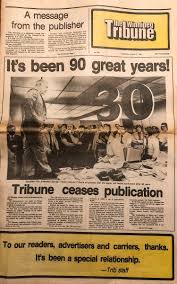

 you were laying out pages. It wasn’t long before I realized that I didn’t want to spend summers in the office, so I decided to turn motorsports into a beat, even though I wouldn’t know how to put air in a tire. So I ended up spending time at Bison Dragways, an NHRA-sanctioned strip located 29 miles east of Winnipeg, and Winnipeg Speedway, where the stock cars ran on a short track south of the city. I point this out because it’s how I picked up the nickname Greaser, which is what Matty started calling me after my first motorsport-related byline.
 League posted this on Twitter on Sunday:


 hazing brought against it by F Eric Guest, 20, who played three seasons (2016-19) with the Kitchener Rangers. . . . You may recall that earlier this summer Guest posted a video on social media in which he detailed some alleged hazing incidents, one of which included the use of cocaine. . . . Having twice tried to contact Guest and not having received a response, David Branch, the OHL commissioner, said in a statement that “we have assumed that Mr. Guest is not prepared to meet and provide the assistance required for the OHL to conduct an investigation into his allegations.” . . . In June, the Rangers asked Waterloo Regional Police to conduct an investigation, but, according to Mark Pare of

