
At some point in the late 1990s, while I was the sports editor at the Regina Leader-Post, I put together a brief history of the Western Hockey League. I had pretty much forgotten about it until recently when I was asked if I might post it again. So I am doing just that. . . . As you read each piece, please remember that I wrote them more than 20 years ago and they cover only the league’s first 25 years. It isn’t an all-encompassing history, but hits on some of the highlights and a few lowlights. . . . The stories are pretty much as originally written. . . . Here is Part 3. . . .
——
The mid-1970s belonged to the Ernie McLean-coached New Westminster Bruins. They were the Western Canada Hockey League’s most-dominant team.
If you didn’t believe that, well, they would convince you of it. And they’d do that any way they felt like it.

The Bruins ran their string of WCHL titles to four, and won the Memorial Cup the last two seasons, in 1976-77 and 1977-78. But by the time the 1980-81 season ended, the bloom was off the rose in New Westminster. Little did anyone know that it never would return.
Prior to the start of the 1976-77 season, the WCHL instituted a rule calling for an automatic game misconduct to any player who initiated a fight. Ironically, the first player stung was Brandon Wheat Kings starry centre Bill Derlago. He got the heave-ho after starting a scrap with Brian Schnitzler of the Saskatoon Blades in a season-opening 3-0 Brandon victory.
Two coaches felt WCHL president Ed Chynoweth’s wrath on Nov. 2. Ivan Prediger of the Kamloops Chiefs was suspended for 20 games, while Ken Hodge of the Portland Winter Hawks got 10 games. Prediger apparently struck Hodge during an altercation between the benches on Oct. 24.

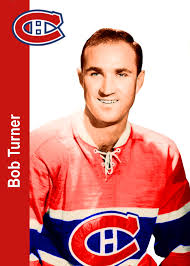
There was joy in Regina on Jan. 27 when the Pats scored a 3-2 victory over visiting Portland. It ended a 36- game Regina winless streak that covered 96 days. “I hope the players don’t become satisfied with the win,” said Lorne Davis, who had taken over as GM/head coach from Del Wilson and Bob Turner with the Pats at 2-32-5.
A nine-hour meeting in Calgary resulted in a new playoff format. Under the original format, the Flin Flon Bombers, third in the East, were 20 points ahead of Regina and all but had a playoff spot locked up. Suddenly, there was a new format and the Bombers were fighting for a spot. Oh yes, they were also on a 15-game West Coast road trip.
“In this league, you need two pieces of equipment,” said Flin Flon boss Mickey Keating. “You need a face-guard when you play some of the teams on the ice and a back protector for the committee room. I had inklings that there may be changes in the playoffs but I had confidence there were intelligent hockey men in this league. I was shown different.”
In Portland, the Winter Hawks were beginning to carve out a niche, which resulted in this March 1 comment from GM Brian Shaw: “We’re selling the all-American boy image. Our players are all properly dressed in public. They all have respectable hair lengths. We feel image is important. Our players have become our outstanding selling point, and they have actually played much better because of the great acceptance which now is blossoming in Portland.”
In mid-April, Kamloops majority owner Ephram Steinke admitted the franchise would likely move to Spokane over the summer. The reasons? Steinke blamed almost $500,000 in losses over four years, and the city’s refusal to construct a new arena.
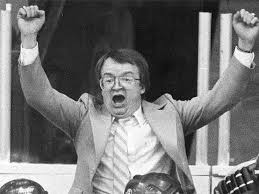
On May 12, the Calgary Centennials signed Bob Strumm as general manager. One of Strumm’s first moves was to confirm that a move to Billings was being contemplated.
Strumm, who had been Chynoweth’s executive assistant, was, at 29, the WCHL’s youngest GM. He would be one of the league’s most-prominent figures through the mid-1980s.
The Calgary move became official on May 19. Eleven days later, Kamloops moved to Seattle and became the Breakers under new owner John Hamilton.
On July 19, at the annual meeting in Calgary, the transfer of the Winnipeg Monarchs to Calgary was approved. Del Wilson, president and governor of the Pats, was named chairman of the board, replacing Bill Burton.
When Winnipeg moved to Calgary and became the Wranglers, owner Gerry Brisson named Doug Barkley as GM. The coach? It was Brisson. Would the GM be able to fire the owner/coach.
Stay tuned.
The 1977-78 regular season hadn’t even started when McLean was in trouble. It stemmed from an exhibition game against the host Victoria Cougars when midway in the second period he ventured into the stands to tangle with a fan who was taunting him. For his troubles, McLean got a gash on his forehead and, later, a $250 fine. This would serve as an omen.
A fierce rivalry was building between Regina and the Brandon Wheat Kings. After one early-season game, Davis had this to say: “If (Dave) Semenko would have been close enough to the box I would have swung at him . . . he came over by our bench trying to intimidate us.” To which Brandon coach Dunc McCallum responded: “How can a 220-pound man be held back by a stick boy?”
A few days later, Semenko joined the WHA’s Edmonton Oilers. A couple of years later, Davis joined the Oilers as a scout.

Derlago, perhaps the best pure offensive talent this league has seen, had a 40-game point streak end on Nov. 9 when he left a game with a thigh injury during his first shift. One month later, he blew out a knee in an exhibition game against the Moscow Selects. Had Derlago not been hurt, who knows what kind of numbers he would have put up? When he was injured, he had 48 goals and 80 points in 26 games. He was on pace for 133 goals, three more than the then-CMJHL record of 130 held by Guy Lafleur.
On Feb. 3, Jack McLeod resigned as coach of the Saskatoon Blades. He stayed on as GM, but put Garry Peters behind the bench. In Calgary, Barkley, the GM, took over as coach from Brisson, the owner.
More bad ink, and lots of it, in early February when McLean was slapped with a 25-game suspension for allegedly hitting an official. He returned for the playoffs.
“Our league has long been accused of protecting either our coaches or, more particularly, owner/coaches, but there is no way one coach or one franchise is bigger than the league,” Chynoweth said. “I can live with the so-called violence on ice, as projected by the media, but when it comes to our officials, qualified or unqualified, I look at things much differently.”
More bad ink in the first round of the playoffs. Yes, it emerged from a round-robin series. This one featured Brandon, Flin Flon and Regina in a double home-and-home series. When it got to the final game, Flin Flon at Regina, the Pats had to beat the Bombers by at least six goals to eliminate Brandon and set up a Regina-Flin Flon division final. Regina won 10-4 and the high-powered Wheat Kings, led by the likes of Derlago, Brian Propp, Laurie Boschman and Ray Allison, were done like so much burnt toast.
“For us to say anything is stupid. You saw what happened,” Flin Flon defenceman Ray Markham said after the game.
Ultimately, Flin Flon, New Westminster and Billings advanced to the WCHL’s round-robin semi-final to eliminate one team and put the other two in the championship final. Out went Flin Flon. New Westminster then swept Billings in the final. It was the Bruins’ fourth straight WCHL title and they would win their second consecutive Memorial Cup.
The Bruins, a power for oh, so long, would rarely be heard from in a positive light again.
On May 22, Flin Flon governor Gord Mitchell revealed that the community-owned team would cease operations. “I hate to see it go,” Mitchell said. “It’s certainly not the fault of the league. The league’s not kicking us out. But there comes a time when something like this seems to be the most reasonable thing to do. We’re a small centre and it got to the point where the league had outgrown us.”
A week later, Chynoweth, who had threatened to resign, announced he would remain as president, thanks to a promise from the governors that an executive assistant would be provided to help with such things as discipline. Wilson, the part-owner of the Pats, filled the bill as vice-president and referee-in-chief. Shaw replaced Wilson as chairman of the board.
On June 1, Gregg Pilling was named GM/coach in Regina, replacing Davis who, in a surprise move, was fired. Davis professed sadness, saying he had worked awfully hard and that all of that work would bear fruit in two years. Which is exactly what happened — two years later the Pats were in the Memorial Cup. But Pilling was gone by that point.
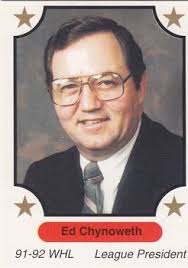
It was during the summer of 1978 when Chynoweth began talking of an education program. On July 4, he announced a program whereby teams would provide a year’s tuition and books at a recognized post-secondary institution for every season a player was in the league.
On Aug. 16, Chynoweth announced an Edmonton group headed by Bill Hunter had purchased the Flin Flon franchise from the league. Hunter would be president and governor, Vic Mah would be first vice-president.
The 1978-79 season began with news of a name change and ended with a new champion for the first time since the spring of ’74.
With three of 12 teams situated in the U.S., the WCHL was no more. Now it was the Western Hockey League.

The goofiness started on Oct. 22 when Pilling went into the penalty box at the start of the third period of a game in Calgary. He said he would serve a bench minor handed him for delay of game at the end of the second period in what would be an 8-1 loss. Pilling also alternated goaltenders Jeff Lastiwka and Gregg Dumba every shift change after a brawl at 2:52 of the second. Changing goalies ended 30 seconds into the third period when, with the faceoff outside Regina’s blueline, Dumba lined up behind his net. He was given a gross misconduct.
Chynoweth, who fined Pilling $1,000, said: “I thought it was a circus. I wouldn’t blame anybody if they didn’t go back.”
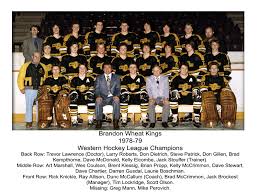
This was to be the season of McCallum’s Wheat Kings. That much was evident when Brandon ran its two-season unbeaten streak to a WHL-record 49 games and its single-season streak to 29 games. Brandon finally lost, going down 9-4 in Edmonton on Dec. 13 with the Oil Kings scoring all nine goals with the man advantage.
There was more news from Brandon on Jan. 11 when GM Jack Brockest, one of the WHL’s most likeable people, bought the team.
If any team could match Brandon it was Portland. The Winter Hawks had a 19-game unbeaten streak ended when visiting Brandon won 7-4 to go to 42-3-7.
In mid-March, rumours had the Edmonton franchise, which was averaging about 500 fans a game, moving to Great Falls, Montana, or Red Deer.
Things got ugly on March 22 in New Westminster when an incident involving the Bruins and Portland resulted in McLean’s being suspended indefinitely and seven of his players being charged by police. A game-ending brawl broke out, but this one was different because, while the Bruins left their bench, Hodge managed to keep his players under control.
On March 27, Wilson said McLean would not be allowed to coach during the playoffs, nor would he be allowed to communicate with the bench from the press box as he had done during previous suspensions.
McLean apologized for the brawl at a Vancouver press conference: “I have to take the full load, the full responsibility for what happened . . . when I look at it, maybe the game has gone by me. Maybe my coaching style isn’t what’s needed anymore. I’m an old horse that’s been at it for 25 years and it’s tough to change your thinking. The game is changing — maybe I haven’t changed with it.”
On April 4, GM Bill Shinske and McLean announced the Bruins were for sale, for $350,000.
The Winter Hawks got a small measure of revenge, beating the visiting Bruins 5-3 on April 8 to eliminate them from post-season play.
But this sad episode would drag on through the summer.
Meanwhile, Brandon was finishing with a 58-5-9 record, setting or tying 19 records.
The Oil Kings were sold on April 10, with ownership handed over to a Portland group headed by Bob Cooper and Tom Gauthier, who said they would move the franchise to Great Falls. “I guess sports is not my bowl of rice,” said Mah, an Edmonton restauranteur. It was Mah’s second go-round as an owner in Edmonton, and he wouldn’t give up. He would try and try again and again to get another franchise for the Alberta capital.
On April 20, charges of common assault were filed against seven Bruins — J.P. Kelly, Terry Kirkham, Bruce Howes, Rick Amann, Boris Fistric, Rob Roflik and Bill Hobbins. In August, the seven pleaded guilty. Judge James Shaw — no relation to the Portland general manager — granted conditional discharges to all seven, then banned them from league games at any level until Dec. 1. McLean said Shaw was “trying to be the judge who is going to clean up hockey. I’m worried about the affect on the game because the judge’s ruling makes a hip-check a criminal offence.”
Portland and Brandon ended up in the final, with Brandon winning in six games.
And, on May 28, Chynoweth resigned, effective June 30. This time he would leave, becoming part-owner of the Wranglers. “It’s more than 25 per cent and less than 50,” said majority-owner Jim Morley.
In late May, Pat Ginnell, who had been with the Lethbridge Broncos, moved north to take over the Medicine Hat Tigers. Mike Sauter would replace him in Lethbridge. Dave King left as coach in Billings to become head coach at the University of Saskatchewan.
The Pats were sold on June 8, with Wilson, Bill Patton, Gord Wicijowski, D.K. MacPherson, Wilf Degelman and Bob Babchuk selling to the Pinders — father Dick and sons Herb, Gerry and Tom. The price was believed to be near $300,000. Strumm was named GM, governor and part-owner.
Strumm later signed Bryan Murray as head coach and one of the great turnarounds in WHL history was under way.
But before that got started, Dave Descent was chosen to run the WHL. In his third season with the Canadian Amateur Wrestling Association at the time, Descent had lots of hockey experience at various levels in the OHA. “This job is an opportunity to get back into hockey, which is my chosen sport, and advance my sporting career,” he said.
Regina, which finished 18-47-7 (last in the East, second-worst in the league) in 1978-79, would go 47-24-1 in 1979-80 to win the division.
It was obvious early that the Bruins were going to pay a steep price for the brawl against Portland. They got their first point, after 13 losses, with a 5-5 tie in Great Falls on Oct. 31.
And on Nov. 16 McLean was at it again. And again it involved Portland.
McLean got tangled up with a fan at a game in Portland and was charged with fourth-degree assault. In one of the most ironical situations in WHL history, McLean was in jail until Brian Shaw posted his bail of $525. Charges were later reduced to harassment and it was all cleared up when a civil compromise was signed, ending the criminal case.
In mid-December, Descent’s title was changed from executive director to president. And concern was being shown about Great Falls, which was 2-22-1 and hurtin’ at the gate. The Americans folded on Dec. 13.
On March 2, McLean threw a 30-gallon garbage can onto the ice to protest the work of referee Ken Wheler during a game against visiting Portland.
The next day, Descent announced his resignation. Said Descent: “Speaking honestly, I’ve enjoyed my stay and feel it was a positive experience. But for personal reasons I’ve decided to take a different career path which is something I’m not at liberty to discuss now.”
Shaw said a five-man board would run the league, and that McLean would be suspended for three games for throwing the can. Oh yes, McLean was later named acting chairman of the management committee.
On March 24, McLean said he was leaving the Bruins. “I’ve made up my mind,” he said. “I’ve worn out my welcome. I will not be in New Westminster next year. We built a dynasty here but it’s time to move on.” All this after the Bruins set a WHL record with 61 losses. It was the first time in 18 seasons that McLean had missed playoffs.
On April 17, Vancouver businessman Nelson Skalbania bought out McLean and Shinske for slightly more than $300,000.
A week later, the WHL announced that Winnipeg would have an expansion team for 1980-81 and that the owners were former Pats star Fran Huck, his law partner Gerald Gunn and Winnipeg businessmen Harry Buekert, Arnold DeFehr and Marsdon Fenwick. Buekert would be GM, with Huck as coach.
On April 27, Regina beat visiting Victoria, 5-4, to win the WHL final, 4-1. The 1980 Memorial Cup, which would be won by the Cornwall Royals, opened in Brandon and closed in Regina.
During the Memorial Cup it became apparent the major juniors were terribly concerned with NHL’s practice of drafting 18-year-olds.
Chynoweth said: “I understand the legal problems the NHL has, although I don’t sympathize with it . . . at this rate, the pros will be scouting midgets soon.”
McLeod remembered the 1979 draft: “Back in June one NHL general manager said there was nothing to worry about, that only seven or eight under-ages would be taken. When they took 58, we were a little disturbed. Once they got into it, they just kept going.”
Junior teams were to be paid $50,000 to $65,000 for under-age players who stuck in the NHL.
Some NHL people said they weren’t in favour of the 18-year-old draft, either.
“The general managers unanimously fought to the 11th hour to avoid drafting under-ages,” said Washington GM Max McNab. “We were going to get caught in a lawsuit. But the NHL is like the government in the eyes of the public here. We’re going to get shot at in any decision.”
On May 15, the WHL announced that the dormant Great Falls franchise would relocate to Spokane with Cooper remaining as majority owner.

On June 26, Skalbania, already the owner of New Westminster and the NHL’s Calgary Flames, bought 50 per cent of the Wranglers. Skalbania explained: “It’s a sympathetic thing. I said when we bought the Flames that we’d support junior hockey in Calgary and I can’t think of a way we’d be supporting it any more than owning the team. I just hope we don’t lose that much money with them.”
Pat Shimbashi, a minority owner in Lethbridge, bought the other 50 per cent of the Wranglers from Jim Morley and Chynoweth, which meant that the latter would return as WHL president.

On June 27, Skalbania completed his purchase of the Bruins, buying 100 per cent for $325,000. McLean stayed as GM, while Skalbania’s 20-year-old daughter, Rozanda, was named president.
McLean resigned a couple of weeks later and Tracy Pratt was named GM. “I’d like to forget about the big bad Bruins of the past,” Pratt said, “and I’d like to think of them as the scrappy Bruins in the future. My concern is putting families back in the building. There was a shade too much violence in past years and many people became very bitter about what happened at Queen’s Park Arena.”
The league lost its referee-in-chief on Aug. 8 when Wilson announced he would scout for the Montreal Canadiens, a team with which he had long been associated.
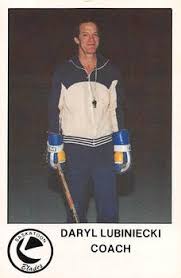
The 1980-81 season opened quietly enough, but the silence was shattered on Dec. 1 with a shakeup in Saskatoon. McLeod and coach Lorne Frey ended their association with the Blades. Majority owner Nate Brodsky bought McLeod’s share (20 per cent) and named Daryl Lubiniecki GM and coach.
Lubiniecki began shaking things up when, on Jan. 15, he traded one player — centre Rocky Trottier — to Billings for six players — Pat Rabbitt, Dave Brown, Brad Duggan, Dave Chartier, Lyndon Byers and Al Acton.
Fighting was still a concern and on Dec. 17 Chynoweth announced that teams would be fined $2,500 if their players fought before games or between periods. Players who started the fights or were main combatants would get a minimum of five games.
A black cloud continued to follow the Bruins. A labour dispute forced them to play their last 29 games on the road. Their last 13 home games were played in such places as Bellingham, Wash., Kamloops, Trail, Duncan, B.C., and Coleman, Alta. The Bruins set a WHL record by losing 25 in a row and had to give season-ticket holders a refund for the 13 home games that were moved.
There were rumblings out of Swift Current that the locals were interested in a WHL franchise. John Rittinger, president of the SJHL team there, was trying to raise money for the venture. “I can’t give you a figure at this time,” he said on April 1, “but, personally, I feel there has been insufficient support.”
The juniors were beginning to realize they were going to have to live with the 18-year-old draft. Said Chynoweth: “The under-age situation is a problem but also a fact of life. The law of the land says at 18 you can fight for your country, drink and get married. Consequently, they’re also eligible to be drafted and play for NHL teams.”
The WHL had a new referee-in-chief — Richard Doerksen — and he was in the news in the playoffs after Strumm grabbed him in the press box during a game. Strumm was slapped with a two-game suspension and a $1,000 fine.
Victoria, under coach Jack Shupe, would win the WHL championship in 1980-81. Trailing Calgary 3-1, the Cougars bounced back and wrapped it up on May 1, beating the visiting Wranglers, 4-2, in Game 7.
Singing a song that would become popular in NHL circles in years to come, Calgary coach Doug Sauter explained: “(Goaltender Grant) Fuhr was the difference.”
NEXT: Part 4 of 5.



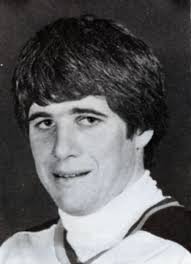

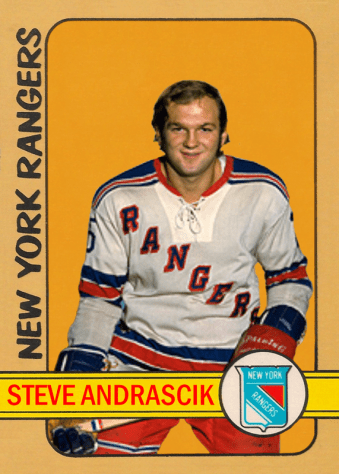 Bombers, totalling 62 goals and 62 assists in 110 games. He also earned 230 penalty minutes as he sometimes rode shotgun with Bobby Clarke and Reggie Leach. Steve was selected 11th overall by the Detroit Red Wings in the 12-team NHL’s 1968 draft — 24 players were selected over three rounds.
 hoping to get their regular seasons started in December. The QMJHL, meanwhile, has one weekend under its belt and has lost three teams. . . . The Blainville-Boisbriand Armada and Sherbrooke Phoenix have suspended all in-person activities. That comes after an Armada player tested positive following a weekend doubleheader between the teams. . . . At the same time, the Armada and Quebec Remparts have been shut down at least for the rest of this month as they are in a red zone as defined by the provincial government. . . . Armada staff and players are in isolation as they await further testing and results, and the outcome of contact tracing. . . . The Armada and Remparts each has eight games on their October schedules.
 of $791,000 at its annual general meeting on Tuesday night. One year earlier, after a 2018-19 season in which it was 11-51-6, the team announced a profit of $38,196.
 their AGM, which also was held on Tuesday night. One year earlier, the team announced a loss of $165,145 for 2018-19.
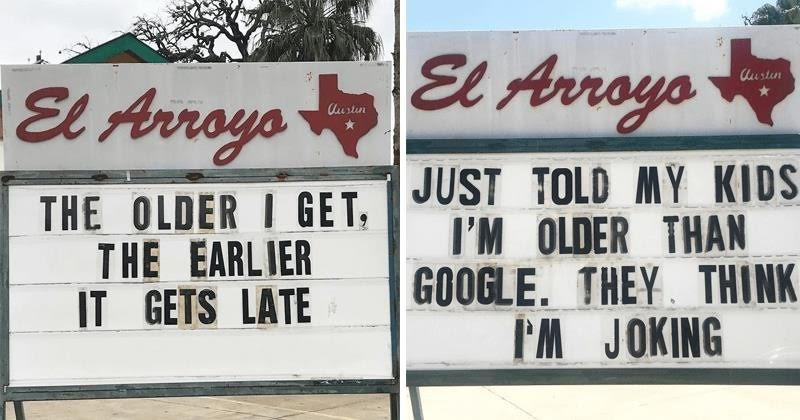

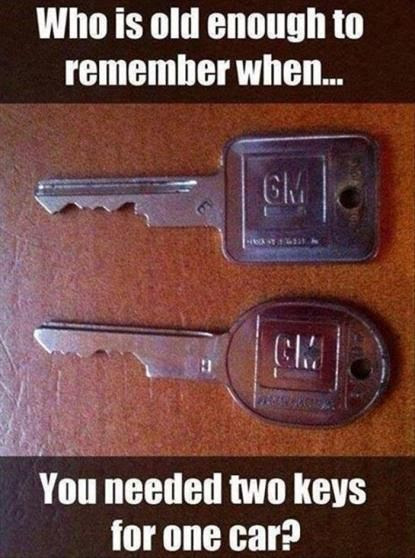
 chance of dying from the coronavirus. The Twins are believed to be the first North American professional team to excuse older coaches from working with their team.
 COVID-19. Fifteen of those players were in training at team facilities. The other 11 were working out away from those facilities. . . . All 26 players have been self-isolated. . . . The NHL says there were 1,450 tests on more than 250 players administered to players who were working out in training facilities. . . . Still to announce its hub cities, the NHL has said it will release testing figures on a weekly basis. . . .
 Monday that he was leaving the post. He cited family reasons for his decision. . . . Andrews was the Pats’ director of media and communications, and handled the play-by-play duties. . . . His departure opens up one of the WHL’s plum play-by-play positions and you can bet that a lot of junior hockey radio types have been preparing resumes.

 response to the COVID-19 pandemic and the dynamic economic challenges ahead,” it will be taking over operations of the Canalta Centre from ASM Global, a venue management company, starting in August. . . . The news release announcing the change included this: “Current provincial and federal restrictions have limited the operational capabilities for the Canalta Centre venue, and the current outlook from Alberta Health and Canada Health authorities indicates that public restrictions can be expected for the remainder of 2020 in an effort to mitigate virus transmission.” . . . The 7,000-seat facility is home to the WHL’s Medicine Hat Tigers. . . . Since opening in time for the 2015-16 season, the Tigers, according to figures compiled by the WHL, have averaged 4,248, 3,586, 3,295, 3,121 and, in 2019-20, 2,947 fans per game. . . . Brian Mastel, the City’s commissioner of public services, said: “Challenges related to market support and attendance were occurring prior to the COVID-19 crisis. When the current situation is considered in context of these broader challenges, it underscores the need to re-examine the operational and cost structure for future sustainability.” . . . You have to wonder what is in store for the start of the next hockey season if, as this news release indicates, all signs in Alberta point to “public restrictions” through the end of 2020. The WHL has five franchises based in Alberta.
 Snohomish County. The WHL’s Seattle Thunderbirds play out of
  Kent, Wash., which is located in King County.

 Kelowna Rockets. . . . Fiddler, who played three seasons (1997-2000) with the Rockets, was added to Kelowna’s coaching staff on Wednesday. . . . Fiddler, 39, will work alongside head coach Adam Foote, assistant Kris Mallette, Adam Brown, who handles goaltenders, skills coach Kim Gellert, and power-skating coach Evan Marble. . . . Fiddler, from Edmonton, had been working as a skills development coach with Dallas, helping out in the NHL and with the AHL’s Texas Stars. . . . Fiddler was dealt by the Rockets to the Medicine Hat Tigers three games into the 2000-01 season. He finished his WHL career with the Tigers before going on to a pro career that included 877 NHL regular-season games. He last played in 2016-17 when he split the season between the New Jersey Devils and Nashville Predators. . . . The Rockets, who didn’t make the playoffs last season, are the host team for the 2020 Memorial Cup.
 . . Each team is allowed to have two import players on its roster during the season. . . . As you read this team-by-team look, keep in mind that a team with an import on its roster who was a first-round NHL draft pick, or one who has signed with an NHL team, or one who is prepping for his 20-year-old season is allowed to add a player in the draft. Some teams, then, could end up with three imports on their roster, but eventually will have to get down to two. . . . I believe a team has until two weeks after the third import arrives to trim its roster.
 whom played last season in the USHL. . . . Finnish F Marcus Kallionkieli played last season with the Sioux City Musketeers, putting up 29 goals and 54 assists in 58 games. He was a fifth-round pick by the Vegas Golden Knights in last weekend’s NHL draft. Kelly McCrimmon, the Wheat Kings’ owner, is the Golden Knights’ assistant general manager; he takes over as GM on Sept. 1. . . . Russian F Vladislav Firstov was picked by the Minnesota Wild in the second round of the 2019 NHL draft. Last season, he had 26 goals and 32 assists with the Waterloo Blackhawks. Firstov has committed to play with the Huskies at the U of Connecticut in the fall. . . . The Wheat Kings’ roster also includes Czech G Jiri Patera, 20, who was a sixth-round pick by the Golden Knights in the NHL’s 2017 draft. The Wheat Kings’ No. 1 goaltender as a freshman last season, he has yet to sign a pro contract.
 Jesper Wallstedt, who has been hyped by some observers as perhaps the best in the world in his age group. . . . He will turn 17 on Nov. 14, so isn’t eligible for the NHL draft until 2021. . . . Last season, the 6-foot-3 Wallstedt played in 21 games with Luleå HF J20 of the SuperElit league, going 2.65, .901. He is expected to return to the team for the 2019-20 season, so the Warriors have some work ahead of them. . . . The Warriors have two other imports on their roster — Belarusian D Vladislav Yeryomenko, 20, who was acquired from the Calgary Hitmen on May 2, and F Danill Stepanov, 18, who also is from Belarus. Yeryomenko was a fifth-round pick by the Nashville Predators in the NHL’s 2018 draft, but he has yet to sign a pro contract.
 Zaytsev as to his immediate future, but, in the meantime, they are keeping him on their roster. . . . With one pick in the draft, then, they took Finnish D Christoffer Sedoff, 17, out of the HIFK organization. . . . Last season, he had three assists in 32 games with HIFK’s U-20 team. . . . He also played in the Hlinka Gretzky Cup. . . . “From everything we know, he’s coming,” Brent Sutter, the Rebels’ owner, general manager and head coach, told Greg Meachem of reddeerrebels.com. “Unless some unforeseen thing comes about, as far as we know he’ll be here.” . . . Russian D Alex Alexeyev, 20, was selected by the Washington Capitals in the first round of the NHL’s 2018 draft and is expected to start his pro career in the fall.
 from last season — Swedish D Emil Malysjev, 18, who will play at home, and Norwegian F Kristian Roykas Marthinsen, 20, who apparently is planning on beginning his pro career. He was a seventh-round pick by the NHL’s Washington Capitals in 2017 but hasn’t signed. . . . The Blades then grabbed a pair of Czech defencemen — Libor Zabransky, 19, who has played 107 WHL games with the Kelowna Rockets, and Radek Kucerik, who is to turn 18 on Dec. 21. . . . Last season, Zabransky had two goals and seven assists in 35 games with the Rockets, before finishing up with the USHL’s Fargo Force. He had four goals and 12 assists in 30 games with Fargo. In 2017-18, He had two goals and 17 assists in 72 games with Kelowna. . . . Kucerik won’t turn 18 until Dec. 17. He captained HC Kometa Brno’s U1-9 squad last season and, if he doesn’t show up in Saskatoon, he could play with HC Kometa Brno in the Czech Extraliga in 2019-20.
 Klassen, the Chiefs picked Czech G Lukas Parik, 18, who was a third-round pick by the Los Angeles Kings in the NHL’s 2019 draft. This was the first time Spokane has picked a goaltender in the import draft. . . . The 6-foot-4 Parik attended the Kings’s development camp this week. . . . Campbell Arnold, 17, also is in the Chiefs’ picture after being a second-round selection in the WHL’s 2017 bantam draft. From Nanaimo, B.C., he played last season for the junior B Spokane Braves of the Kootenay International Junior Hockey League. . . . Spokane also selected Russian D Matvei Startsev, who will turn 17 on Sept. 4. He is listed at 5-foot-8 and 132 pounds, but the Chiefs indicated in a news release that “scouting reports indicate Startsev has grown significantly above his listed height and weight over the past year.” . . . Veteran Czech D Filip Kral, who turns 20 on Oct. 20, remains on Spokane’s roster and could return for a third season. He was a fifth-round pick by the Toronto Maple Leafs in the NHL’s 2018 draft, but has yet to sign a pro deal.
 picked two players — Czech F Michal Teply, 18, and German F Nino Kinder, 18. . . . Teply was a fourth-round selection by the Chicago Blackhawks in the NHL’s 2019 draft. Last season, he had four goals and six assists in 23 games on loan to HC Benatky nad Jizerou in the Czech2 league. He had been loaned by Bílí Tygři Liberec of the Extraliga, the country’s top pro league. Teply had played 15 games with them, putting up two assists. He also played at the IIHF U-18 Worlds and the Hlinka Gretzky Cup. . . . Kinder had 17 goals and 24 assists in 33 games with the U-20 Eisbaren Juniors Berlin. He was pointless in five games with Eisbaren Berlin of the DEL. Kinder is spending this week at the Los Angeles Kings’ development camp. . . . The Ice finished last season with two import defencemen on its roster. Martin Bodak of Czech Republic has used up his junior eliibility, while Valtteri Kakkonen, 19, of Finland has signed with JYP of Liiga, that country’s top pro league.
 TAKING NOTE